When someone wants to improve their smile with veneers, composite, crowns or aesthetic rehabilitation, it is not enough to analyse only the colour and shape of the teeth.
We also need to study the forces acting on them.
Bruxism may involve clenching, grinding or holding the jaw under tension, either during sleep or while awake. It can be associated with tooth wear, fractures, sensitivity, muscular tension and damage to restorations, although not every patient presents the same signs or symptoms.
For this reason, before carrying out a smile design, it is important to assess whether bruxism is present, how the bite functions and which teeth are receiving the greatest load.
A smile may look perfect in a photograph while still being exposed to forces that compromise its stability.
At SMITA Advanced Smile Design in Barcelona, we plan aesthetics and function as parts of the same treatment.
We are not only looking to create beautiful teeth.
We want the result to be natural, functional, conservative and as stable as possible.
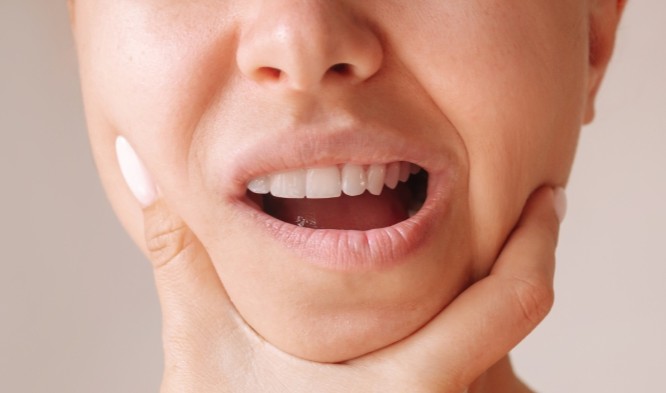
What Is Bruxism?
Bruxism is a repetitive activity of the jaw muscles.
It may appear as:
Tooth clenching.
Tooth grinding.
Prolonged contact between the teeth.
Jaw tension or stiffness.
Repetitive jaw movements.
It may occur during sleep or while the person is awake.
Awake bruxism is often related to clenching or maintaining muscular tension during the day. Sleep bruxism occurs while the person is asleep and may go unnoticed for a long time.
Not every patient who clenches produces audible grinding.
Not every person with bruxism experiences pain.
For this reason, the diagnosis should not be based on a single symptom.
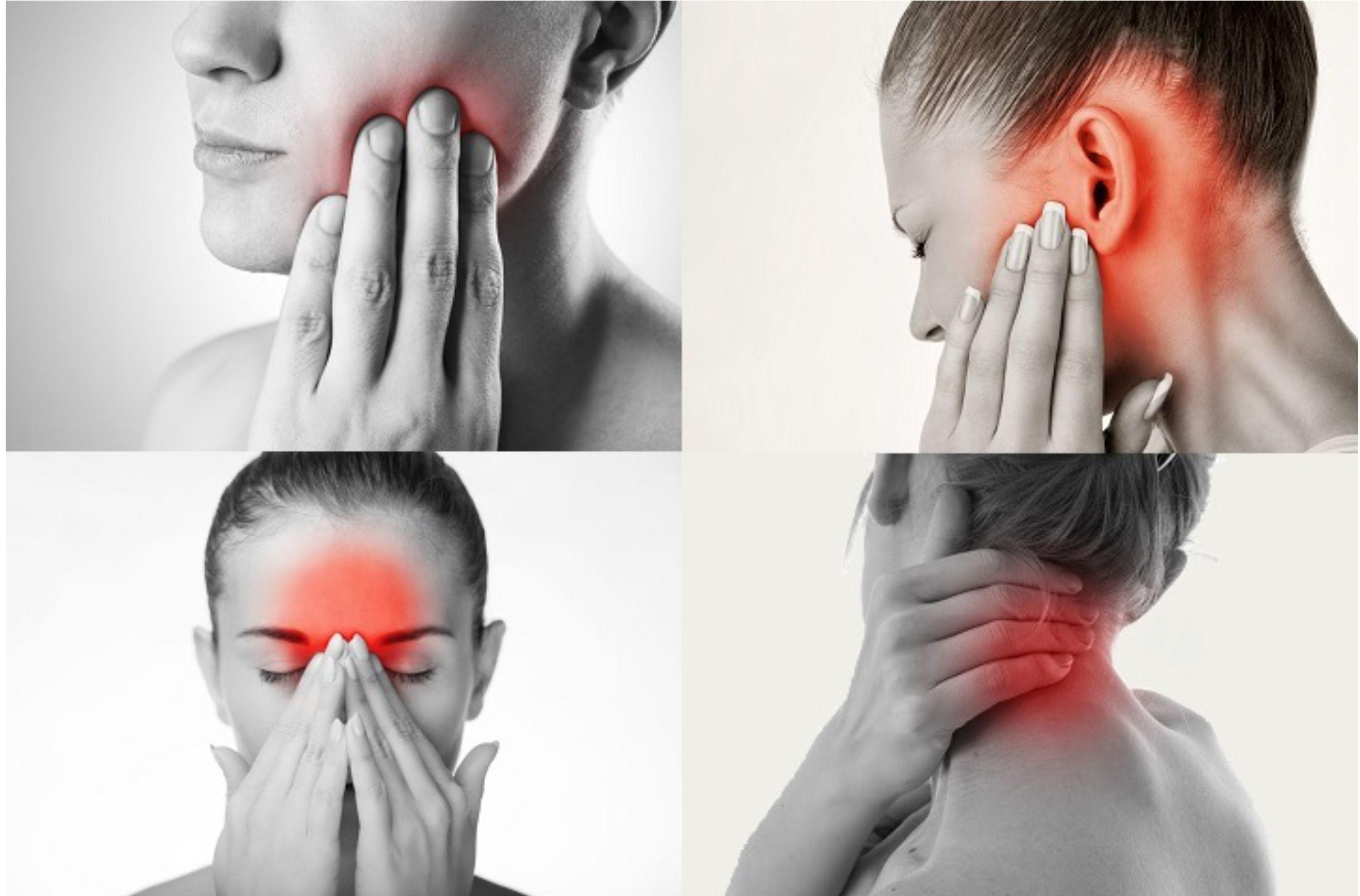
What Are the Most Common Signs?
The signs and symptoms can vary considerably between patients.
Some of the most common include:
Flattened or worn teeth.
Small fractures along the edges.
Cracks in the teeth.
Sensitivity.
Muscular pain or fatigue.
Jaw tension.
Discomfort on waking.
Headaches or facial pain.
Restorations that repeatedly fracture.
Marks on the tongue or inside the cheeks.
However, none of these signs alone confirms that active bruxism is present.
The entire clinical situation needs to be interpreted.
Worn Teeth Do Not Always Mean Bruxism
Tooth wear can have several causes.
In addition to bruxism, it may be related to:
Frequent acid exposure.
Gastro-oesophageal reflux.
Carbonated or energy drinks.
Repetitive habits.
Bite problems.
Loss of posterior teeth.
Old restorations.
Unfavourable tooth position.
A combination of several factors.
For example, acids can soften the enamel and make it easier for mechanical forces to wear it down more quickly.
For this reason, when we see short teeth or flat edges, we should not automatically conclude that the patient grinds their teeth.
The diagnosis should consider the wear pattern, habits, symptoms, bite and progression over time.
How Is Bruxism Diagnosed?
The assessment may include:
Clinical interview.
Review of daytime habits.
Dental examination.
Assessment of tooth wear.
Muscle palpation.
Bite analysis.
Photographs.
Digital scans.
Comparison with previous records.
Information provided by a partner or family member.
Sleep assessment when indicated.
In certain cases, a sleep study may help confirm sleep-related bruxism or detect other problems, such as breathing-related sleep disorders.
In practice, the most important objective is to identify whether there are signs of overload that need to be considered before aesthetic treatment begins.
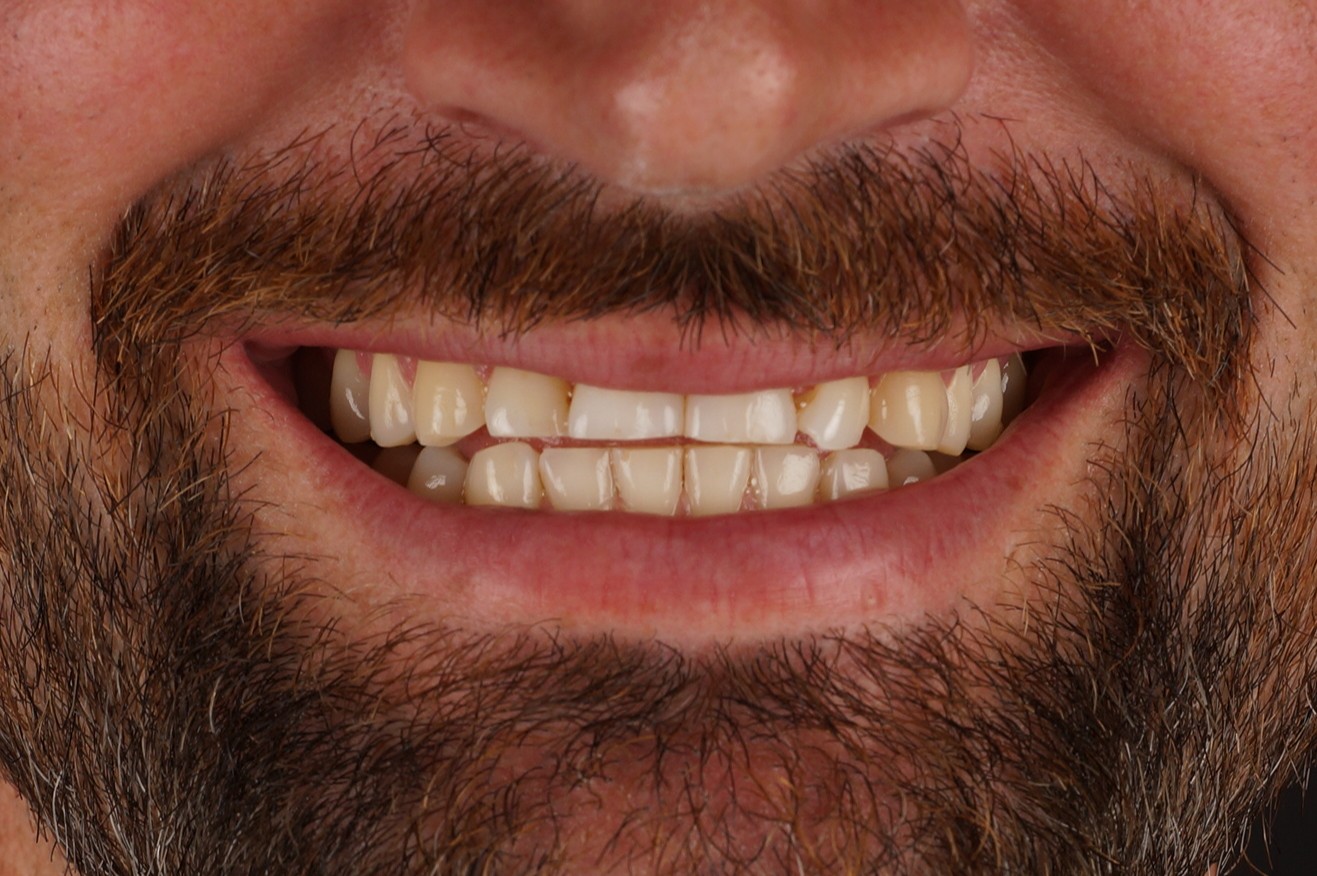
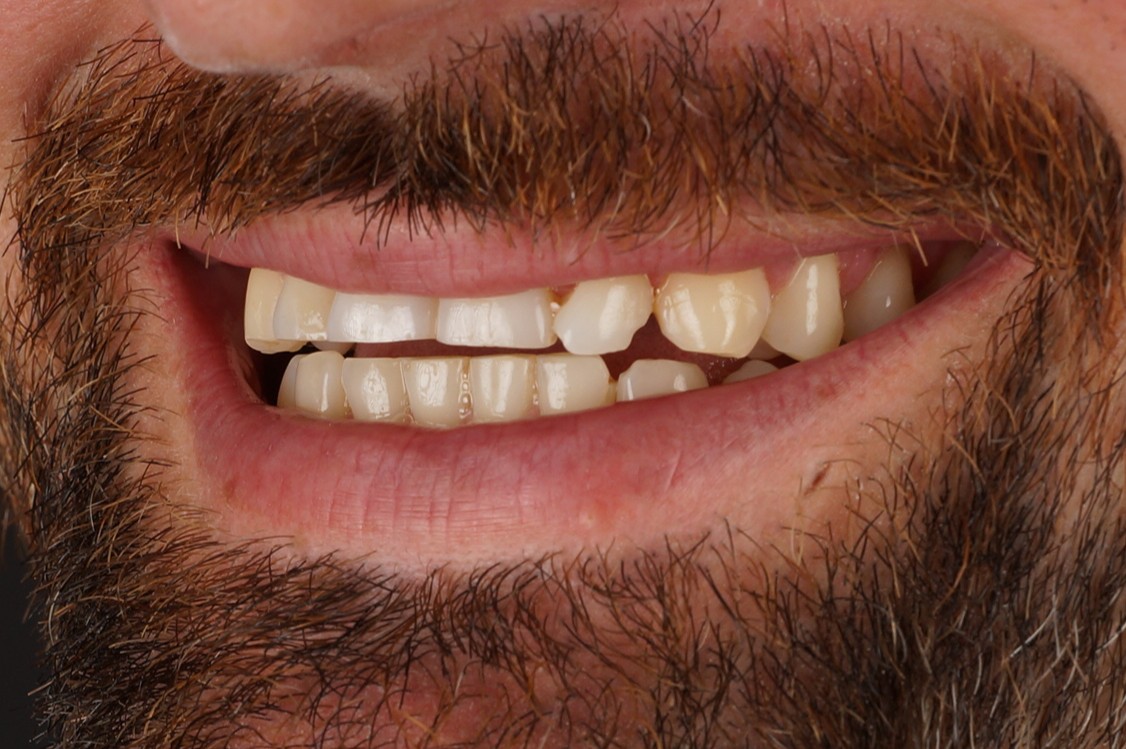
How Bruxism Affects the Appearance of the Smile
Bruxism can gradually change the appearance of the teeth.
It may cause:
Shortening of the incisors.
Loss of the smile curve.
Flat or irregular edges.
Small fractures.
Differences in tooth length.
Loss of tooth texture.
Exposure of dentine.
Changes in colour.
An older-looking smile.
When the incisors lose length, they may stop following the curve of the lower lip.
The amount of tooth visible when speaking or smiling may also decrease.
In other cases, wear makes the teeth appear wider, squarer or less defined.
For this reason, bruxism is not only a functional concern.
It can change the proportions and overall expression of the smile.
Bruxism Before Smile Design
Before carrying out veneers, composite or aesthetic rehabilitation, we need to assess:
The presence of wear.
Previous fractures.
Muscular strength.
Dental contacts.
Jaw movements.
Bite stability.
Tooth position.
The presence of pain or sensitivity.
The amount of available enamel.
Existing restorations.
This analysis helps us determine whether aesthetic treatment can begin directly or whether other factors should be stabilised first.
For some patients, the plan may include:
Habit control.
Orthodontics.
Reconstruction of posterior teeth.
Treatment of tooth wear.
A protective dental splint.
Monitoring before the aesthetic phase begins.
There is no identical treatment sequence for every patient.
Can I Have Veneers If I Have Bruxism?
In some cases, yes.
Having bruxism does not automatically mean that veneers cannot be placed.
However, the functional risk needs to be assessed and explained.
In patients with bruxism, special attention should be given to:
The position of the veneer edges.
Material thickness.
The amount of enamel.
Anterior contacts.
Guidance during jaw movements.
Posterior stability.
Material selection.
The possible need for night-time protection.
Maintenance.
A beautiful veneer that is not adequately protected may be exposed to unsuitable forces.
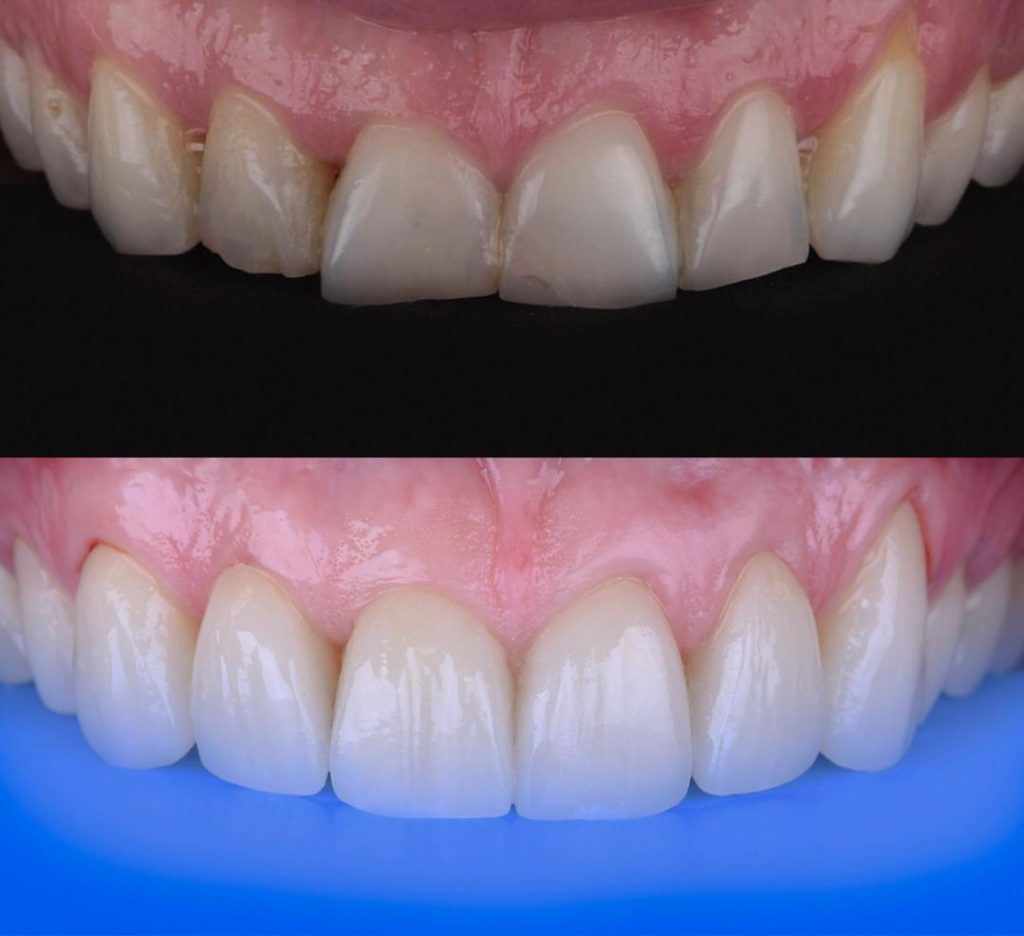
Can Bruxism Break Veneers?
Both composite and porcelain can fracture when exposed to high or repeated forces.
Possible complications include:
Small fractures.
Wear.
Debonding.
Cracks.
Loss of gloss in composite.
Partial or complete fracture.
This does not mean that every veneer placed in a patient with bruxism will fail.
It means that treatment planning should take the increased mechanical risk into account.
We should not assess only which material looks more attractive.
We also need to consider how it will behave under the patient’s real functional forces.
Composite or Porcelain in Patients with Bruxism
There is no perfect material for every case.
Composite
Composite may offer:
A conservative treatment.
The possibility of direct repair.
Simple modifications.
Reconstruction in stages.
Less need for tooth preparation in some cases.
If a small fracture occurs, it can often be repaired in the clinic without replacing the entire restoration.
However, composite may wear, stain or lose texture more easily.
Porcelain
Porcelain may offer:
Good colour stability.
High luminosity.
A texture similar to enamel.
Resistance to surface wear.
Excellent aesthetic precision.
However, a major fracture can be more complex to repair and may require replacement of the restoration.
The choice should be based on the amount of enamel, available space, the extent of wear, the bite, mechanical risk and the desired result.
The Importance of the Bite
The bite determines how forces are distributed between the teeth.
In smile design, we need to assess:
Where the teeth contact.
Which teeth receive more pressure.
How the jaw moves.
What happens when the jaw moves forwards.
How lateral movements function.
Whether there are interferences.
Whether posterior support is missing.
Whether there is a deep overbite.
Whether teeth are tilted or out of position.
An anterior restoration may receive excessive load if the posterior teeth do not provide stability or if certain movements are poorly distributed.
For this reason, in some cases, the posterior region needs to be stabilised before the front teeth are rebuilt.
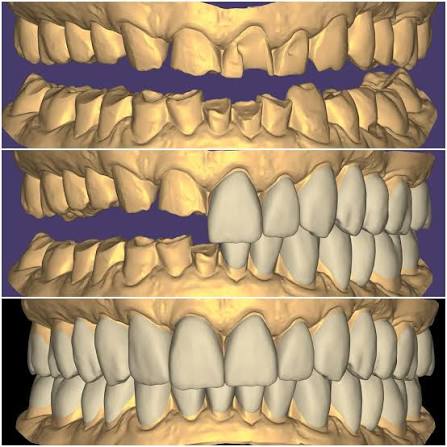
Bruxism, Worn Teeth and Loss of Vertical Dimension
When wear is generalised, the teeth may lose part of their anatomy and height.
In certain cases, it may be necessary to reorganise the available space so the teeth can be rebuilt.
This may include planning the vertical dimension.
It does not simply mean making the teeth longer.
It involves studying:
The bite.
Restorative space.
The muscles.
Facial aesthetics.
Speech.
Tooth display.
Functional adaptation.
This type of treatment requires comprehensive planning and often a trial stage or mock-up.
Orthodontics and Bruxism
Orthodontics may be necessary when tooth position makes the aesthetic design more difficult or creates unfavourable contacts.
It can help to:
Move the teeth into a more favourable position.
Distribute spaces.
Improve the bite.
Reduce tooth preparation.
Facilitate more conservative restorations.
Create a more harmonious smile line.
However, orthodontics should not be presented as a treatment that eliminates bruxism.
It can improve tooth position and create better functional conditions, but it does not guarantee that the person will stop clenching or grinding.
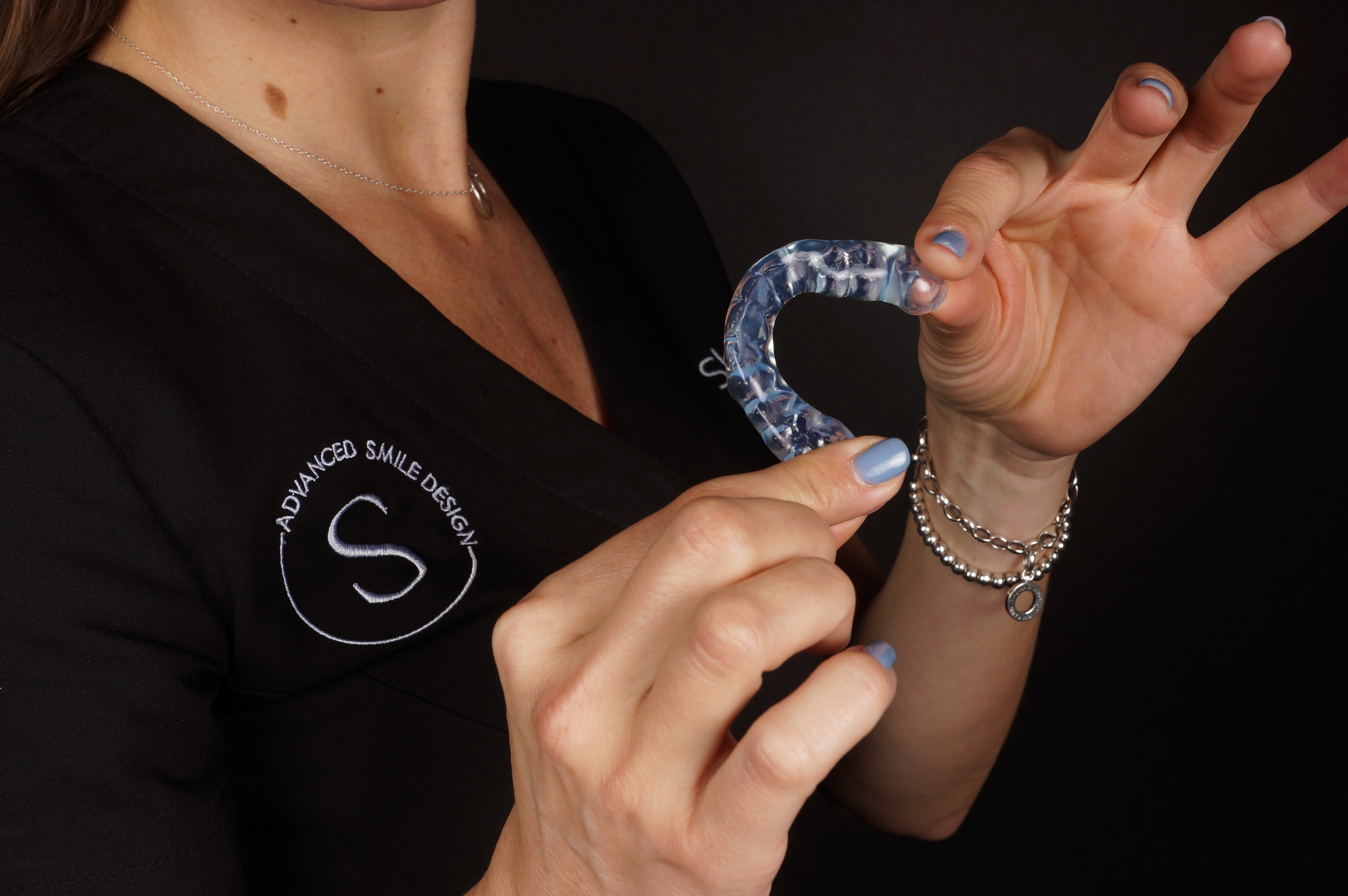
Does a Night Guard Cure Bruxism?
Not necessarily.
A dental splint can protect the teeth and restorations, distribute contacts and reduce direct damage between dental surfaces.
However, it should not be presented as a permanent cure for bruxism.
Its main role is usually protective.
It may also help control certain muscular symptoms in some patients, but the response is individual.
Are All Dental Splints the Same?
No.
Dental splints may vary in:
Material.
Rigidity.
Thickness.
Design.
The arch on which they are worn.
The type of contacts created.
Therapeutic objective.
A splint should be adapted to the mouth and functional pattern of each patient.
Generic or poorly adjusted splints may be uncomfortable, may not fit correctly, may interfere with the bite or may fail to provide adequate protection.
They also need to be reviewed periodically.
Wear marks on the splint can provide useful information about the forces acting on it.
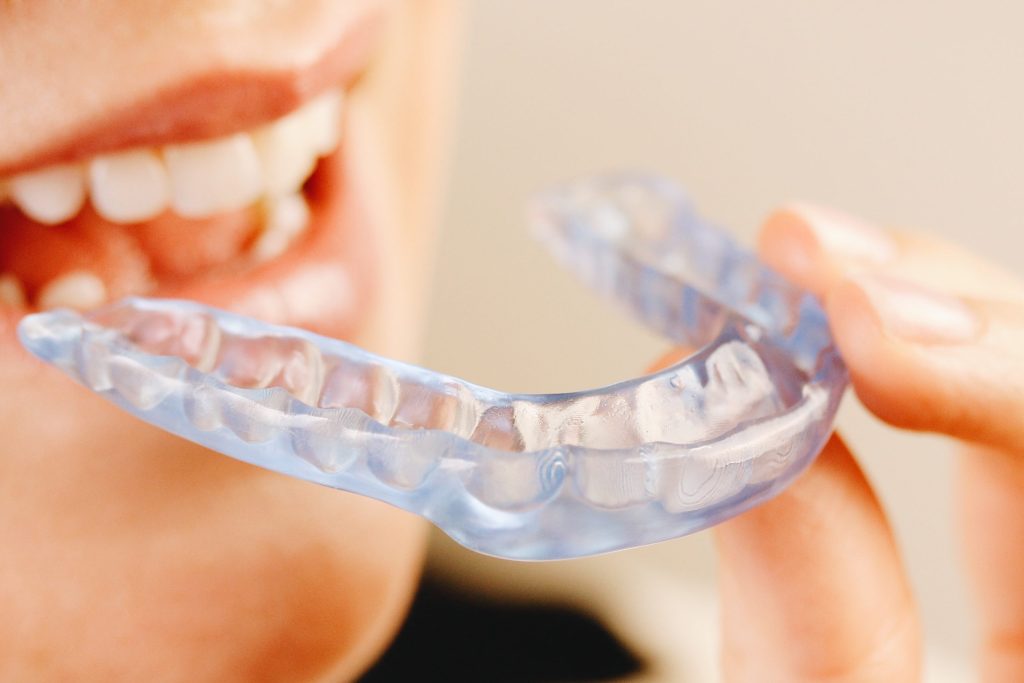
A Night Guard After Veneers or Composite
After veneers or restorations have been completed in a patient with signs of bruxism, a protective splint may be recommended.
Its aim is to protect:
Incisal edges.
Veneers.
Composite restorations.
Crowns.
Natural teeth.
Implants and prostheses, when present.
The splint needs to fit the final smile design.
It should generally not be made before all definitive restorations are completed if those restorations will significantly change the tooth anatomy.
Awake Bruxism: The Importance of Daytime Habits
Many people keep their teeth clenched during the day without realising it.
This may occur while they are:
Working at a computer.
Driving.
Exercising.
Concentrating.
Experiencing stressful situations.
Using a phone.
At rest, the teeth should not normally remain in constant contact.
Becoming aware of the habit may help reduce periods of daytime clenching.
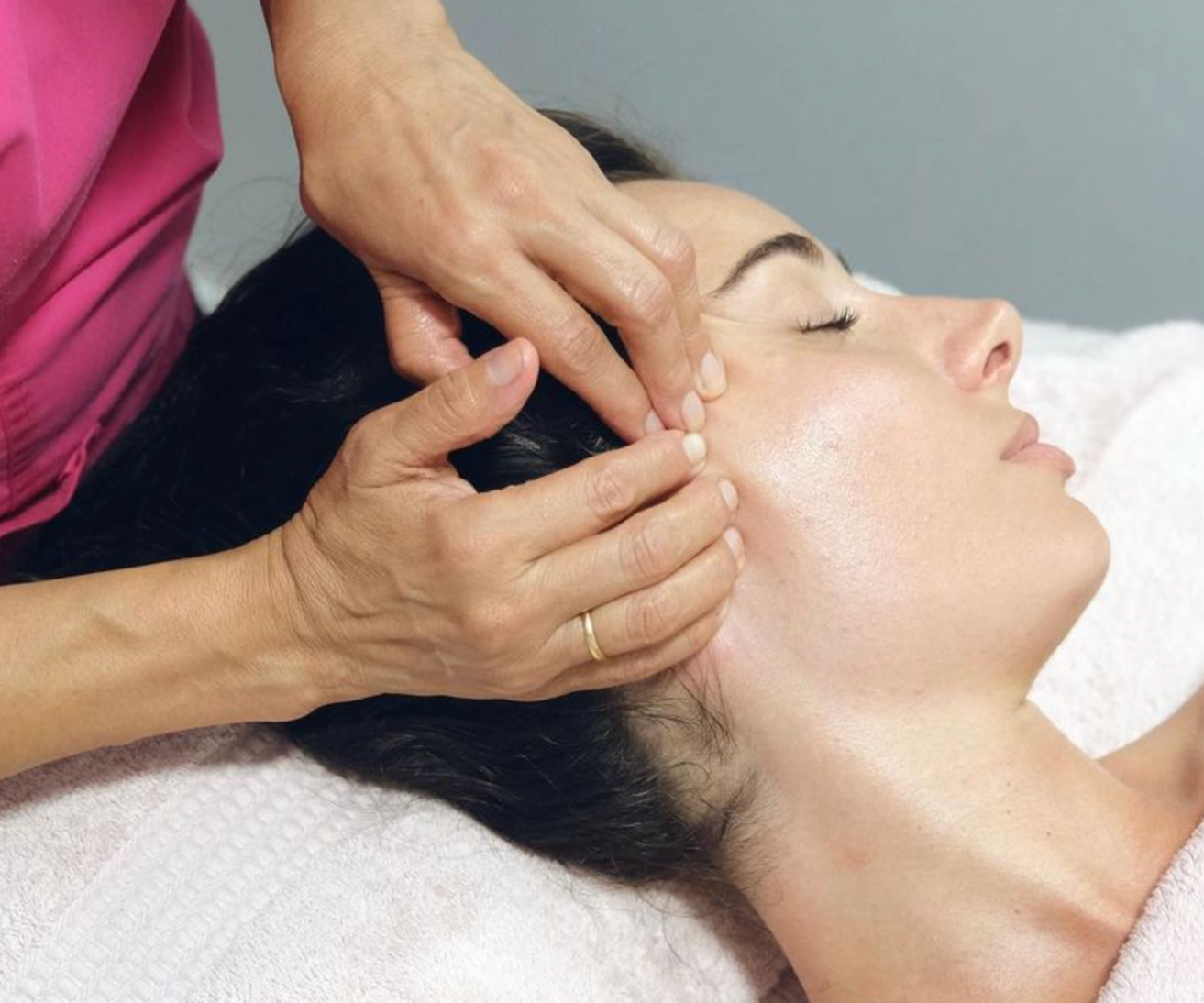
Simple reminders can be used to relax the jaw, separate the teeth and rest the tongue gently.
When there is pain, persistent tension or restricted movement, dental care may need to be complemented by physiotherapy, sleep medicine or other professionals, depending on the case.
Stress and Bruxism
Stress can be associated with clenching in some patients, especially in awake bruxism.
However, not every case should be reduced to “stress”.
Bruxism can be influenced by several factors, and sleep bruxism is considered an activity related to the nervous system and sleep, not simply a consequence of a poor bite.
Management may therefore involve different strategies:
Education.
Habit awareness.
Improving sleep.
Controlling triggering factors.
A protective splint.
Physiotherapy.
Medical assessment when indicated.
Bruxism and Sleep Apnoea
Some patients with sleep bruxism may also present snoring, frequent waking, daytime sleepiness or symptoms compatible with sleep-related breathing problems.
This does not mean that every person with bruxism has sleep apnoea.
However, when relevant symptoms are present, medical assessment or a sleep study may be appropriate.
The priority is to identify the problem correctly and not limit treatment to a dental splint when other health factors may be involved.
Smile Design in Patients with Bruxism
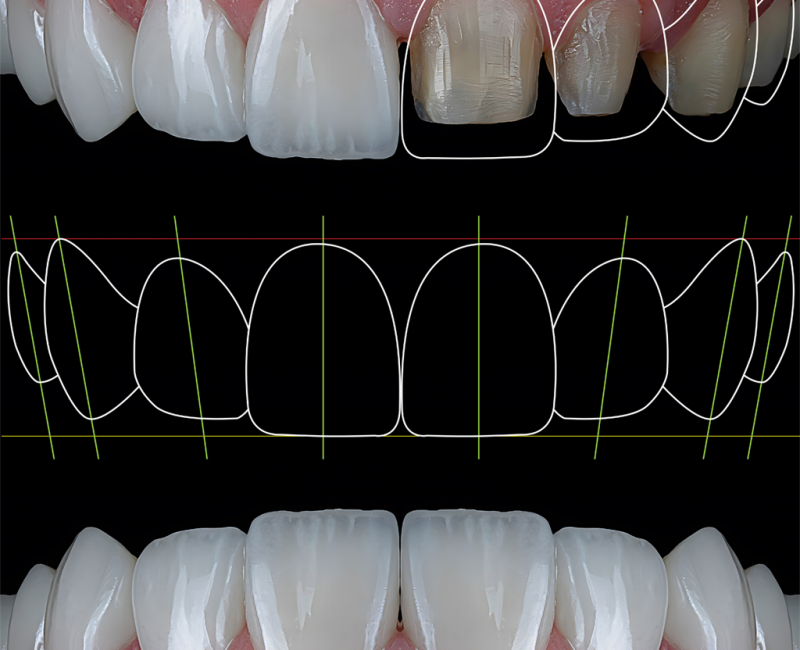
Smile design in these patients should include both aesthetics and function from the beginning.
We analyse:
Lost tooth length.
Proportions.
Tooth position.
The amount of enamel.
The smile line.
The lips.
The bite.
Functional contacts.
Previous fractures.
Existing restorations.
Protection requirements.
Treatment may include:
Teeth whitening.
Orthodontics.
Composite restorations.
Porcelain veneers.
Inlays or onlays.
Partial crowns.
Posterior rehabilitation.
Gum treatment.
A protective splint.
The combination is selected according to the real needs of each smile.
Why Is It Not Always Enough to Rebuild Only the Front Teeth?
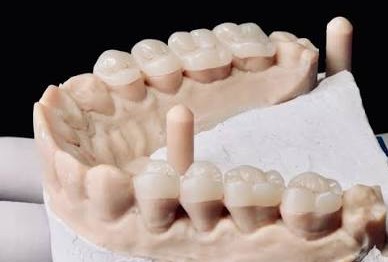
When the front teeth are worn, the problem may involve the entire bite.
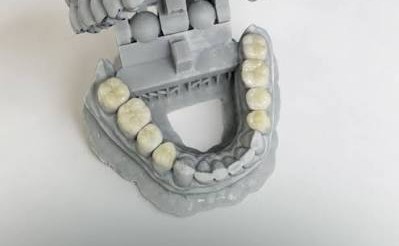
If the posterior teeth have also lost height or stability, rebuilding only the incisors may create inappropriate contacts.
For this reason, we need to assess whether enough space exists to restore the anterior tooth length.
In some cases, the posterior teeth also need to be included in the rehabilitation.
This may help to:
Distribute forces more effectively.
Create restorative space.
Protect the front teeth.
Improve stability.
Restore functional anatomy.
The extent of treatment depends on the wear pattern and the way the bite has adapted.
Mock-Up and Functional Trial
In more extensive treatments, an aesthetic trial or mock-up may be carried out.
This allows us to assess:
Tooth length.
Shape.
The smile line.
The relationship with the lips.
Speech.
Comfort.
Bite adaptation.
The mock-up is not only a tool to show the patient how the smile could look.
It may also help confirm that the design functions correctly before the final treatment is completed.
Maintenance After Aesthetic Treatment
Patients with bruxism require particularly careful follow-up.
Maintenance may include:
Regular check-ups.
Bite control.
Review of the splint.
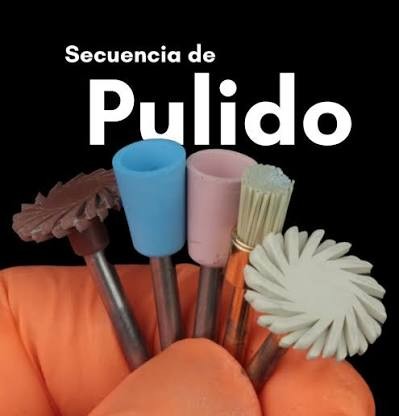
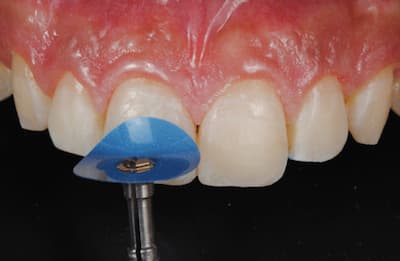
Composite polishing.
Monitoring small fractures.
Assessment of wear.
Professional hygiene.
Comparative photographs.
Digital scans.
Habit monitoring.
Restorations do not automatically eliminate bruxism.
Follow-up therefore continues after the smile design has been completed.
Signs That Require a Review
It is advisable to request an assessment if any of the following appears:
A new fracture.
Persistent sensitivity.
Pain when biting.
Changes in the bite.
Tooth mobility.
Frequent muscular pain.
Difficulty opening the mouth.
A veneer or restoration that feels loose.
Visible wear on the splint.
Pain caused by the splint itself.
Early intervention may allow a small area to be repaired before the problem becomes more extensive.
How We Plan Bruxism and Aesthetic Dentistry at SMITA
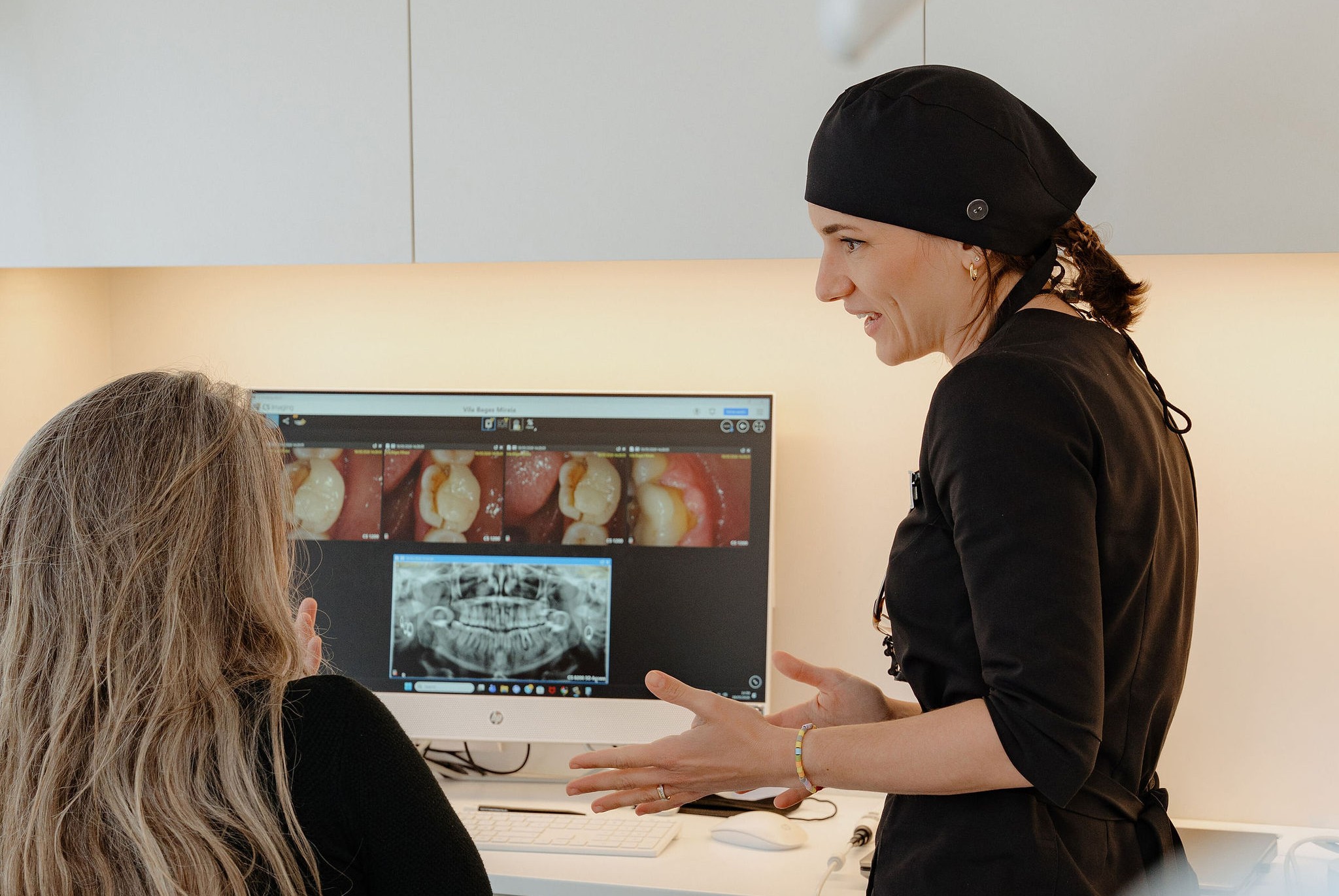
At SMITA Advanced Smile Design, we begin with a complete assessment.
We listen to what concerns the patient, what changes they have noticed and what result they would like to achieve.
We then analyse:
Oral health.
Tooth shape and length.
The wear pattern.
The bite.
Tooth position.
The muscles.
Existing fractures.
Previous restorations.
Daytime and night-time habits.
The relationship between the teeth, lips and face.
From there, we create a personalised treatment sequence.
In some cases, the first step will be habit control and protection of the teeth.
In others, orthodontics or reconstruction of certain areas may be needed before the aesthetic phase begins.
Once the situation is prepared, we select the most appropriate treatment: composite, porcelain, a combination of techniques or a more comprehensive rehabilitation.
Finally, we plan protection and maintenance.
We do not treat only the appearance of the teeth.
We treat the smile as an aesthetic and functional system.
Frequently Asked Questions
Can I Have Veneers If I Have Bruxism?
In some cases, yes. The bite, wear, amount of enamel, functional forces and risk of fracture need to be assessed. A protective splint may also be recommended.
Does Bruxism Always Cause Pain?
No. Some people develop wear or fractures without muscular pain. Others experience tension and discomfort with little visible wear.
Do Worn Teeth Prove That I Have Bruxism?
Not necessarily. Wear may also be related to acids, reflux, habits, tooth position or functional problems.
Does a Night Guard Stop Bruxism?
Not always. Its main purpose is usually to protect the teeth and restorations. It does not guarantee that the person will stop clenching or grinding.
Which Material Is Best for a Patient with Bruxism?
There is no single ideal material. The choice depends on the wear, bite, enamel, extent of treatment, mechanical risk and the possibility of maintenance or repair.
Does Composite Break More Easily?
It may wear or fracture, but it is also often easier to repair. Its behaviour depends on the design, the amount of material and the forces acting on it.
Is Porcelain Resistant to Bruxism?
Porcelain can offer good strength and stability, but it is not indestructible. High or poorly distributed forces may cause fracture or debonding.
Will I Need to Wear the Splint Forever?
It depends on the risk, habits and type of treatment. For many patients, long-term protection and periodic review are recommended.
Does Orthodontics Eliminate Bruxism?
No. It may improve tooth position and create better functional conditions, but it does not guarantee that bruxism will disappear.
Can I Have Teeth Whitening If I Have Bruxism?
In many cases, yes. Tooth wear, sensitivity, cracks and any planned restorative treatment should first be assessed.
Is Stress the Only Cause of Bruxism?
No. It may influence some patients, especially during the day, but bruxism is multifactorial and should not automatically be attributed to a single cause.
How Do I Know If I Am Damaging My Veneers?
Small fractures, bite changes, sensitivity, movement or visible wear on the splint are all reasons to request a review.
Conclusion
Bruxism does not mean that a person cannot improve their smile.
It means that treatment needs to be planned more carefully.
Before carrying out veneers, composite or aesthetic rehabilitation, we need to assess tooth wear, the bite, tooth position and the forces acting on the teeth.
The goal is not only to achieve a beautiful result.
We also need to protect it.
For some patients, treatment will include a dental splint.
For others, orthodontics, posterior reconstruction, habit control or adaptation of the restorative design may be necessary.
At SMITA Advanced Smile Design in Barcelona, we combine aesthetics and function from the beginning.
We do not treat every case of bruxism in the same way.
We design a personalised solution aimed at preserving tooth structure, reducing risk and creating a smile that is natural, functional and stable.
Book an assessment at SMITA and discover how to protect your smile before and after aesthetic dental treatment.