When someone wants to improve the shape, colour or proportions of their teeth, one of the most common questions is whether to choose composite or porcelain veneers.
Both options can achieve highly aesthetic results.
However, they are not the same treatment, they do not behave in the same way and they are not suitable for every patient.
Composite allows us to make direct changes and, in many cases, use a very conservative approach. Porcelain can offer greater colour stability, a highly natural texture and excellent integration when treatment is properly planned.
But the decision should not be based only on which material appears “better”.
Before choosing, we need to assess:
Tooth position.
The amount of available enamel.
The bite.
The initial tooth colour.
The extent of the desired change.
The presence of tooth wear.
Bruxism.
The patient’s expectations.
The maintenance the patient is prepared to carry out.
At SMITA Advanced Smile Design in Barcelona, we choose the material only after studying the complete smile.
The goal is not simply to place a particular type of veneer.
The goal is to achieve the best possible result with the most appropriate and conservative treatment for each person.
What Are Dental Veneers?
Veneers are aesthetic restorations placed over the visible surface of the teeth, mainly in the front area of the mouth.
They can be used to improve:
Tooth shape.
Colour.
Length.
Worn edges.
Small fractures.
Certain spaces.
Some alterations in tooth proportions.
Specific asymmetries.
Veneers should not automatically be used to correct every aesthetic concern.
If the teeth are poorly positioned, if there is a significant bite problem or if the gums are unhealthy, these conditions may need to be treated first.
For some patients, orthodontics, whitening or small localised restorations may offer a more conservative solution.
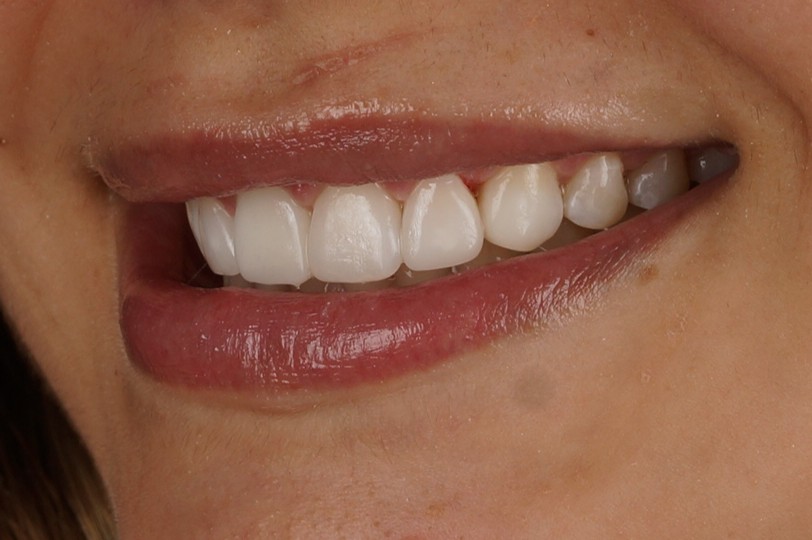
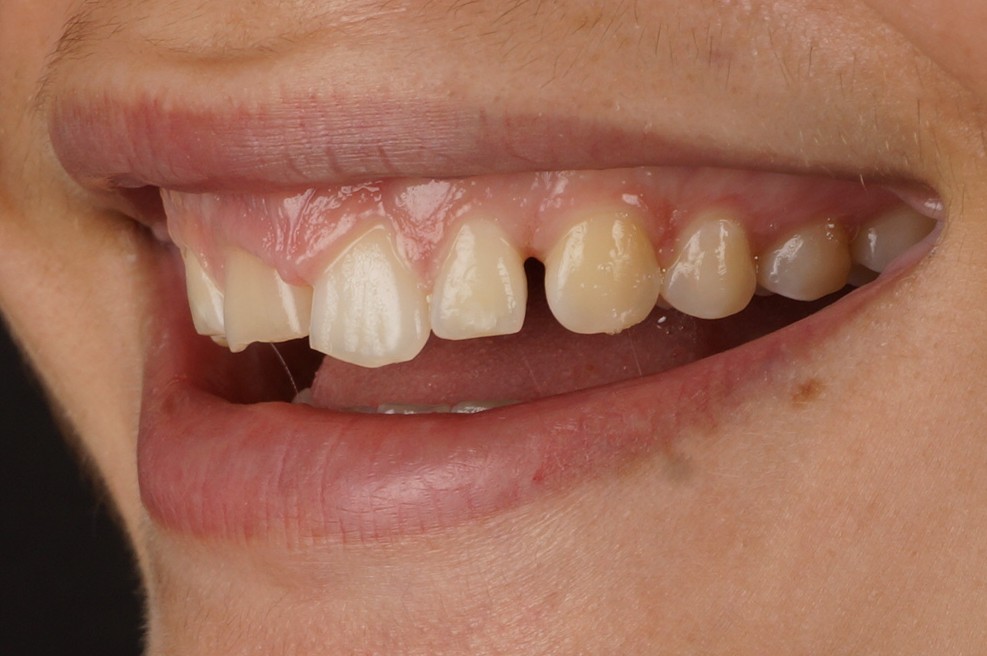
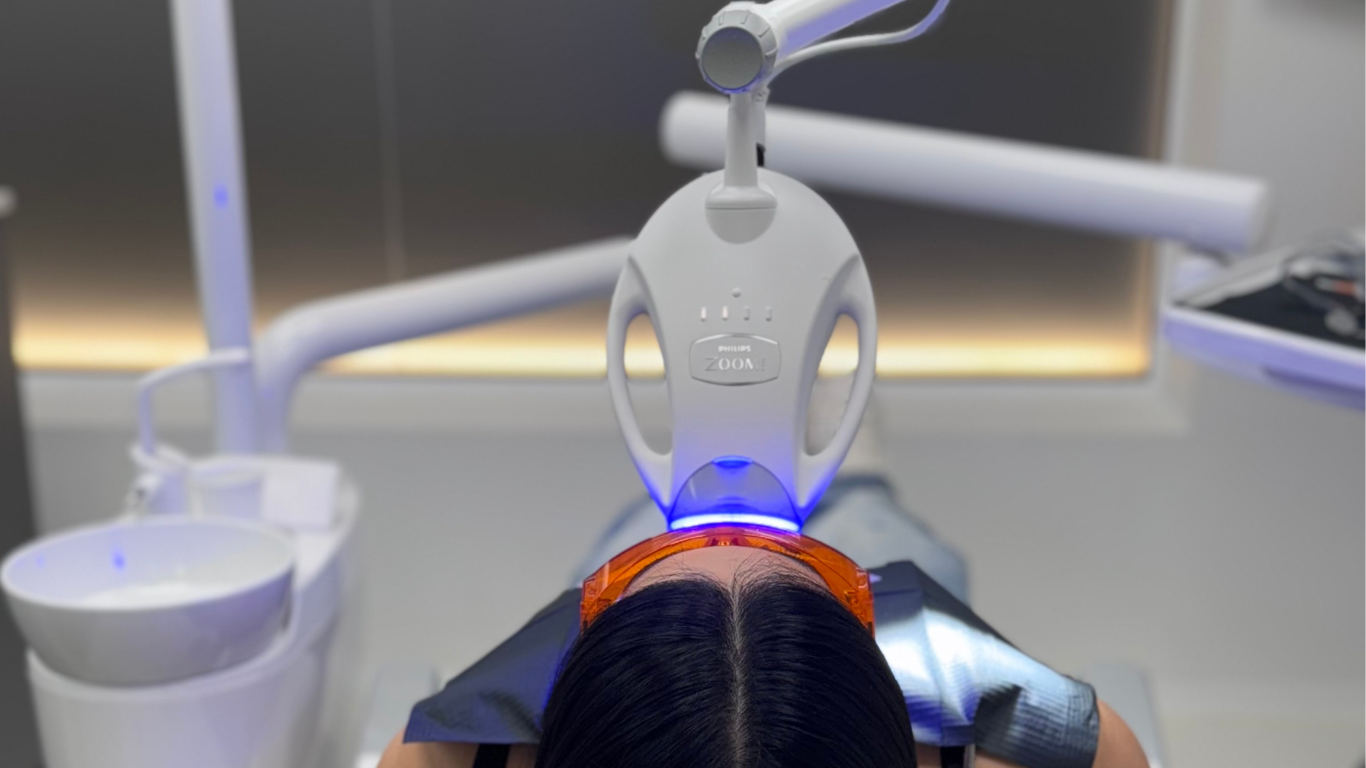
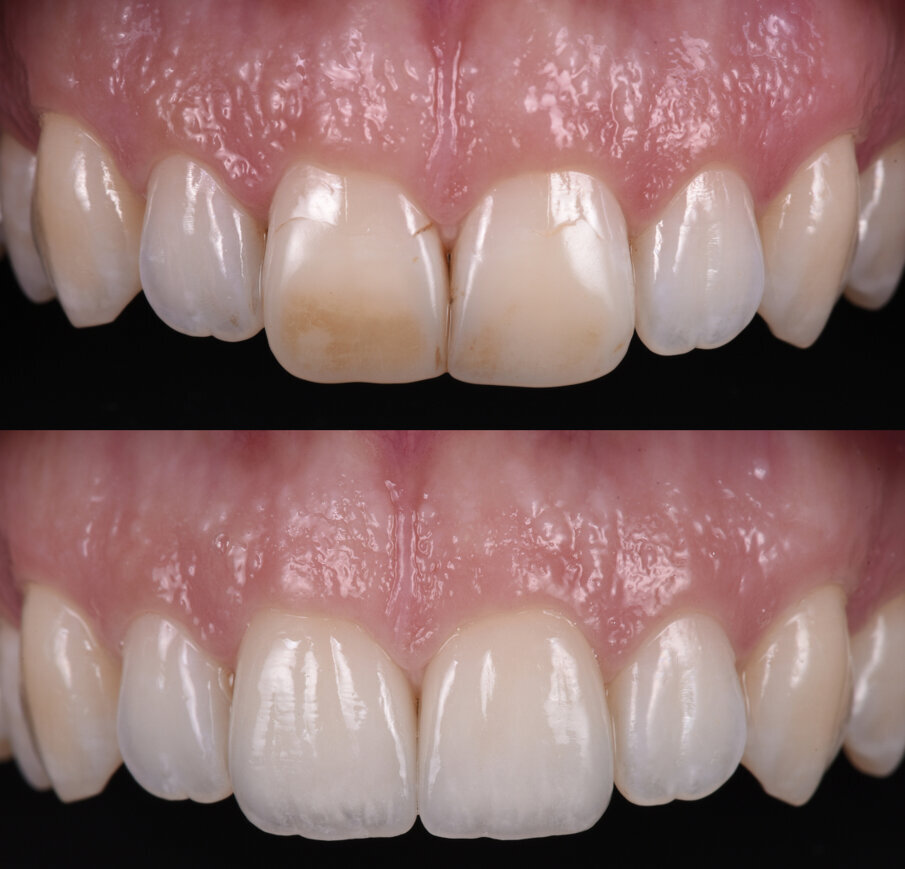
Real SMITA case:
1. Gum correction 2. Whitening Philips ZOOM 3. Composite restorations and veneers with Filtek White shade
What Are Composite Veneers?
Composite veneers are made from an aesthetic tooth-coloured resin.
In many cases, the material is applied directly to the tooth and sculpted in the clinic.
The dentist progressively works on the shape, volume, proportions, texture and colour.
Composite can be used to cover a large part of the visible tooth surface or to make smaller, more selective changes.
For example:
Rebuilding an edge.
Lengthening an incisor.
Closing a small space.
Improving the shape of a lateral incisor.
Correcting an asymmetry.
Repairing a fracture.
Not every composite treatment needs to cover the entire tooth.
In many cases, the most natural and conservative result is achieved by adding material only where it is genuinely needed.
What Are Porcelain Veneers?
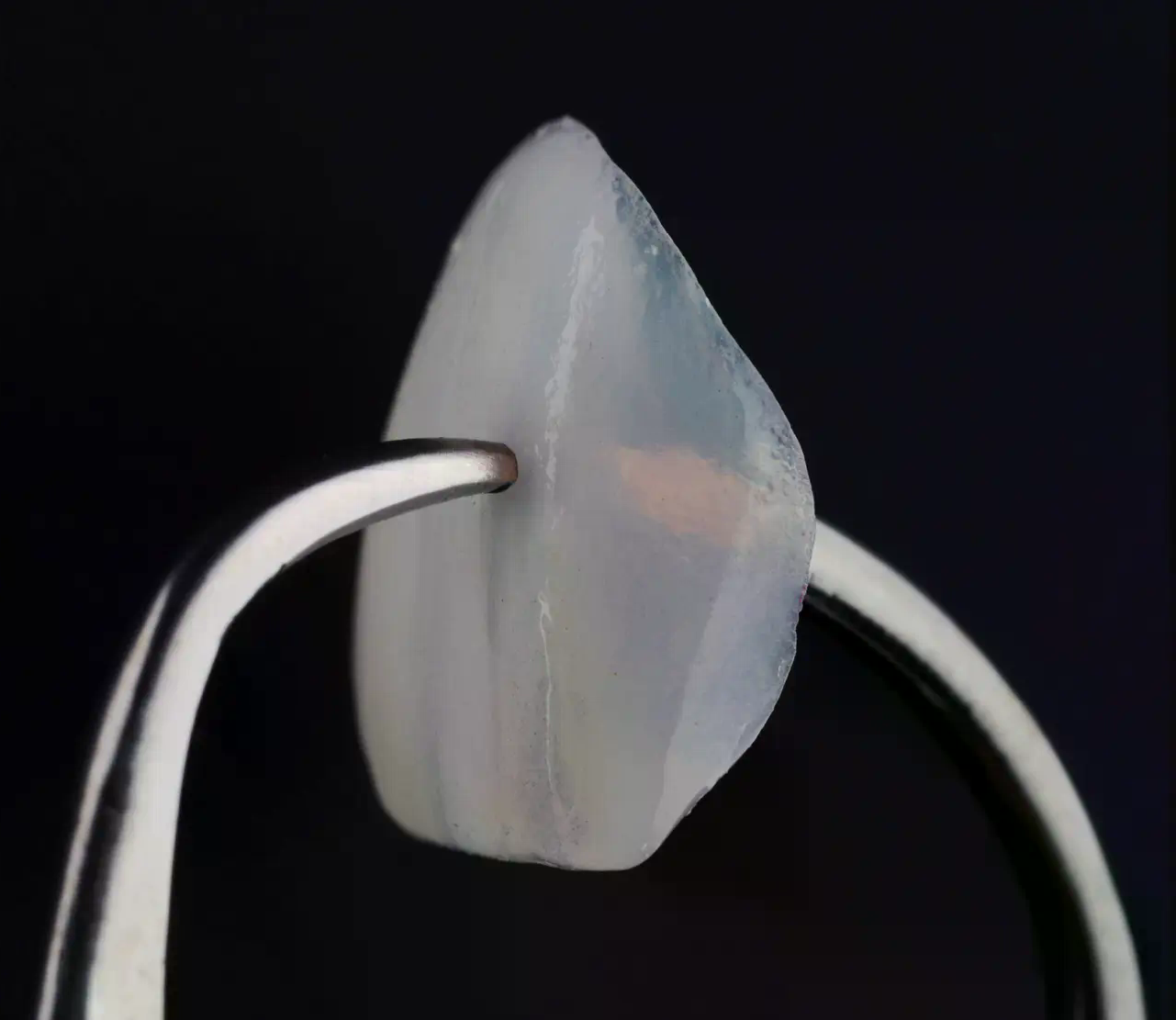
Porcelain veneers are thin restorations made outside the mouth, usually by a dental laboratory.
They are designed individually according to the shape, colour and proportions planned for each smile.
They are then bonded to the tooth surface using specific adhesive protocols.
Porcelain allows us to work with:
Translucency.
Luminosity.
Surface texture.
Depth of colour.
Precise proportions.
Aesthetic stability.
For the result to look natural, a veneer should not simply be white and smooth.
It needs to reproduce the way natural enamel reflects and transmits light.
The Main Difference Between Composite and Porcelain
The difference is not only the material itself.
The way treatment is planned, created, maintained and repaired also changes.
Composite is worked directly in the clinic and allows adjustments or repairs to be made relatively easily.
Porcelain is designed and manufactured indirectly, allowing very precise control over the final shape, colour and texture.
In general terms:
Composite offers flexibility, repairability and a direct treatment approach.
Porcelain offers high aesthetic stability and a ceramic surface that closely resembles natural enamel.
However, these advantages do not mean that one material is always superior to the other.
The indication depends on the individual case.
Which Material Produces the Most Natural Result?
Both materials can achieve natural-looking results when they are correctly indicated and carefully executed.
A well-layered composite veneer can blend beautifully with the natural tooth.
A well-designed porcelain veneer can reproduce enamel translucency, texture and luminosity with great precision.
Natural appearance depends on many factors:
Treatment planning.
Tooth shape.
The chosen shade.
Surface texture.
Material thickness.
Tooth position.
The quality of the enamel.
Integration with the gums.
The relationship with the lips and face.
Clinical and technical experience.
An excellent material can still produce an artificial result if the design is too white, too uniform, too bulky or unsuitable for the face.
The choice of material is therefore only one part of smile design.
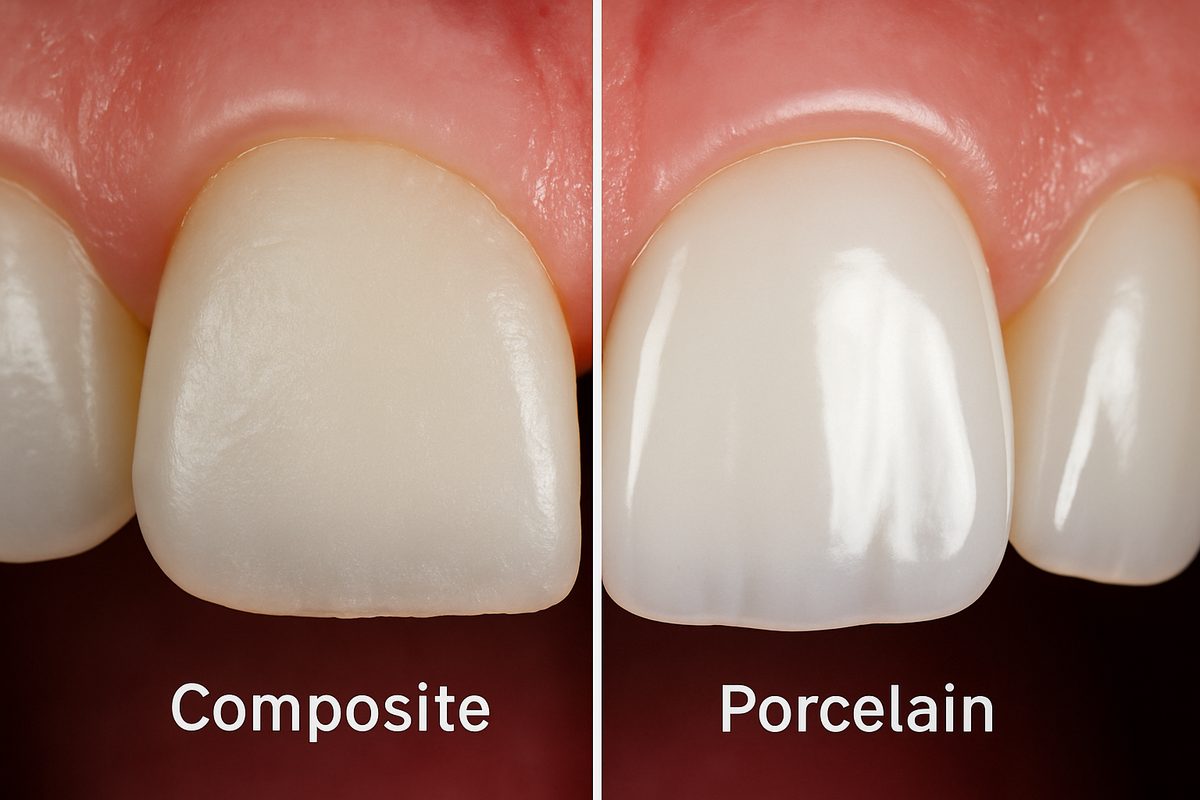
Colour Stability
One of the best-known differences between the two materials is colour stability.
Porcelain generally maintains its colour and gloss better over time.
Its surface is less likely to absorb stains than composite resin.
Composite may experience:
Loss of gloss.
Changes in texture.
Surface staining.
Darkening around the margins.
Colour changes.
This does not mean that composite will necessarily look unattractive.
With good oral hygiene, regular reviews and periodic polishing, it can remain in good condition.
However, it does require a greater commitment to maintenance.
How Long Do Composite and Porcelain Veneers Last?
There is no exact lifespan that applies to every patient.
Longevity depends on:
The bite.
Bruxism.
The amount of enamel.
The extent of the restoration.
The adhesive technique.
Habits.
Oral hygiene.
Diet.
Maintenance.
Correct case selection.
Porcelain veneers can offer high survival rates over the medium and long term when they are correctly indicated and bonded, particularly when enamel is preserved.
Composite restorations can also perform very well clinically, but they often require more maintenance, polishing, repairs or partial replacement over time.
Rather than promising an exact number of years, it is more useful to explain the type of maintenance each option requires.
Which Option Is More Conservative?
Composite can be extremely conservative.
In many situations, it can be added directly onto the enamel with minimal preparation or no tooth reduction at all.
This makes it particularly interesting for:
Younger patients.
Small aesthetic changes.
Worn edges.
Small lateral incisors.
Localised spaces.
Testing aesthetic changes.
Cases where future flexibility is important.
However, we should not assume that every composite treatment is automatically “no-prep”.
If too much material is added to tilted or poorly positioned teeth, the result may become bulky or unnatural.
In these cases, moving the teeth first with orthodontics may be the more conservative option.
Porcelain veneers can also be highly conservative when properly planned.
Whenever clinically possible, the aim should be to keep preparation within the enamel, as bonding to enamel is especially favourable.
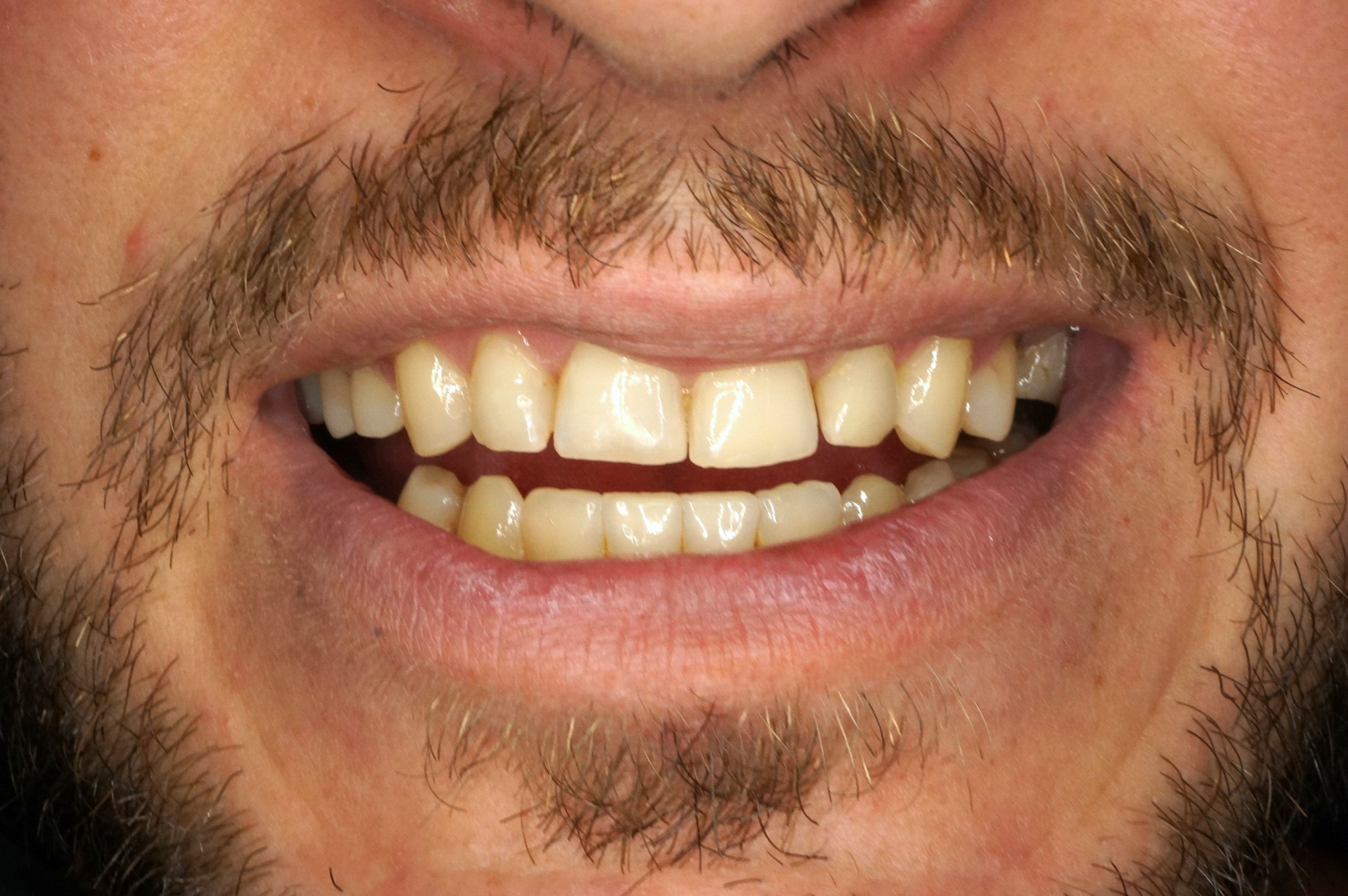
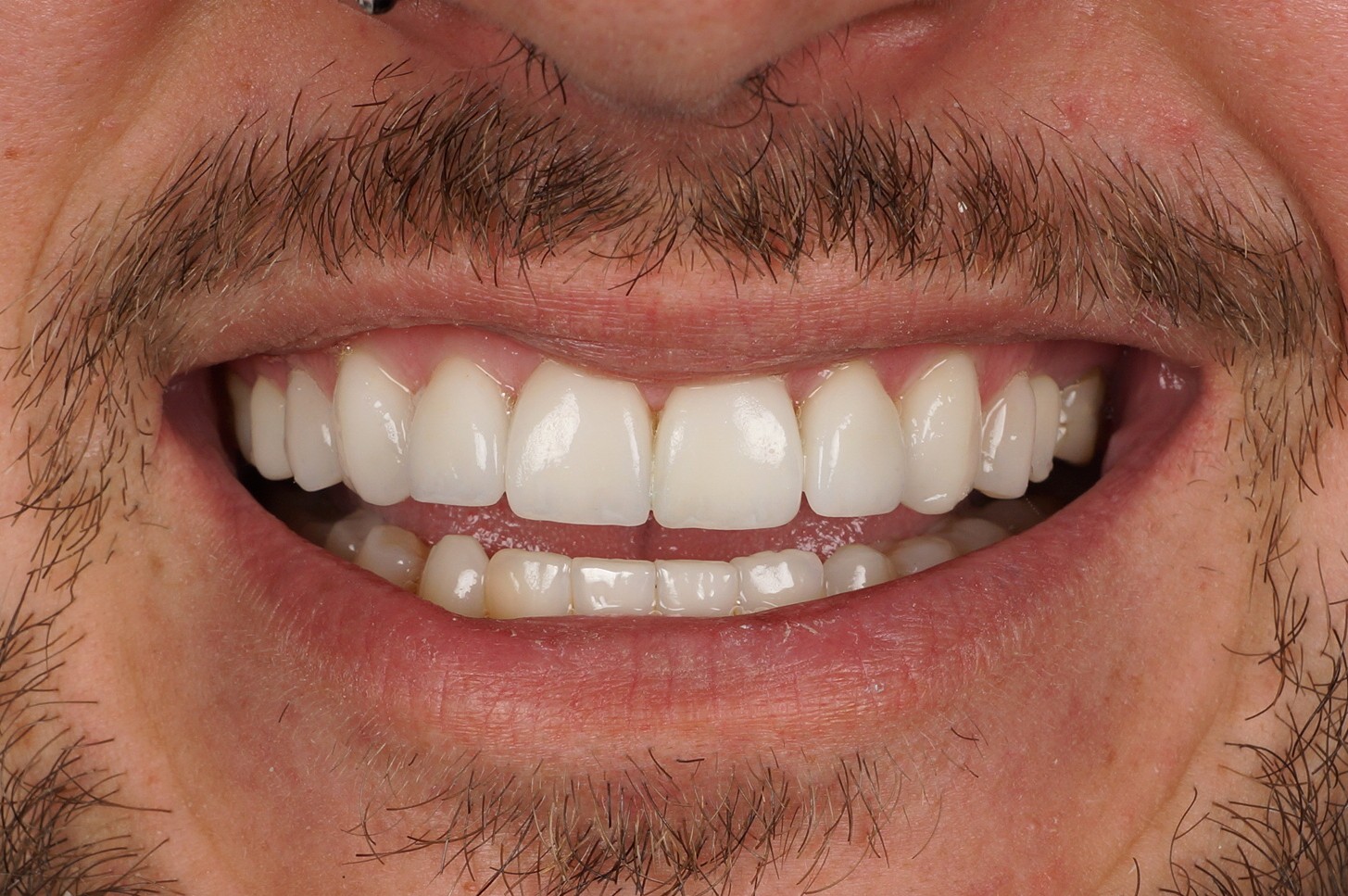
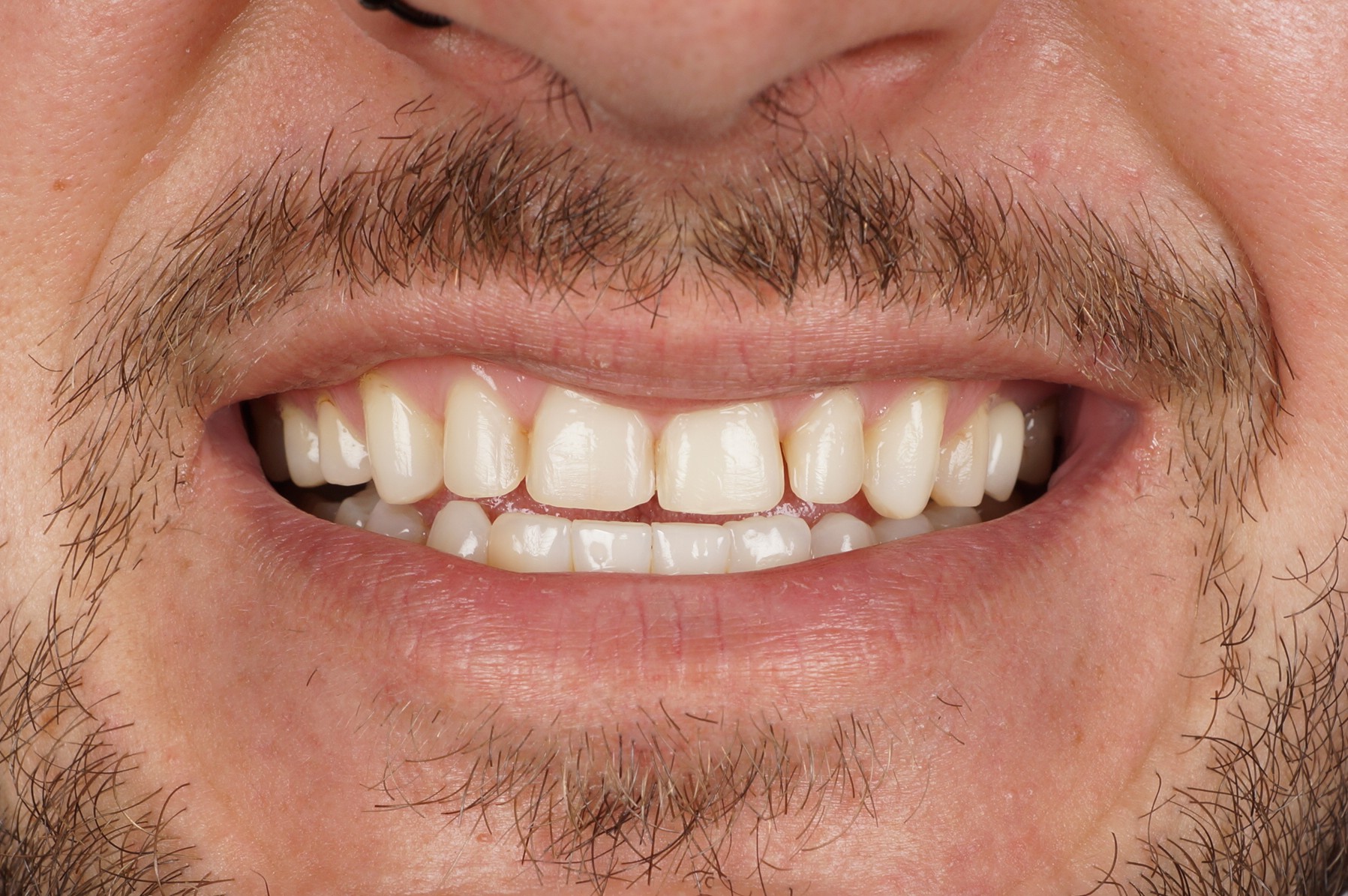
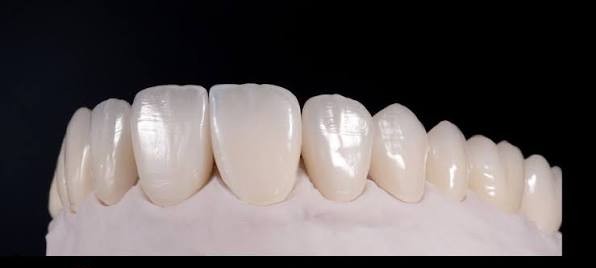
Real SMITA case:
1. Initial situation 2. Prepared teeth (very soft minimum preparation) 3. 10 upper Emax veneers color Bleach 2
Do Porcelain Veneers Always Require Tooth Preparation?
Not always to the same extent.
The amount of preparation depends on:
Tooth position.
The initial colour.
The required thickness.
The desired change in shape.
Existing restorations.
Available space.
The type of smile.
In some cases, preparation can be minimal.
In others, space needs to be created to avoid a bulky result.
There are also cases where no-preparation veneers may be indicated, but they are not suitable for everyone.
Placing porcelain without creating enough space can result in teeth that look too thick, too long or too prominent.
A conservative approach does not mean avoiding all preparation at any cost.
It means performing only the preparation necessary to achieve a healthy, functional and aesthetic result.
Repair and Maintenance
Composite can be polished, modified and repaired directly in the clinic.
If a small fracture or area of staining appears, it is often possible to treat only that specific area.
This repairability is one of its main advantages.
Porcelain usually requires less surface maintenance, but a significant fracture may be more complex to repair.
In some cases, an intraoral repair is possible. In others, the veneer may need to be replaced.
The choice therefore also depends on how the patient values:
The possibility of future adjustments.
The need for regular maintenance.
Aesthetic stability.
Long-term predictability.
Main Advantages of Composite
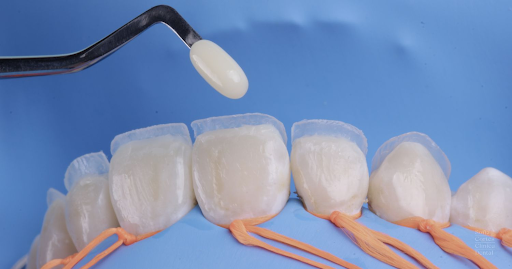
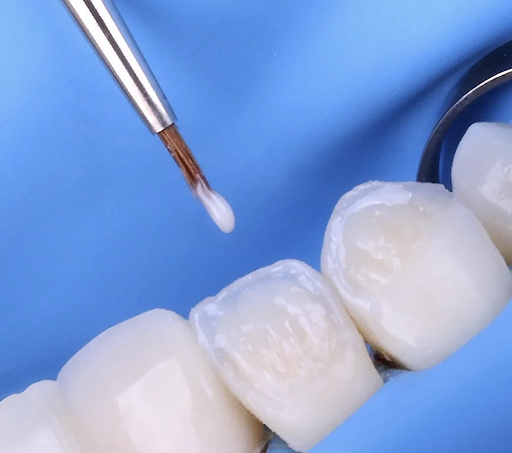
Composite veneers or restorations may offer:
A highly conservative approach.
Direct treatment.
The possibility of modifying the shape in the clinic.
Relatively simple repairs.
A shorter treatment time in some cases.
The possibility of working in phases.
Excellent integration for small modifications.
A lower initial investment than porcelain in many cases.
They are particularly useful when the required change is limited and there is enough healthy enamel.
Possible Limitations of Composite
Composite may also involve:
A greater need for maintenance.
Progressive loss of gloss.
A higher tendency to stain.
Surface wear.
Small fractures.
Changes in texture.
Greater dependence on direct clinical technique.
When composite is used to transform an entire smile, the clinical time and precision required can be considerable.
It is also important for the patient to understand that polishing and occasional repairs are a normal part of maintenance.
Main Advantages of Porcelain
Porcelain veneers may offer:
High colour stability.
Excellent luminosity.
A texture very similar to enamel.
A smooth and stable surface.
Precise control of shape and proportions.
Good resistance to surface wear.
Detailed planning of the final result.
They may be especially useful for more extensive changes in colour, shape, texture or proportions.
Possible Limitations of Porcelain
Porcelain veneers also involve factors that need to be considered:
They require planning and laboratory fabrication.
They may require tooth preparation.
Repair can be more complex.
A significant fracture may require replacement.
The initial investment is usually higher.
They are not suitable for every tooth or every bite.
They require highly precise bonding and clinical execution.
Porcelain does not automatically make a treatment better or more premium.
Its quality depends on correct indication, design, preparation, laboratory work, bonding and functional control.
Which Is Better for Small Changes?
For small modifications in shape, edges, spaces or asymmetries, composite can be an excellent option.
It allows us to treat only the areas that need improvement while preserving most of the original tooth structure.
For example, it may be suitable for:
Repairing a fractured edge.
Slightly lengthening a tooth.
Closing a small diastema.
Improving the shape of a lateral incisor.
Balancing two teeth.
In these situations, covering the entire tooth surface with porcelain may not be necessary.
Which Is Better for a Complete Transformation?
When a broader change in colour, shape, texture and proportions is desired, porcelain may offer greater aesthetic stability.
However, before recommending multiple veneers, we need to assess:
Tooth position.
The bite.
The enamel.
Gum health.
The initial colour.
Whether every tooth genuinely needs to be covered.
More conservative alternatives.
A complete transformation does not mean that every tooth must receive the same treatment.
It is possible to combine porcelain, composite, whitening, orthodontics and untreated natural teeth.
Can Composite and Porcelain Be Combined?
Yes.
A smile design does not need to rely on a single material.
In some cases, porcelain may be used on teeth that require a more extensive change, while composite is used in smaller areas that need minor corrections.
Treatment may also combine:
Invisible orthodontics.
Teeth whitening.
Aesthetic contouring.
Composite.
Porcelain veneers.
Gum treatment.
The key is to ensure that every element is coherent in colour, shape, texture and function.
The Importance of Whitening Before Veneers
When visible natural teeth will remain untreated, whitening should often be considered before choosing the final shade of the restorations.
Natural teeth can become lighter.
Composite and porcelain do not change colour through whitening.
For this reason, we may first improve the shade of the natural teeth and, once the colour has stabilised, select the final shade of the veneers or restorations.
This allows for better integration and helps avoid having to replace restorations later because of colour differences.
Tooth Position Before Choosing the Material
Before deciding between composite and porcelain, we need to assess the position of each tooth.
When there is:
Crowding.
Rotations.
Significant tooth inclination.
Displaced dental midlines.
Lack of space.
Bite problems.
Orthodontic treatment may be recommended first.
Moving the teeth may reduce the amount of restorative material needed and help avoid excessive preparation.
The question is not always: “Composite or porcelain?”
Sometimes, the correct question is: “Do the teeth need to be placed in a better position first?”
The Bite and Bruxism
The bite directly affects the longevity of veneers.
If excessive forces, unfavourable contacts or bruxism are present, both composite and porcelain may fracture or wear.
Before treatment, we assess:
Dental contacts.
Jaw movements.
Existing wear.
Previous fractures.
Posterior stability.
Clenching habits.
In some cases, it may be necessary to:
Correct tooth position.
Stabilise the bite.
Rebuild posterior teeth.
Use a protective night guard.
Carry out more frequent reviews.
No material is indestructible.
Functional planning is just as important as aesthetic material selection.
Healthy Gums Before Treatment
Veneers should integrate with healthy gums.
If there is inflammation, bleeding or plaque accumulation, this should be treated before starting aesthetic treatment.
We also assess:
Gum height.
Gingival symmetry.
Recession.
The amount of gum visible.
The relationship between the gums and tooth length.
A good result does not depend only on the veneer margin.
It also depends on how the restoration relates to the gum tissue and whether the patient can maintain good oral hygiene.
Which Option Stains More?
Composite has a greater tendency to develop surface staining and lose gloss.
Coffee, tea, smoking and certain habits may accelerate these changes.
Porcelain generally has a more stable surface in relation to staining.
However, the margins, bonding material, natural teeth and gums still require maintenance.
Neither option removes the need for hygiene, reviews and ongoing care.
Which Material Resembles Natural Enamel More Closely?
Porcelain has optical properties that allow it to reproduce enamel translucency and luminosity very effectively.
However, high-quality composite, carefully layered and polished, can also blend beautifully.
The final result depends more on the complete execution than on a purely theoretical comparison between materials.
Each material should be used according to its properties and the genuine needs of the case.
Which Option Is More Suitable for Younger Patients?
In younger patients, we tend to prioritise enamel preservation and the possibility of future modification or repair.
For this reason, composite can be a very suitable option in many cases.
It may also be preferable to wait, monitor the situation or carry out orthodontics before recommending a more extensive definitive treatment.
Age alone does not determine the choice.
We need to assess dental maturity, the bite, the extent of the problem, oral hygiene and expectations.
Which Option Looks More Premium?
A premium result does not depend exclusively on using porcelain.
Premium treatment is defined by:
A complete diagnosis.
Personalised planning.
Tooth preservation.
Correct material selection.
Clinical precision.
Technical quality.
Integration with the face.
Long-term follow-up.
A well-indicated composite treatment can be much better than unnecessary porcelain.
And a carefully planned porcelain veneer can achieve a result that would not be as predictable with composite.
Quality lies in the decision, not only in the material.

How We Choose Between Composite and Porcelain at SMITA
At SMITA Advanced Smile Design, we begin by listening to the patient.
We want to understand:
What they would like to change.
What type of result they like.
What result they want to avoid.
How much change they want.
What level of maintenance they are prepared to accept.
We then assess:
Dental health.
Available enamel.
Tooth position.
The bite.
Tooth wear.
Colour.
Proportions.
The gums.
The lips.
Facial harmony.
We also assess whether veneers are genuinely necessary or whether a more conservative alternative may be appropriate.
The treatment plan may include:
Whitening only.
Invisible orthodontics.
Selective composite restorations.
Composite veneers.
Porcelain veneers.
A combination of techniques.
Gum treatment.
We do not believe every smile should be treated in the same way.
We choose the material that can achieve a natural, functional and stable result while respecting as much healthy tooth structure as possible.
Frequently Asked Questions
Which Is Better, Composite or Porcelain?
It depends on the case. Composite can be more conservative, adjustable and easier to repair. Porcelain generally offers greater colour and texture stability. The best option is the one that matches the specific needs of the smile.
Which Veneers Last Longer?
Porcelain veneers generally offer greater aesthetic stability over time. Composite can last for many years but usually requires more maintenance, polishing and occasional repairs.
Do Composite Veneers Stain?
They can develop staining and lose gloss over time, especially with certain habits. Periodic polishing helps maintain their appearance.
Do Porcelain Veneers Stain?
Porcelain has high colour stability and is less susceptible to surface staining. However, the margins, gums and natural teeth still require care.
Can Composite Be Repaired?
Yes. One of its main advantages is that it can often be modified and repaired directly in the clinic.
Can Porcelain Be Repaired?
Some small fractures may be repairable, but in certain situations the veneer may need to be replaced.
Do the Teeth Need to Be Shaved Down?
It depends on the case. Composite may require minimal or no preparation. Porcelain may require controlled preparation to create space and avoid excess bulk.
Can I Choose Any Shade?
The shade should be selected according to the skin, lips, natural teeth and complete smile. An excessively white shade may look artificial.
Do I Need Whitening First?
In many cases, whitening the natural teeth first is recommended if they will remain visible. The shade of the restorations is selected afterwards.
Can I Have Veneers If I Have Bruxism?
It may be possible in some cases, but bruxism and the bite need to be assessed carefully. A protective night guard and regular reviews may be required.
Can I Start with Composite and Change to Porcelain Later?
In some cases, yes. However, it should be planned from the beginning to preserve enamel and avoid unnecessary treatment.

Conclusion
Both composite and porcelain veneers can achieve excellent aesthetic results.
Composite offers a direct, conservative, adjustable and repairable option.
Porcelain offers high stability of colour, texture and luminosity.
However, neither option is always better.
The choice depends on tooth position, enamel, the bite, colour, wear, the extent of the desired change and the maintenance each patient requires.
At SMITA Advanced Smile Design in Barcelona, we do not choose the material before studying the smile.
First, we establish the diagnosis.
Then, we design the result.
Finally, we select the most appropriate technique to achieve a smile that is natural, personalised, functional and stable.
Book an assessment at SMITA and discover which option is best suited to your smile.