–A patient wants to improve their smile and already has a fairly clear idea of what they would like to achieve.
Straighter-looking teeth.
Better proportions.
A more harmonious smile.
Perhaps closing spaces, correcting certain shapes or rebuilding worn edges.
And then a very logical question appears:
Why should I have Invisalign if I am going to have veneers afterwards?
At first, it may seem as though we are adding an unnecessary treatment.
But in selected cases, the opposite is true.
Moving the teeth first can allow us to perform less restorative dentistry afterwards.
It may reduce the volume of future restorations.
It may decrease the amount of natural tooth structure that needs to be modified.
It can help us preserve more enamel.
And in some patients, it may even reduce the number of veneers required or make them unnecessary altogether.
At SMITA Advanced Smile Design in Barcelona, we do not see Invisalign and veneers as two independent treatments.
When both may form part of the same case, we begin with a different question:
Where should the teeth be positioned before we decide how to change their shape?
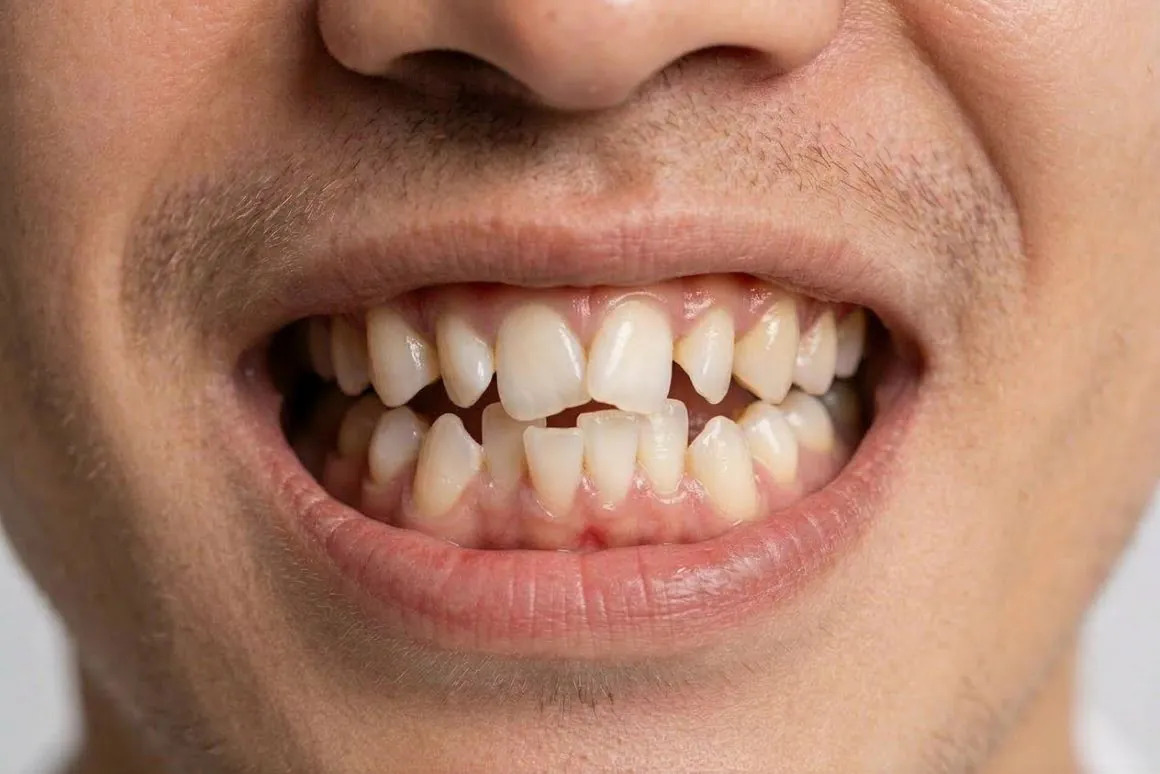
Before changing the shape of a tooth, we should study its position
A veneer can change the visual shape, size, certain proportions and colour of a tooth.
But it is not always the most appropriate tool for compensating for an unfavourable tooth position.
Imagine a slightly rotated incisor.
From the front, it may appear narrower simply because less of its facial surface is visible.
If we try to create perfect symmetry only by adding restorative material, we may end up making the tooth excessively bulky.
Now imagine an incisor positioned too far forwards.
To create visual alignment with a veneer, more tooth structure may need to be reduced from the front surface.
Or consider crowded teeth with different inclinations.
Trying to turn them directly into a perfectly uniform line using restorations may require unnecessary compromises.
In these situations, the issue is not only the shape of the tooth.
It is also its position.
And if we correct the position first, the restorative treatment afterwards can become considerably smaller.
Why can Invisalign make veneers more conservative?
A veneer needs a certain amount of space to integrate correctly with the tooth and surrounding tissues.
When a tooth is already positioned favourably, we can design the restoration while respecting its anatomy much more effectively.
But if the tooth sits too far forwards, is rotated or inclined, we may find ourselves trying to compensate for a three-dimensional positional problem with a surface restoration.
Moving the tooth beforehand can help us:
Place it in a more favourable position
Create space where it is actually needed
Distribute existing spaces more effectively
Correct inclinations
Improve symmetry
Optimise the smile line
Reduce the volume of composite or porcelain required
Preserve more enamel
In selected cases, this orthodontic preparation may allow us to work with very minimal restorations.
In others, it may make a more additive approach possible where otherwise more tooth structure would need to be removed.
This does not mean that Invisalign automatically turns every veneer case into a “no-prep” treatment.
Every situation is different.
But it can create much more favourable biological and aesthetic conditions before restorative treatment begins.
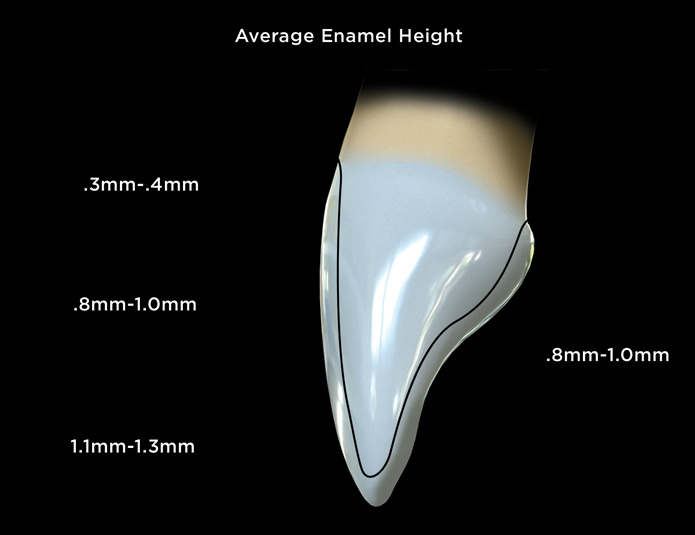
Why is preserving enamel so important?
When we talk about conservative aesthetic dentistry, preserving tooth structure is not simply a philosophical preference.
Enamel is an extremely valuable tissue.
Whenever possible, we want to preserve it.
With adhesive veneers, having a good amount of enamel available can support predictable bonding and allows us to work in a more respectful way.
So before preparing a tooth to compensate for an unfavourable position, we should ask:
Can we move it first?
Can we improve its inclination?
Can we distribute the space more effectively?
Can we reduce the amount of restoration required?
Modern aesthetic dentistry should not simply look for the fastest route towards a particular image.
It should look for the most logical route to that result while preserving as much natural tissue as possible.
A rotated tooth does not always need a larger veneer
Rotations are a good example.
When a tooth is rotated, it may visually appear too narrow or irregular.
If we try to correct this appearance using only composite or porcelain, we may need to add material in certain areas and remove structure in others.
This can alter the anatomy and increase the volume of the restoration.
After correcting the rotation orthodontically, however, the situation may look completely different.
Perhaps the tooth already has an appropriate shape.
Perhaps it only needs a very small adjustment.
Perhaps a worn edge needs to be rebuilt.
Or perhaps it no longer needs any restorative treatment at all.
This is why we cannot always know how many veneers a person needs before properly assessing tooth position.
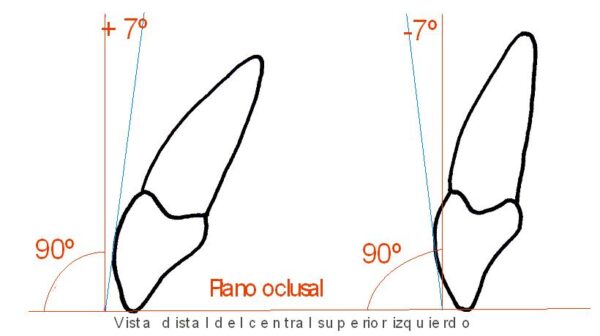
Inclined teeth can also be visually misleading
The inclination of a tooth significantly changes how we perceive it.
An incisor inclined forwards may appear more prominent.
One inclined inwards may look hidden and smaller.
Inclination can also affect how much tooth is visible when smiling and how the teeth relate to the lips.
If we try to solve this exclusively with veneers, we may create restorations that are too bulky or require more preparation than we would like.
In selected cases, aligners can correct the inclination first.
We can then reassess the smile from a much more favourable starting point.
Only then do we decide whether composite, porcelain or simply the natural tooth is the best option.
Invisalign can help distribute spaces before veneers
Spaces between teeth do not always need to be closed directly with restorations.
Imagine that there is a space between the two central incisors.
We could simply make both teeth wider.
But what happens if this makes the central incisors disproportionately wide for their length?
We may close the space, but create less natural proportions.
In some cases, orthodontics can be used to redistribute the space.
The teeth can be moved so that the remaining spaces are positioned where small additions of composite or porcelain can create more harmonious proportions.
This concept is particularly important when there are:
Small teeth
Narrow lateral incisors
Congenitally missing teeth
Multiple spaces
Significant differences in tooth size
Asymmetries
The question should not simply be:
“How do we close the space?”
But rather:
“Where should that space be positioned so that we can create a well-proportioned smile?”
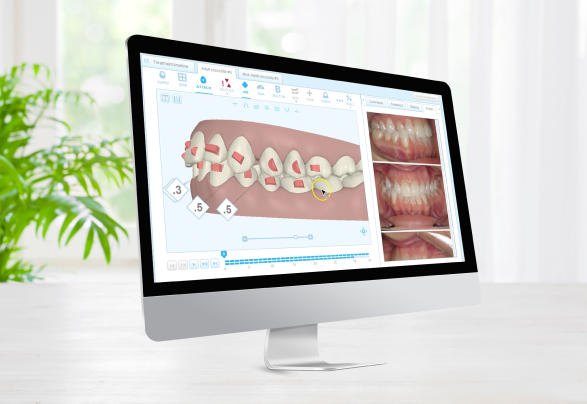
We plan the final tooth position with future restorations in mind
When we already know that restorative treatment is likely to follow orthodontics, the orthodontic objective may be different from simply aligning every tooth.
We need to think about the final result from the beginning.
This means considering aspects such as:
How much space will be needed to rebuild a tooth
What final tooth length we want to create
What proportions the smile should have
Where the gingival margins should ideally be
How spaces should be distributed
Which teeth are likely to require restoration
How tooth position will affect the bite
Where the teeth should finish before the aesthetic phase begins
This interdisciplinary planning is fundamental.
We do not want to complete orthodontics and only then discover that the teeth are straight but not positioned ideally for the final smile design.
Orthodontics should prepare the foundation for the aesthetic treatment that follows.
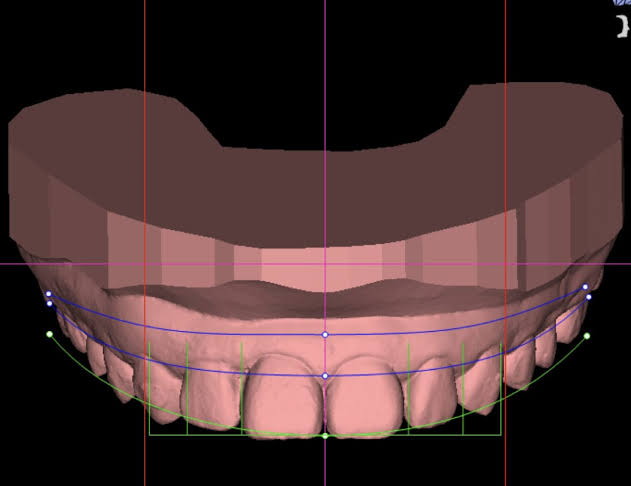
Digital Smile Design before Invisalign
In some cases, smile design can begin even before the first aligner is fitted.
Using photographs, facial analysis and digital planning, we can study which tooth positions may be more favourable within the future smile.
This allows us to work backwards.
First, we imagine the desired result.
Then we analyse which orthodontic movements could help us reach it.
Only afterwards do we decide which restorations are still necessary.
This is very different from thinking:
First orthodontics.
Then aesthetics.
As though they were two unrelated treatments.
In a truly interdisciplinary approach, both belong to the same plan.
The position of the gingival margins may also change
Moving teeth affects more than alignment.
It can also change how we perceive the relationship between the teeth and gums.
Vertical position and inclination can modify the visual architecture of the smile.
So before deciding that we need gum correction or that a tooth must be lengthened with a restoration, we also need to analyse its position.
In some situations, orthodontics may help create a more favourable gingival relationship.
In others, periodontal treatment or a small aesthetic gum correction may still be required.
What matters is deciding this within a complete plan.
Because teeth, gums and lips form a single composition.
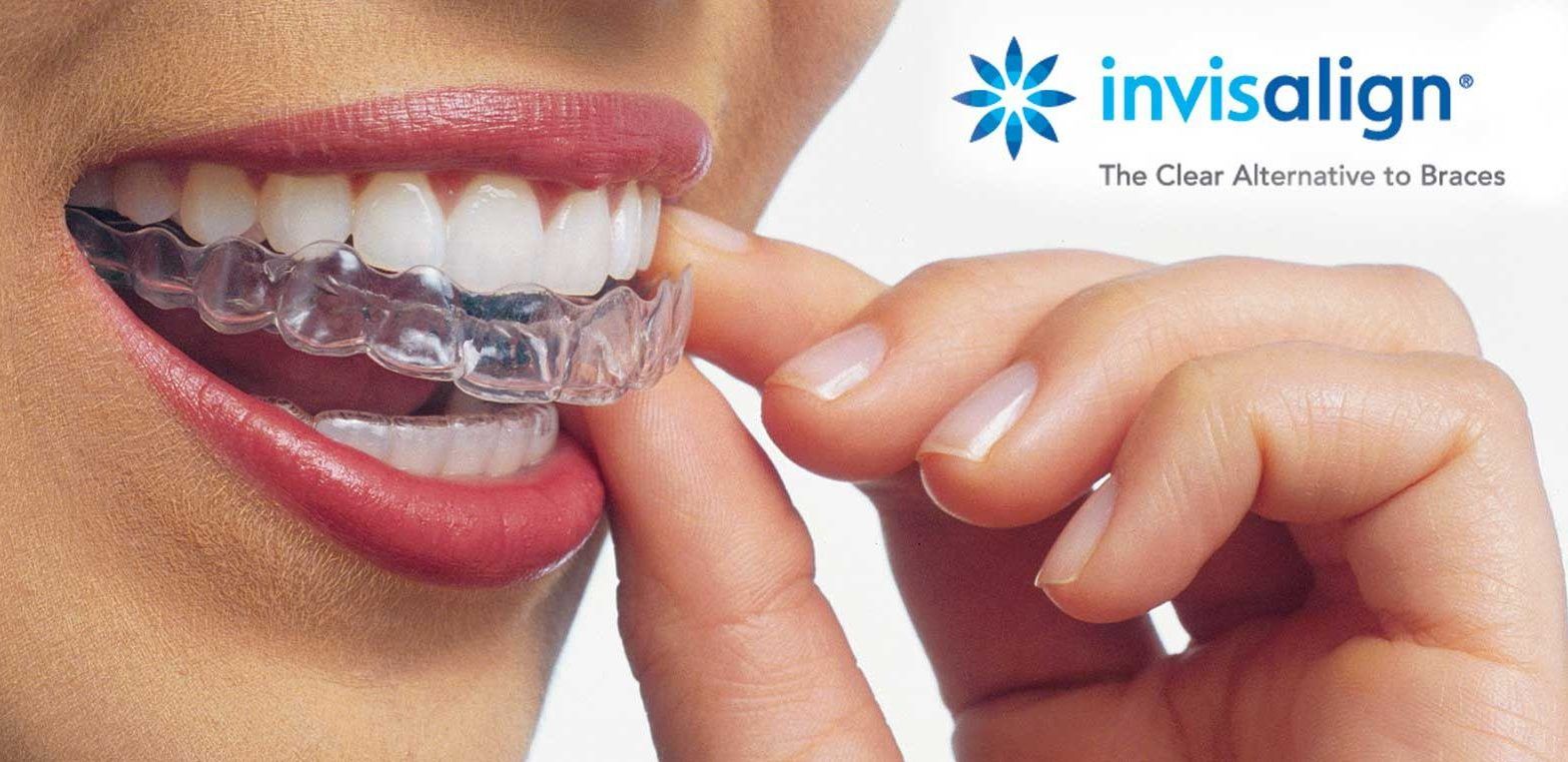
Do you always need Invisalign before veneers?
No.
And this is important to state clearly.
Some patients already have well-positioned teeth, a stable bite and aesthetic concerns that are mainly related to:
Shape
Colour
Minor wear
Fractures
Proportions
Old restorations
In these situations, adding an orthodontic phase may not provide enough benefit to justify it.
We do not recommend orthodontics simply because it makes the treatment appear more comprehensive.
There must be a clinical reason.
Orthodontics before veneers makes sense when it can significantly improve:
Tooth position
The amount of natural structure we can preserve
Proportions
Space distribution
Function
Stability
The quality of the final aesthetic result
A conservative treatment is not necessarily a long treatment. It is a treatment that uses only what each individual case genuinely requires.
What if I want to avoid wearing aligners?
This is a completely reasonable question.
A patient may prefer a faster solution.
Our role is to explain the alternatives and the consequences of each one.
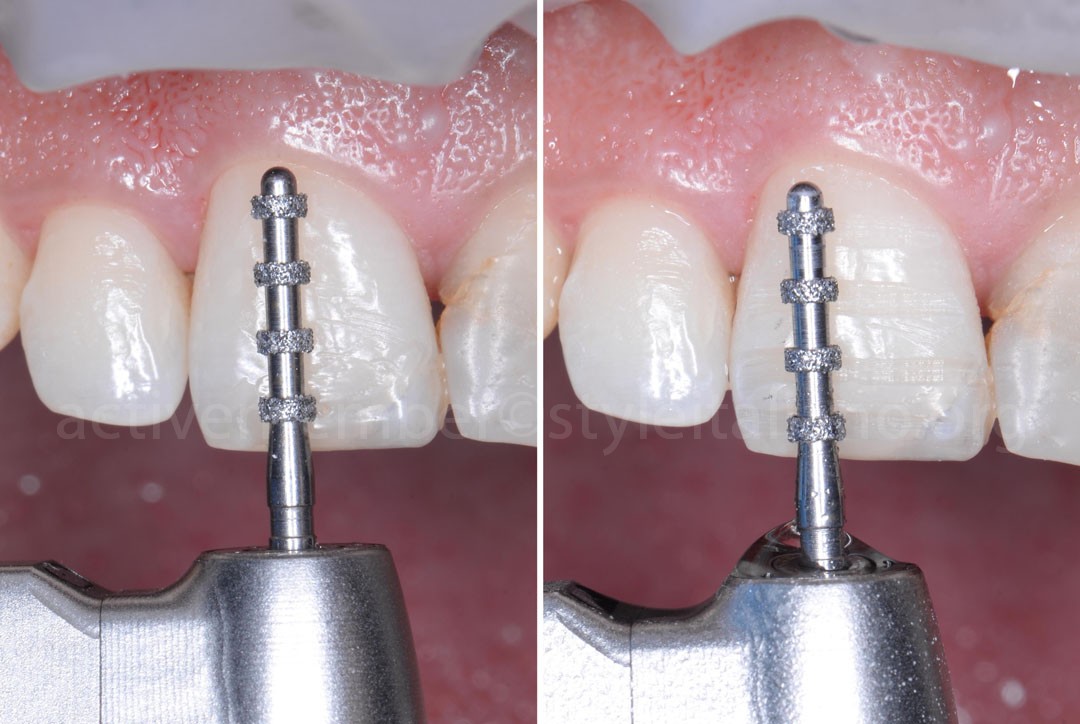
There may be situations where it is technically possible to compensate for an unfavourable tooth position using restorations.
But we need to understand what that involves.
How much tooth structure would need to be prepared?
How much volume would the restoration require?
Would the proportions remain natural?
Would the bite remain stable?
Is there an alternative that preserves more tooth structure?
The decision should be made with full information.
It is not about saying that one option is always correct and the other is wrong.
It is about understanding which compromises come with each path.
Short orthodontic treatment does not automatically mean simple orthodontics
In aesthetic cases, sometimes only limited tooth movement is required.
But a localised treatment still needs precise planning.
Even small movements need to respect:
Root position
Periodontal tissues
The bite
Stability
Available space
Biological limits
The final restorative objective
This is why an appropriate orthodontic diagnosis is always necessary.
The aligner is simply a tool.
The quality of treatment depends primarily on the planning behind it.
Will I still need veneers after Invisalign?
Not necessarily.
This is one of the most interesting aspects of combined treatment.
Some patients begin thinking that they will need several veneers after Invisalign.
But once the teeth are aligned and we reassess the smile, the situation may look quite different.
Perhaps whitening is all that is needed.
Perhaps small worn edges can be rebuilt with composite.
Perhaps only one or two teeth require a shape correction.
Perhaps a small number of carefully planned veneers are still beneficial.
Or perhaps the patient is already happy with the improvement achieved through orthodontics alone.
Orthodontics can reduce the amount of restorative treatment needed because it allows us to evaluate the natural dental anatomy from a more favourable position.
After Invisalign, we reassess the smile
Once the orthodontic phase is complete, we do not automatically assume that the original restorative plan remains exactly the same.
We look again.
We reassess:
Tooth position
Proportions
Colour
Incisal edges
Wear
Gums
The smile line
The relationship with the lips
The bite
Sometimes we discover that less treatment is required.
And that is a positive outcome.
Treatment planning should be able to adapt to the new situation.
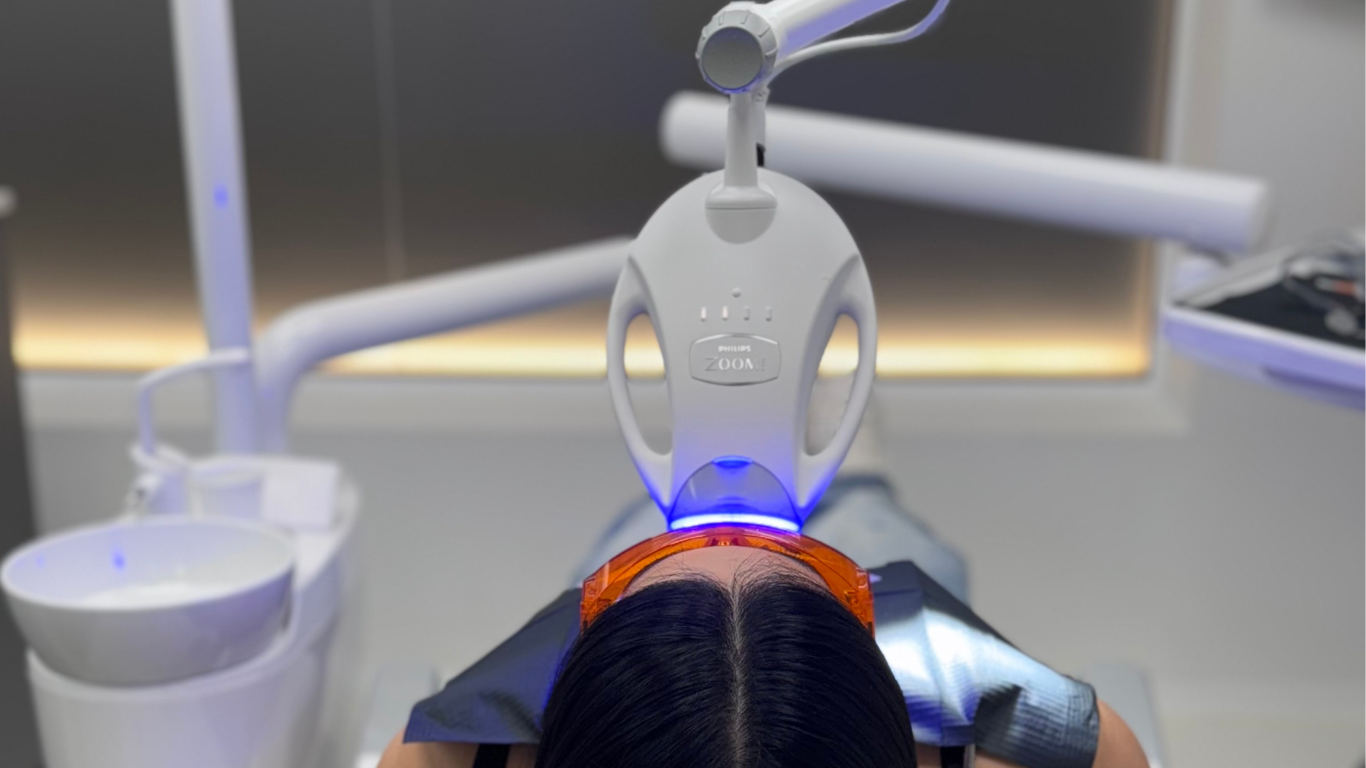

Whitening before definitive restorations
When composite or veneers are planned after Invisalign and the patient would also like a brighter smile, whitening may be advisable before the definitive restorations are completed.
This allows us to improve the colour of the natural teeth before selecting the final shade of the restorations.
A possible sequence may be:
Orthodontics
Reassessment
Whitening
Colour stabilisation
Mock-up or design refinement when indicated
Definitive restorations
The exact sequence depends on the individual case.
But planning colour before restoring can help create a much more coherent result.
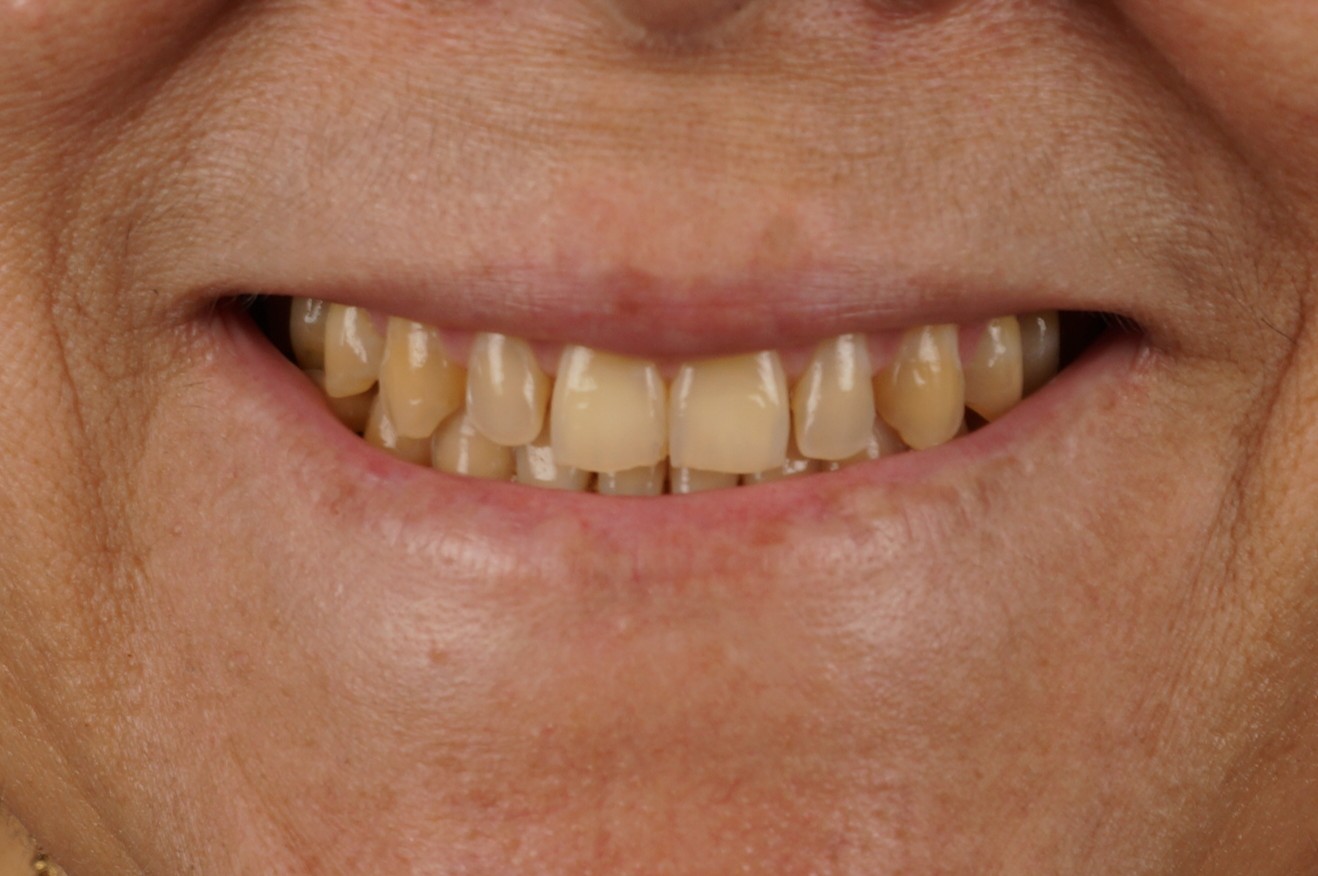
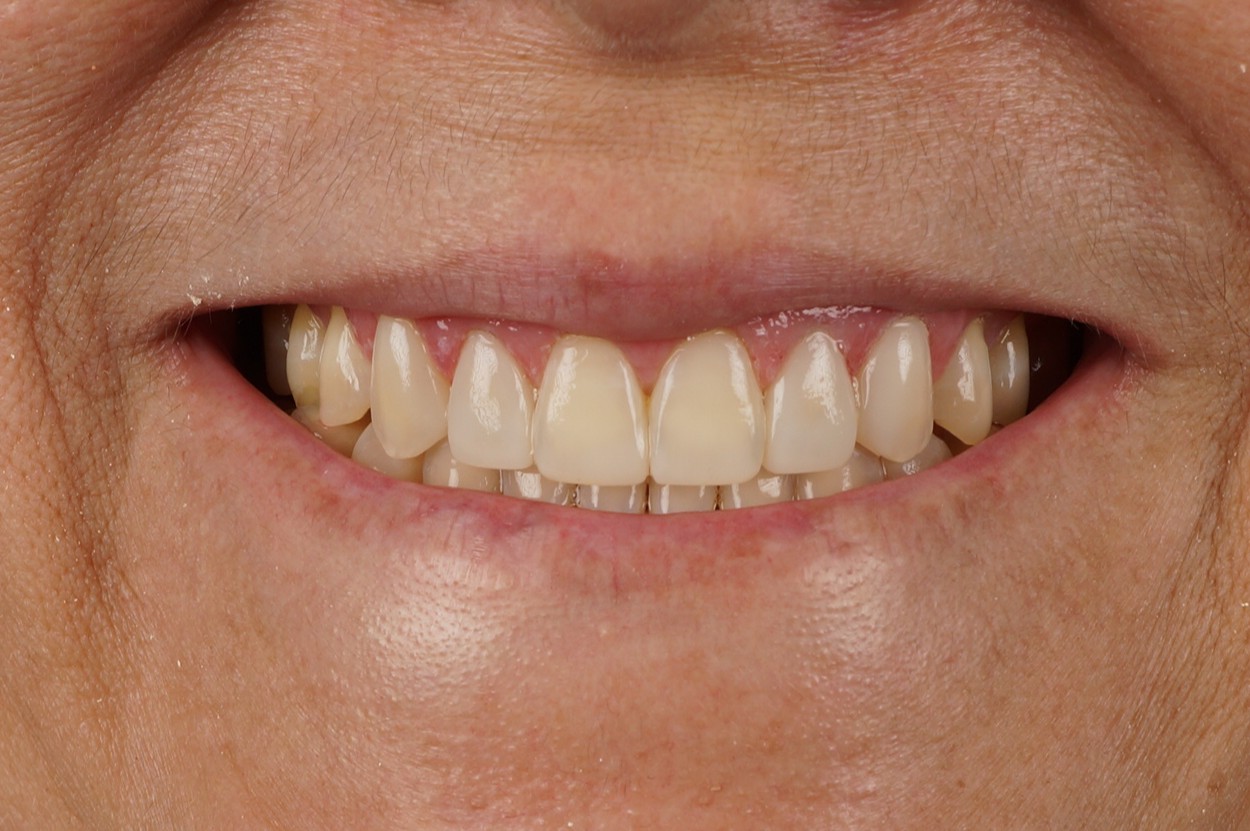
Composite after Invisalign: sometimes that is all we need
Once the teeth are correctly positioned, small differences in shape may become more visible.
A lateral incisor may be slightly small.
An edge may be worn.
There may be a small asymmetry.
In these situations, composite bonding may be enough to complete the smile.
We can add small amounts of material to improve shape, proportions or incisal edges without covering the whole tooth.
This is another reason why it is so important not to decide too early how many veneers a patient needs.
The answer may change after orthodontics.
When might veneers still be necessary?
Orthodontics changes tooth position.
But it does not completely change the anatomy, internal colour or structure of a tooth.
After alignment, veneers may still be indicated when we need to correct situations such as:
Significant alterations in shape
Tooth wear
Extensive old restorations
Colour changes that cannot be adequately improved with whitening
Proportions requiring greater modification
Structural defects
A combination of several factors
The difference is that we are now working from a better tooth position.
This can allow us to create restorations that are more proportionate, less bulky and potentially more conservative.
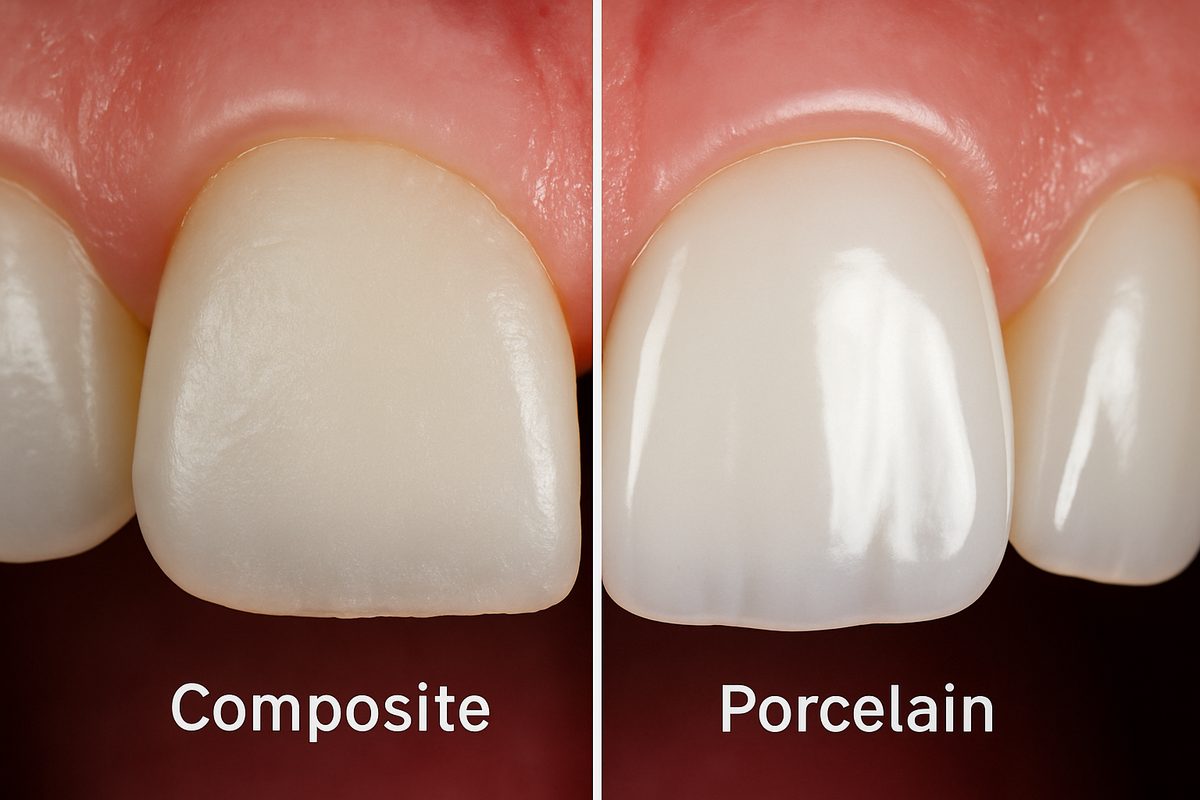
Composite or porcelain veneers after Invisalign?
It depends on the case.
If the required changes are small and mainly additive, composite can be an excellent option.
When different changes in structure, shape, colour stability or resistance are needed, porcelain may be considered.
The choice depends on:
The amount of change required
The quality and quantity of enamel
The bite
Bruxism
The number of teeth involved
Colour
Wear
Aesthetic expectations
Long-term maintenance
There is no single material that is better for everyone.
There is a material that is more appropriate for a particular clinical situation.
The bite also matters before veneers
Placing the teeth in a visually correct position is not enough.
We also need to analyse how they contact one another.
Future restorations will be exposed to forces every day.
During chewing.
During speech.
During mandibular movements.
And, in some patients, during episodes of bruxism.
For this reason, orthodontics before veneers may also have a functional objective.
We may aim for a tooth position that allows future restorations to function within a more favourable bite.
This can be especially important when teeth are worn or when a more extensive aesthetic rehabilitation is being considered.
Retention after Invisalign and veneers
Once orthodontic treatment is complete, maintaining the position achieved is essential.
Teeth have a tendency to move if adequate retention is not used.
Depending on the case, fixed retainers, removable retainers or a combination may be recommended.
When veneers or composite restorations are placed afterwards, retention needs to be coordinated with the restorative treatment.
Retainers must fit the new dental anatomy.
And over time, we should continue to review:
Tooth position stability
Retainers
The bite
The gums
Restorations
Wear
Possible signs of bruxism
Finishing the aesthetic treatment does not mean finishing the care of the smile.
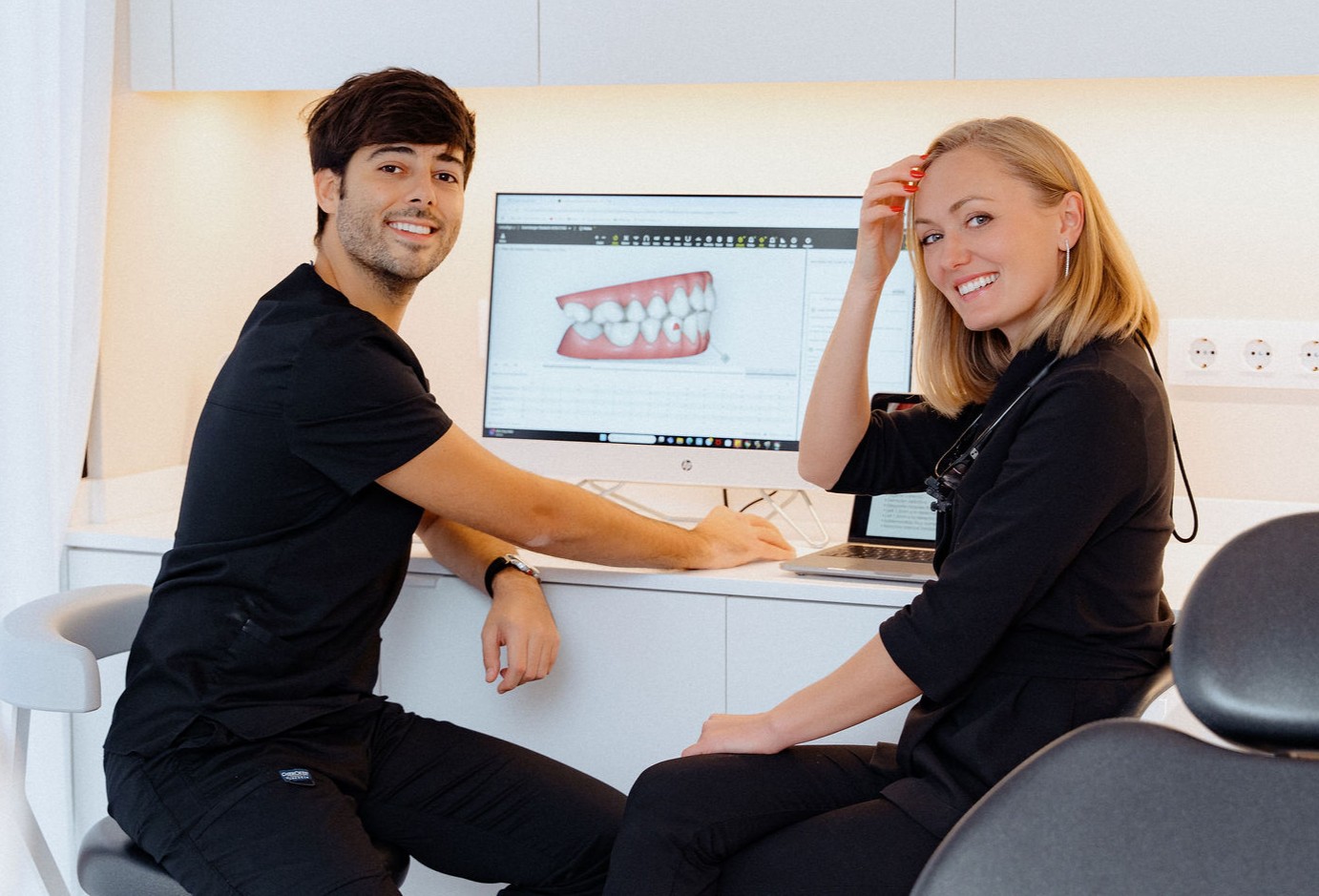
Invisalign and veneers as part of one smile design
At SMITA Advanced Smile Design in Barcelona, we prefer not to think in isolated treatments.
When we assess a smile, we first study the initial situation and define what we want to achieve.
Then we decide which tools are necessary to get there.
For some patients, the sequence may be:
Invisalign
Whitening
Composite bonding
For others:
Invisalign
Whitening
Minimally invasive veneers
For others:
Orthodontics
Gum treatment
Restorations
And in some cases, Invisalign alone.
There is no universal sequence.
There is an appropriate sequence for each smile.
Doing more treatment in order to do less
It may sound contradictory.
Why add orthodontics if the objective is to be conservative?
Because the number of treatment phases and the amount of natural tooth tissue we modify are not the same thing.
In selected cases, several months of tooth movement can help us avoid much greater restorative preparation.
The treatment may take longer.
But we may preserve more natural structure.
There may be two phases.
But the second phase may become significantly smaller.
That is what long-term planning means.
Not simply looking for the most immediate solution.
But studying which route allows us to create a natural, functional and stable smile while respecting the natural teeth as much as possible.
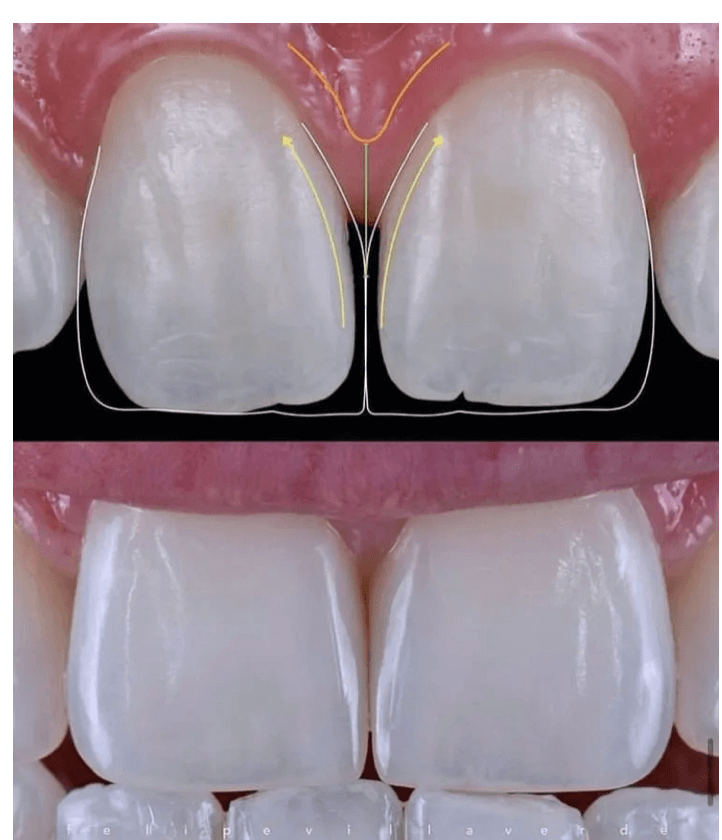
At SMITA, we design the result first
When a patient comes to us asking about veneers, our first question is not how many veneers we should place.
First, we want to understand:
What the patient would like to improve
Which teeth are healthy
How the teeth are positioned
How the bite functions
How the teeth relate to the lips
What the gums look like
Which proportions work within the face
How much natural tooth structure we can preserve
Then we design.
And finally, we decide which treatments are necessary.
Sometimes Invisalign is part of the journey.
Sometimes it is not.
Sometimes veneers follow.
Sometimes only composite is needed.
And sometimes we discover that moving the teeth correctly was almost everything the smile required.
Because conservative aesthetic dentistry is not simply about creating smaller restorations.
It is about making better decisions before touching the tooth.
Frequently Asked Questions
Is Invisalign always necessary before veneers?
No. It may be recommended when the position, rotation or inclination of the teeth would make it difficult to achieve a good result with veneers or would require modifying more natural tooth structure than desired.
Can Invisalign help avoid shaving my teeth for veneers?
In selected cases, it may reduce the amount of preparation required by placing the teeth in a more favourable position first. However, a completely preparation-free treatment cannot be guaranteed for every patient.
Can I have veneers directly if my teeth are crowded?
It depends on the degree of crowding, tooth position and the amount of correction required. In some cases, orthodontics first may be more conservative than attempting to compensate for the entire tooth position with restorations.
Why have orthodontics if the shape of my teeth will be changed afterwards?
Because shape and position are different problems. Orthodontics can place the tooth correctly so that any following restoration only needs to modify what genuinely requires correction.
Can Invisalign reduce the number of veneers I need?
Yes, in some patients. After the teeth have been aligned, whitening or small composite corrections may be enough, while other patients may still benefit from a limited number of veneers.
Which comes first, Invisalign or whitening?
When orthodontic treatment is required, we would normally complete the planned tooth movement first. Whitening and definitive restorations can then be considered according to the individual treatment sequence.
After Invisalign, is composite or porcelain better?
It depends on the type of change required, the available enamel, bite, colour, wear and aesthetic expectations. There is no single material that is best for every patient.
Can veneers be placed immediately after Invisalign?
The tooth position, stability, gums, bite and restorative plan should first be reassessed. The appropriate timing depends on the individual case.
Will I still need retainers if I have veneers after Invisalign?
Yes. Orthodontic treatment requires retention to maintain the corrected tooth position. When restorations are placed afterwards, the retainers need to be adapted to the new dental anatomy.
How do I know whether I need Invisalign before veneers?
The only way to determine this is through a complete smile assessment. Tooth position, bite, proportions, gums, enamel and the desired aesthetic result should all be analysed before deciding on the treatment sequence.
Learn more about the SMITA team:
Book your assessment: