
Is it good to get dental veneers?
Yes — when they are truly indicated.
Dental veneers can transform a smile in a remarkable way. For example, they can restore worn teeth, improve proportions, close certain spaces, rebuild damaged edges and correct shapes that do not fit naturally with the rest of the smile.
However, there is another side to this answer that we consider just as important:
not every person who wants to improve their smile needs veneers.
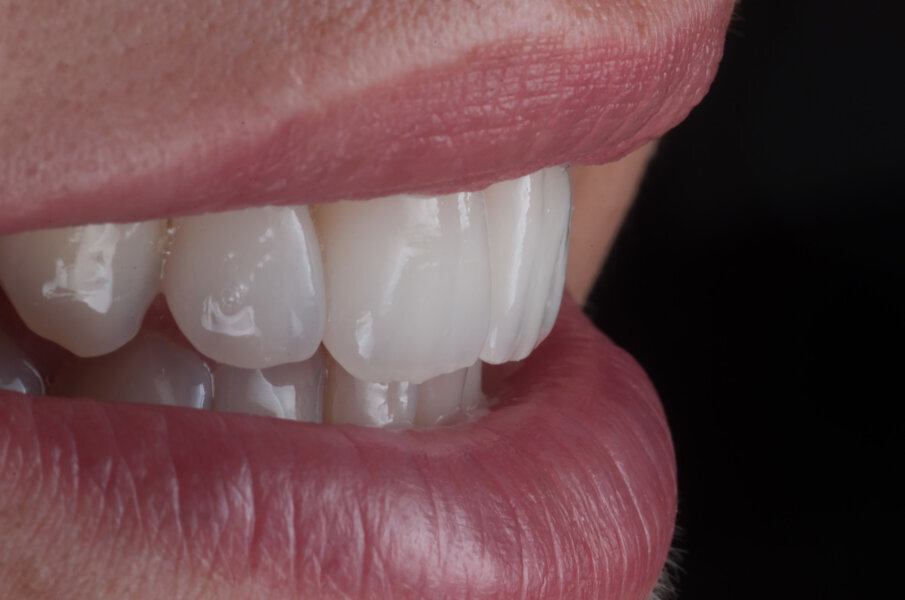
At SMITA, we often meet patients who have already visited several cosmetic dental clinics. Some tell us that they have been advised to have six, eight or even ten veneers.
In some cases, that may be exactly the right treatment.
In others, however, once we analyse the whole smile, we discover that the desired result could be achieved in a much more conservative way.
For example, whitening may be enough. Alternatively, we may need to improve the position of a few teeth, rebuild small areas with composite, or correct the shape of the gums.
Therefore, before deciding whether someone needs veneers, we need to answer a more important question:
What exactly do we want to improve, and what is causing the problem?
Why is there so much confusion about dental veneers?
Over the last few years, veneers have become one of the most visible treatments in cosmetic dentistry.
We see them constantly on social media. We also see countless before-and-after photographs and hear about composite veneers, porcelain veneers, E.max, ultra-thin veneers and no-prep veneers.
As a result, many people start to believe that:
“I want to improve my smile” means “I need veneers.”
However, these are two very different things.
Moreover, many patients arrive at our clinic feeling confused or frustrated because different clinics have suggested very different treatments.
One clinic may recommend four veneers, while another recommends eight or ten. Similarly, one dentist may suggest porcelain, whereas another recommends composite.
Naturally, the patient starts asking:
What do I actually need?
For this reason, we believe diagnosis should always come before treatment.
Veneers are a clinical tool.
They should not automatically be the starting point.
At SMITA, we do not start by asking how many veneers you need
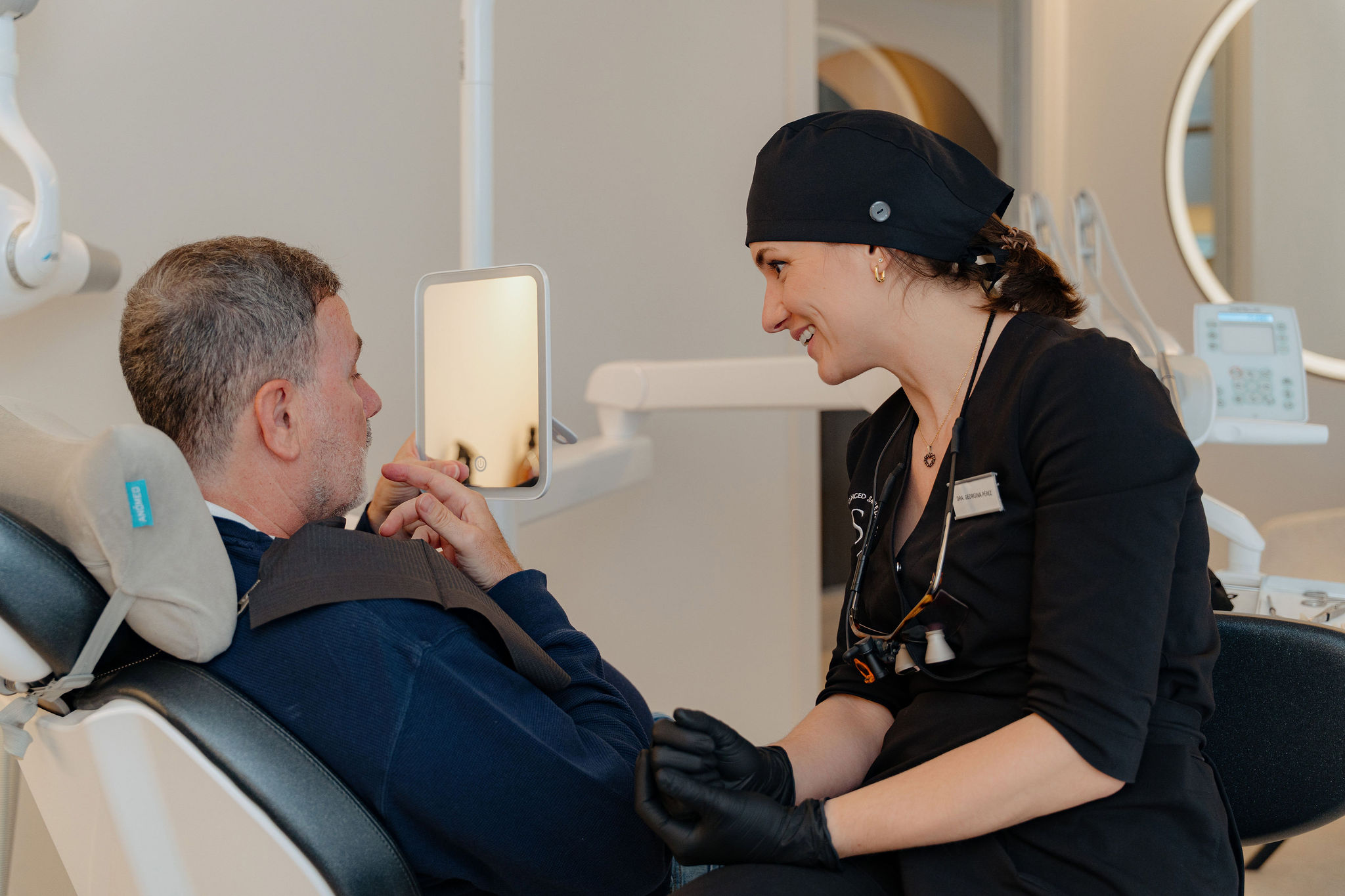
When someone tells us:
“I want to improve my smile,”
we do not begin by counting veneers.
Instead, we first want to understand what the person would like to change.
A sentence such as:
“I don’t like my teeth”
can describe many completely different situations.
For instance, the concern may be colour. In another patient, it may be tooth size, wear, spacing or position. Sometimes the main issue is the gums rather than the teeth themselves.
Therefore, we study the smile as a whole.
We assess oral health, teeth, gums, tooth position, wear, proportions, colour, bite and the relationship between the smile, lips and face.
Just as importantly, we listen to something that no software can measure:
what the patient actually wants to achieve.
So, when is it good to get dental veneers?
There are many situations in which veneers can be an excellent treatment.
In well-selected cases, they can restore lost tooth structure, improve proportions and create a major aesthetic change while keeping the treatment controlled and conservative.
However, the key is to understand the difference between adding something a tooth genuinely needs and covering a healthy tooth without a strong reason.
When teeth are naturally too small
This is one of the clearest indications for additive cosmetic treatment.
Some people have completely healthy and well-positioned teeth, yet those teeth are relatively small compared with their face, lips or smile width.
As a result, the smile may show larger dark spaces at the sides. Teeth may also appear short or narrow.
In some people, this can even give the smile a slightly childlike appearance.
In these situations, veneers or additive restorations can be an excellent option because we actually need to add structure.
We can increase length and width, improve proportions and create a fuller smile.
Moreover, when the anatomy allows it, we can often make these changes while preserving almost all of the natural tooth.
When teeth are worn
Tooth wear is another important indication.
Over time, bruxism, erosion, function and certain habits can gradually reduce tooth structure.
Consequently, the front edges may become flatter, teeth may look shorter and less tooth structure may be visible when smiling.
In these cases, we are not simply “putting veneers on teeth”.
Instead, we are rebuilding structure that has been lost.
Depending on the situation, we may use composite, ceramic or a combination of different restorations.
However, if the wear affects many teeth, we also need to understand why it happened. Therefore, bite, function, bruxism and other possible causes must be assessed before treatment begins.
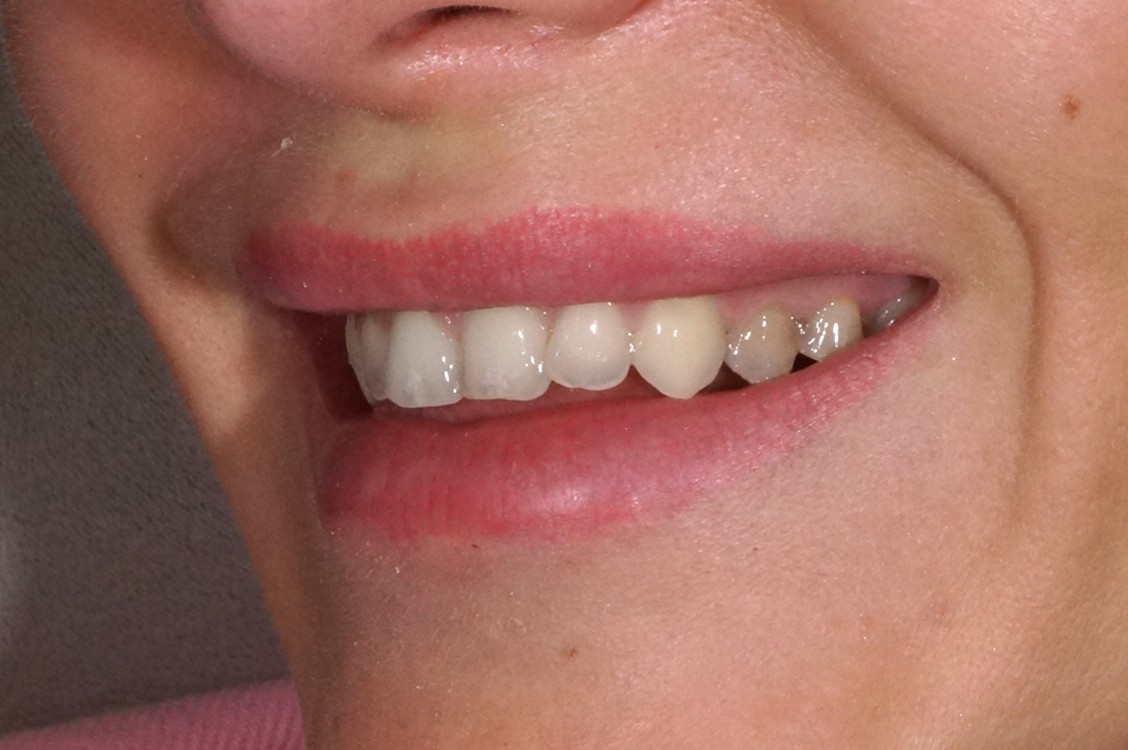
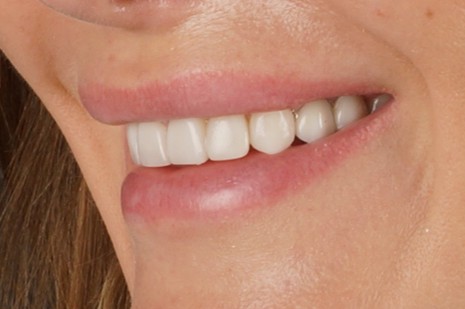
- Real SMITA case: composite veneers combined with posterior ceramic onlays
When tooth shapes are not in harmony
Some teeth simply have a shape that does not fit well with the rest of the smile.
For example, a patient may have very small lateral incisors, peg-shaped teeth, noticeable differences between the two sides, irregular edges, fractures or old visible fillings.
In these situations, aesthetic restorations can help us change exactly what needs to be changed.
However, this does not always mean covering the whole front surface of a tooth.
Sometimes we only need to add a small amount of composite to one edge, corner or specific area.
Therefore, a small problem may require only a small intervention.
When there are spaces between teeth
Spaces or diastemas can also be a good indication for veneers or composite bonding.
Nevertheless, we first need to understand why the spaces exist.
If the teeth are small and there is extra space, adding volume with composite or ceramic may create much better proportions.
On the other hand, if the teeth already have a good size and the space is mainly caused by their position, orthodontics may be a better solution.
Therefore, the question should not simply be:
“Can we close this space with veneers?”
A more useful question is:
“What is the most conservative way to close this space while keeping natural tooth proportions?”
When there is a significant colour problem
Colour can also be a reason to consider restorative treatment.
Nevertheless, we usually start by asking whether we can improve the natural tooth colour first.
Professional whitening is a much more conservative treatment and can produce a significant change when the main issue is a dark or yellow tone.
Furthermore, if aesthetic restorations are planned afterwards, whitening the natural teeth first can give us a lighter base from which to choose the final composite or ceramic shade.
[Suggested external link: professional tooth whitening / American Dental Association]
However, some deep colour changes do not respond enough to whitening. In those cases, a carefully designed ceramic veneer may give us more control over the final result.
When the smile has become worn or structurally altered
Some patients notice that their smile has changed slowly over many years.
Their teeth may have become shorter. Edges may have been lost. Old restorations may be visible, while tooth size and shape may no longer feel balanced.
In these situations, veneers can be an excellent part of a wider aesthetic rehabilitation.
Even so, we do not automatically assume that every visible tooth needs a restoration.
First, we design the desired result. Then, we assess which teeth are actually part of the problem. Finally, we decide where treatment is necessary.
When do you NOT need veneers?
- Real SMITA case: Philips Zoom whitening and aesthetic composite restorations
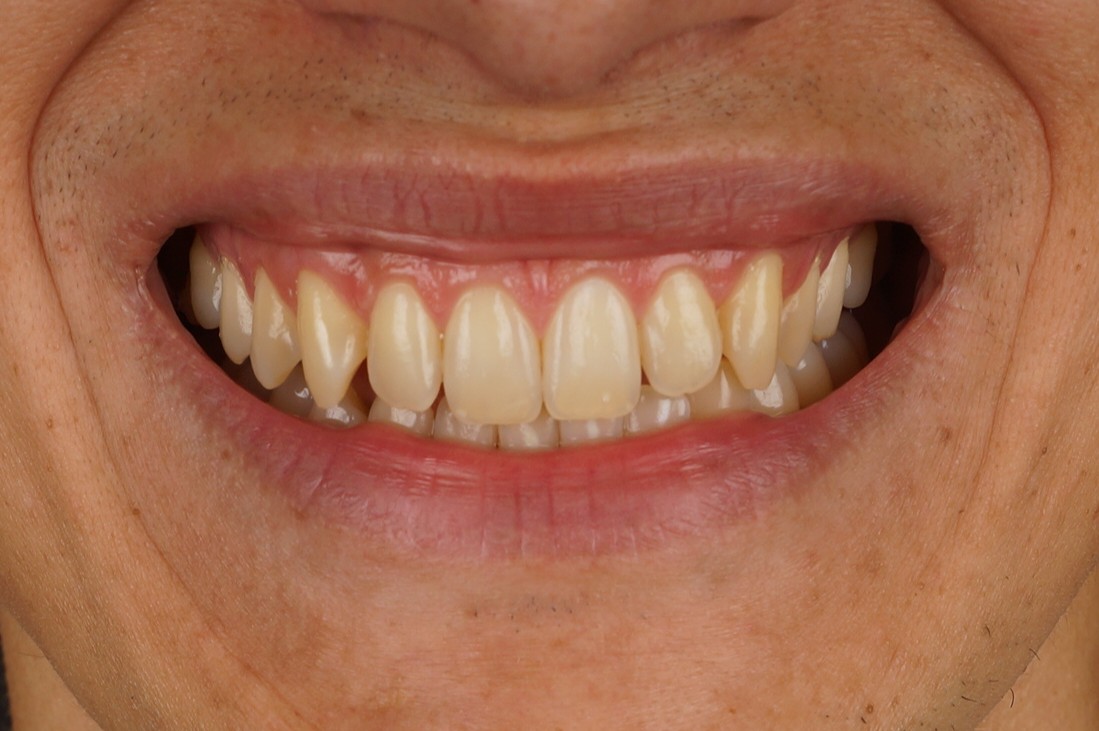
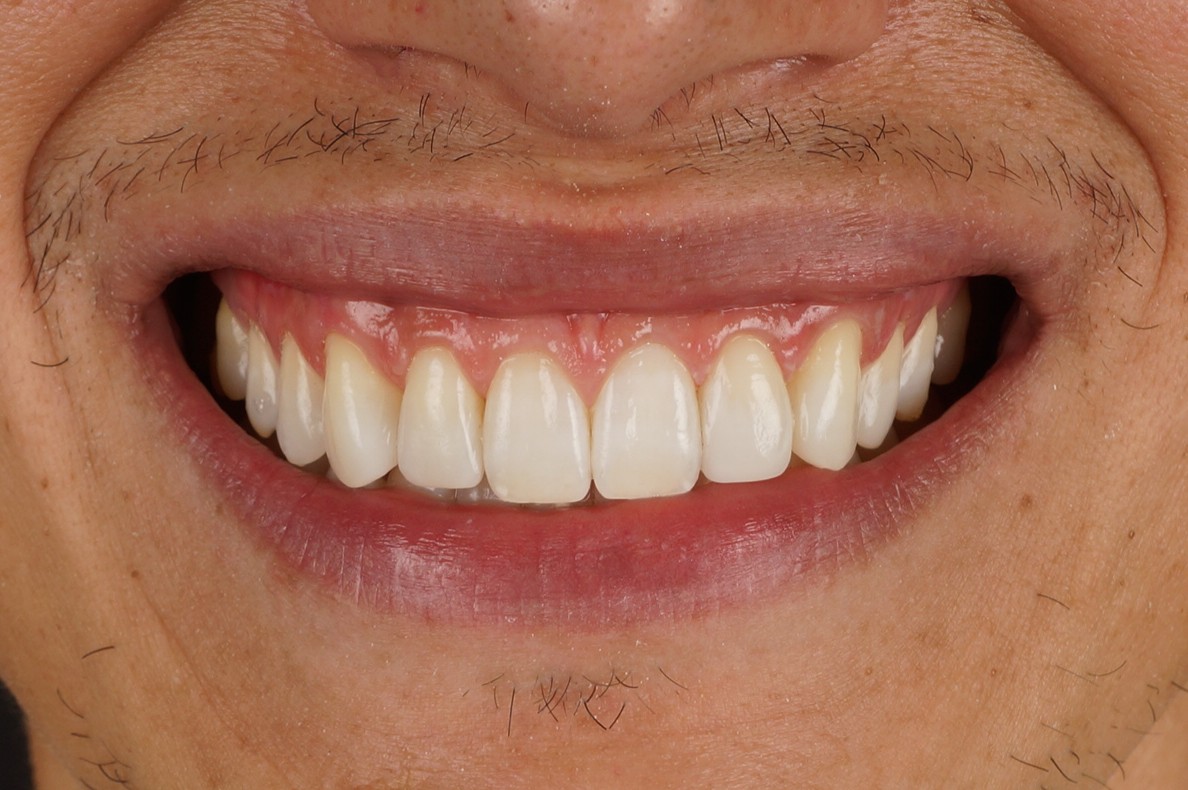
Knowing when not to treat is just as important as knowing when to treat.
After all, a beautiful smile does not have to be a smile covered in restorations.
If the main problem is colour, whitening may be enough
Imagine healthy teeth that are well aligned and have good proportions.
The shape is already attractive.
However, the patient feels that the teeth look too yellow.
In this situation, professional whitening may transform the entire smile without changing the physical shape of a single tooth.
Therefore, whitening is not always something we do “before veneers”.
For many patients, whitening is the entire treatment.
[Suggested internal link: SMITA article on Philips Zoom whitening]
If the dental base is already good, small corrections may be enough
Another common situation is a smile that already has an excellent foundation.
The proportions work, the teeth are in a good position and oral health is stable. However, there may be one small issue.
Perhaps one edge is slightly chipped.
A lateral incisor may be a little narrow.
There may be a small space or an old filling.
In these cases, we can often use small additive composite restorations.
This allows us to add material only where it is needed and preserve almost the entire natural tooth.
Moreover, changes of just one or two millimetres can sometimes make a surprising difference to the whole smile.
Sometimes the problem is the gum, not the tooth
A patient may tell us:
“My teeth are too small.”
However, after analysing the smile, we may find that part of the natural tooth is covered by gum tissue.
In other cases, the gum margins may sit at different heights or too much gum may be visible when smiling.
Therefore, changing the shape of the gums can sometimes transform the apparent proportions of the teeth.
For example, in selected cases we can combine gum treatment, whitening and small additive composite restorations.
As a result, we may achieve a major aesthetic change without covering all the teeth with veneers.
This is why teeth and gums should always be designed together.
[Suggested internal link: SMITA article on gum aesthetics and smile design]
If the problem is tooth position, orthodontics may come first
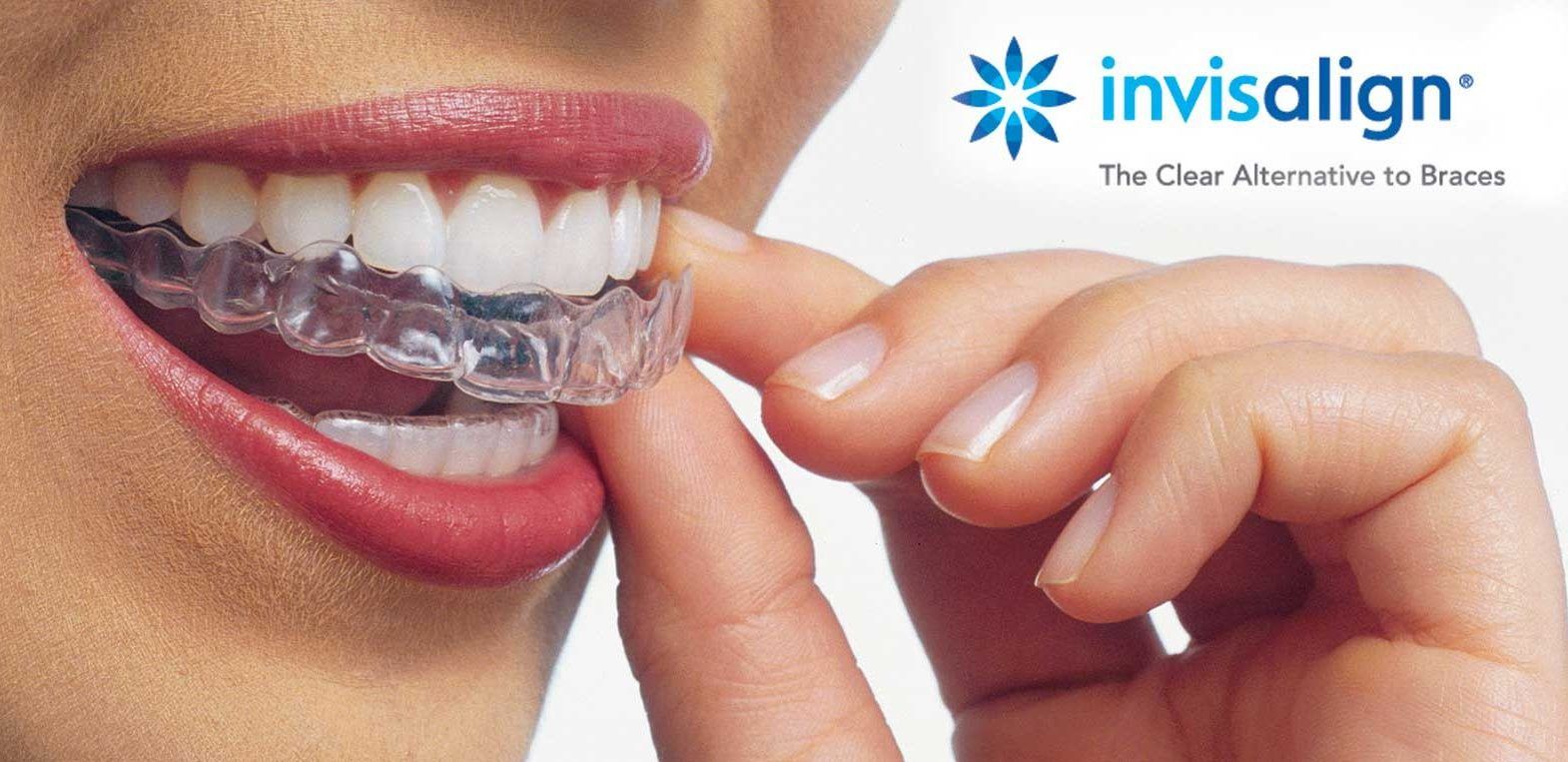
This is one of the decisions that can have the greatest effect on how conservative a treatment can be.
Imagine a rotated tooth, a tooth positioned too far forwards or several crowded teeth.
Technically, we could sometimes try to create the appearance of perfect alignment with veneers.
However, if doing so means removing a significant amount of healthy enamel, we should consider another route.
At SMITA, we often ask whether we can move the tooth first.
Therefore, Invisalign may be part of the smile design before any veneers are made.
Once the teeth are in a more favourable position, we assess the smile again.
At that stage, we may discover that fewer veneers are needed. Perhaps only small composite additions remain necessary. In some cases, no restorative treatment is required at all.
In other words, moving teeth first can help us preserve more natural tooth structure.
[Suggested internal link: Invisalign before veneers]
When the smile is already beautiful, we should also know when not to treat
We live in a world filled with images of extremely uniform smiles.
As a result, people sometimes start to see normal natural features as defects.
One tooth may be slightly different from another.
There may be small asymmetries.
Natural enamel may have texture and variations in colour.
However, these features can be part of a beautiful and harmonious smile.
Therefore, when teeth are healthy, balanced and naturally attractive, our role is not to find a reason to cover them.
Sometimes the best recommendation is whitening.
In another case, we may polish a small detail.
A minimal composite restoration may be enough.
And sometimes the best option is simply not to perform restorative treatment at all.
A beautiful smile does not mean a mouth full of veneers
This idea is central to the way we work at SMITA.
A major aesthetic improvement can come from whitening, orthodontics, gum correction or small composite additions.
On the other hand, a patient with very small, worn or structurally altered teeth may genuinely benefit from several restorations.
Both decisions can be correct.
The diagnosis is what makes the difference.
Do you really need veneers on all your teeth?

In most purely aesthetic cases, we are not talking about placing veneers on every tooth in the mouth.
Usually, we work with the teeth that are visible and relevant to the smile.
For this reason, the number of veneers can vary greatly.
Some patients may need two or four. Others may benefit from six, eight or ten.
Meanwhile, another patient may need none.
Smile width, tooth size, wear, position, colour and the desired level of change all affect the decision.
Therefore, we do not believe in formulas such as:
“A smile makeover means ten veneers.”
Smile design is a planning process.
It is not a package of restorations.
[Suggested internal link: How many veneers do I need — 2, 4, 6, 8 or 10?]
Digital Smile Design can help us do less treatment
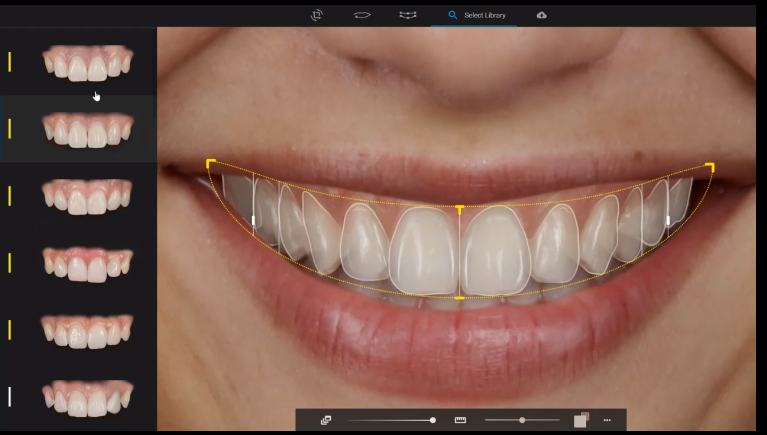
Digital planning is sometimes presented simply as a way to show a patient what future veneers could look like.
However, we believe its most valuable role is different.
It can help us decide how much treatment is really necessary.
First, we define the result we want to achieve.
Then, we work backwards to decide how to get there.
Using Digital Smile Design, photography, 3D scanning and, when appropriate, a mock-up, we can assess which teeth actually need changes.
In addition, we can study how much volume should be added, whether the tooth position needs correcting and whether the gum architecture should change.
We can also ask whether whitening can solve part of the problem or whether additive composite would be enough.
Therefore, technology should not be used to justify more treatment.
On the contrary, it should help us avoid unnecessary treatment.
[Suggested internal link: Digital smile simulation and mock-up]
Preserving enamel is part of deciding whether veneers are worth it
When veneers are indicated, we want to perform the treatment as conservatively as possible.
The amount of enamel we preserve matters.
Not only are we preserving healthy natural tissue, but enamel is also an excellent surface for adhesive dentistry.
Recent clinical evidence continues to support the importance of enamel preservation in the long-term performance of ceramic veneers.
Therefore, before preparing a healthy tooth, we should always ask whether preparation is really necessary.
For example, if creating the appearance of straight teeth would require aggressive reduction of crowded teeth, orthodontics may offer a more conservative path.
In contrast, when teeth are naturally too small and we need to add volume, the situation may be ideal for an additive approach.
Once again, the indication changes everything.
[Suggested external link: PubMed research on enamel preservation and ceramic veneers]
Our philosophy at SMITA: do not start with the treatment
At SMITA Advanced Smile Design, we work extensively with aesthetic dentistry and smile design.
Of course, we provide veneers.
However, our objective is not for every patient to leave with the same treatment.
Instead, we want every person to understand what their smile actually needs.
Someone may arrive asking for veneers and discover that whitening is enough.
Another person may need Invisalign.
In a different case, a small gum correction combined with composite may give us the result we want.
Finally, there will also be patients for whom veneers genuinely are the best solution.
Therefore, our first aesthetic consultation is based on understanding the patient’s oral health, smile and goals before deciding on a treatment.
Moreover, health remains at the centre of the process.
Before changing aesthetics, we need to know that the teeth and gums are healthy and that the proposed treatment also makes sense in the long term.
The difference between improving a smile and replacing it
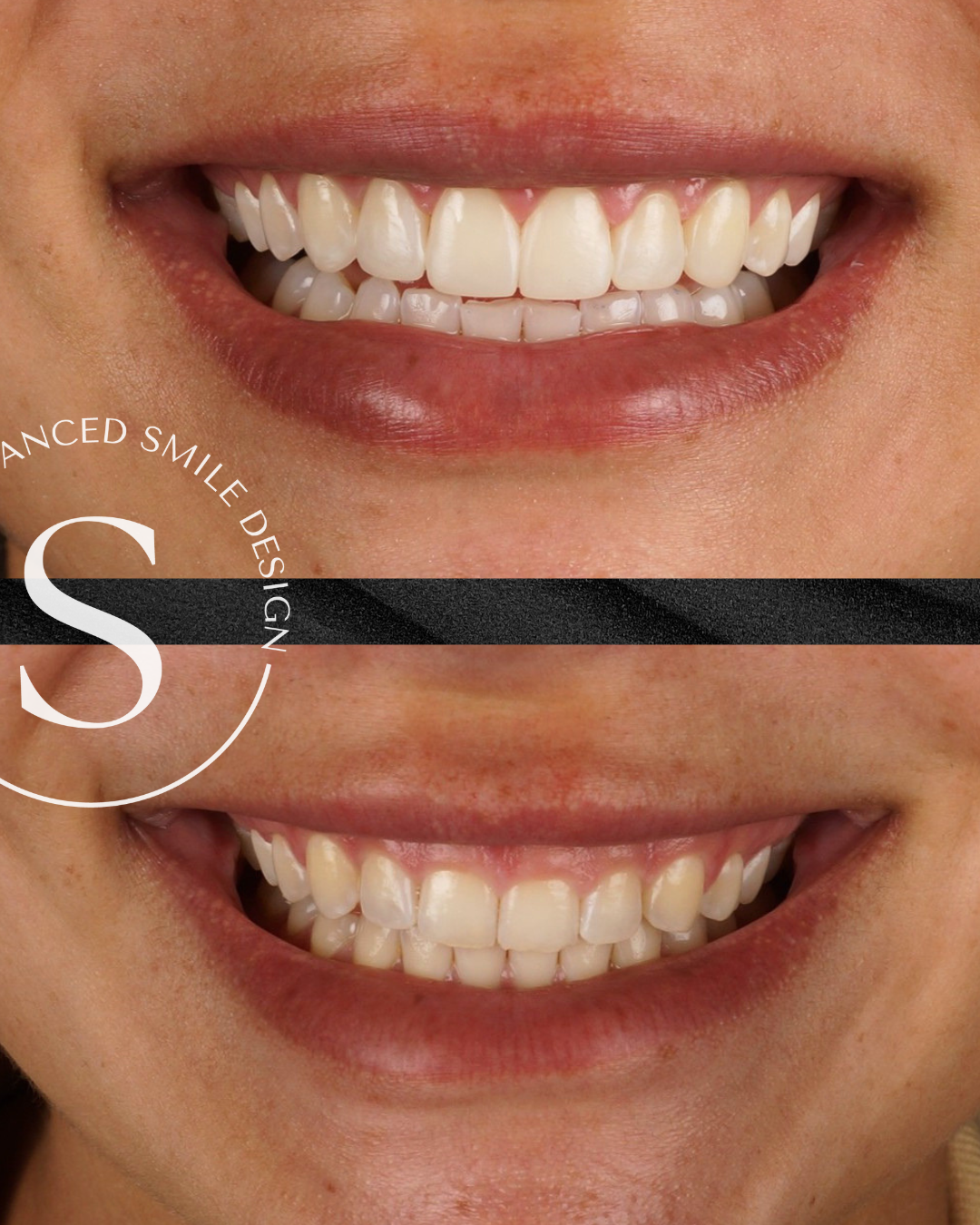

Our goal is not to remove every natural feature and replace it with a standardised smile.
Instead, we want to preserve the details that make a smile look real.
Natural texture matters.
So does translucency.
The relationship with the lips matters too, as do facial proportions and small differences that give teeth character.
Therefore, a good aesthetic result should look as if it belongs to that person.
It should not simply look like excellent dental work.
Furthermore, the most sophisticated result is not always the one with the greatest amount of change.
Sometimes the best result comes from changing very little — but changing exactly the right thing.
So, is it good to get dental veneers?
Yes.
It is good to get dental veneers when there is a clear indication and when veneers are the right solution for the result we want to achieve.
For example, they can be an excellent option for small teeth, worn teeth, unusual shapes, fractures, selected spaces, significant colour problems or lost tooth structure.
However, if the natural dental foundation is healthy and well proportioned, we can often create a beautiful smile with much smaller treatments.
Whitening may be enough.
Alternatively, orthodontics may solve the main concern.
In other cases, a gum correction or small additive composite restorations may be all that is required.
In summary, good cosmetic dentistry is not about doing more dentistry.
It is about understanding exactly what each smile needs, what we can preserve and when we do not need to intervene at all.
Frequently Asked Questions
Is it good to get dental veneers?
Yes, when they are correctly indicated. For example, veneers can improve tooth shape, size, wear, selected spaces and certain colour problems. However, they should not automatically be placed on every patient who wants to improve their smile.
How do I know if I really need veneers?
First, we need to identify what is causing the concern. It may be colour, tooth position, gum shape, wear, tooth form or proportions. Afterwards, we can decide whether veneers are appropriate or whether a more conservative option would be better.
Can I improve my smile without veneers?
Yes. In fact, many patients achieve major improvements with whitening, Invisalign, gum treatment, small composite additions or a carefully planned combination of these options.
Do I need veneers if my teeth are yellow?
Not necessarily. If the teeth have good shape, position and proportions, professional whitening may be the first option to consider. As a result, we may improve the natural colour without covering healthy teeth.
Are veneers a good option for very small teeth?
Yes. When we need to increase tooth length or width, additive restorations can improve the proportions while preserving a large amount of natural tooth structure.
What if my teeth are worn?
In this situation, restorations can help replace lost tooth structure. However, if the wear is significant, we also need to assess the bite, bruxism and other possible causes before deciding on the final treatment.
Can gum treatment mean that I no longer need veneers?
In some cases, yes. If the teeth look small because of excess gum tissue or uneven gum levels, correcting the gum shape first can significantly improve the proportions of the smile.
Why might Invisalign be recommended before veneers?
If tooth position is the main problem, moving the teeth first may reduce how much natural tooth structure needs to be altered later. Moreover, after orthodontics we may find that fewer restorations are required — or none at all.
Do I need ten veneers for a smile design?
No. Digital Smile Design is a planning method, not a package of ten veneers. Therefore, the final plan could involve whitening, orthodontics, gum treatment, composite, veneers or a personalised combination.
Why can different cosmetic dentists recommend different treatments?
Because more than one treatment may sometimes be clinically possible. Nevertheless, each proposal should clearly explain the problem being treated, how much natural tooth will be changed, which alternatives exist and why the recommended option is suitable for that particular patient.
More about the SMITA team:
Book your appointment at SMITA: