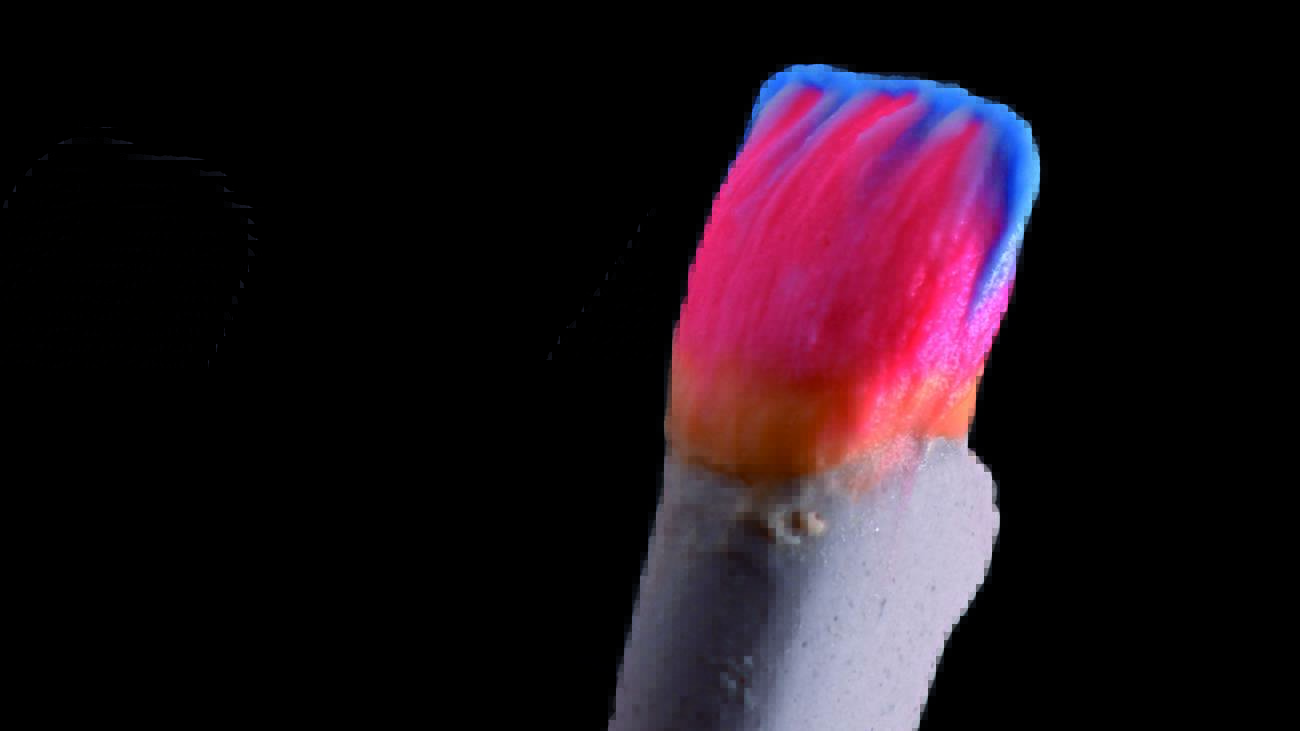
Composite, feldspathic porcelain, E.max, zirconia, ultra-thin veneers, Lumineers, no-prep veneers…
When people start researching dental veneers, they often come across so many different terms that it can seem as though there are dozens of completely different treatments.
In reality, to understand the options properly, we need to separate three concepts:
What material the veneer is made from
How the veneer is fabricated
How much tooth preparation is required to place it
And these three things are not the same.
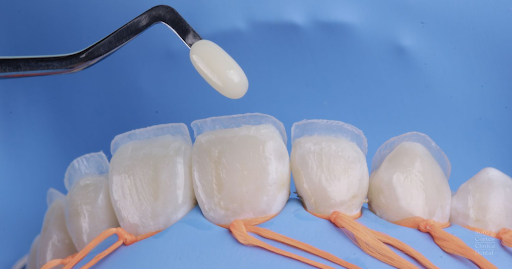
An ultra-thin veneer mainly describes thickness. A layered veneer describes a fabrication technique. E.max is a commercial system associated mainly with lithium disilicate. Lumineers is also a brand name, not a separate material.
At SMITA, we add an even more important fourth question:
Do we really need to cover the entire front surface of the tooth with a veneer?
Because if we can achieve the result by adding material only where it is needed, we prefer to preserve as much healthy enamel as possible.
Direct composite veneers: one of our most conservative options
At SMITA, we use direct composite in many smile designs precisely because it is one of the most conservative tools available to us.
In the majority of correctly selected cases, we do not need to shave or mechanically reduce the tooth at all.
The treatment can be completely additive: we add composite only where we want to improve length, shape, proportions, volume or small spaces.
This allows us to preserve almost all of the natural tooth structure.
Our own aesthetic rehabilitation protocol follows this minimally invasive and highly personalised philosophy.
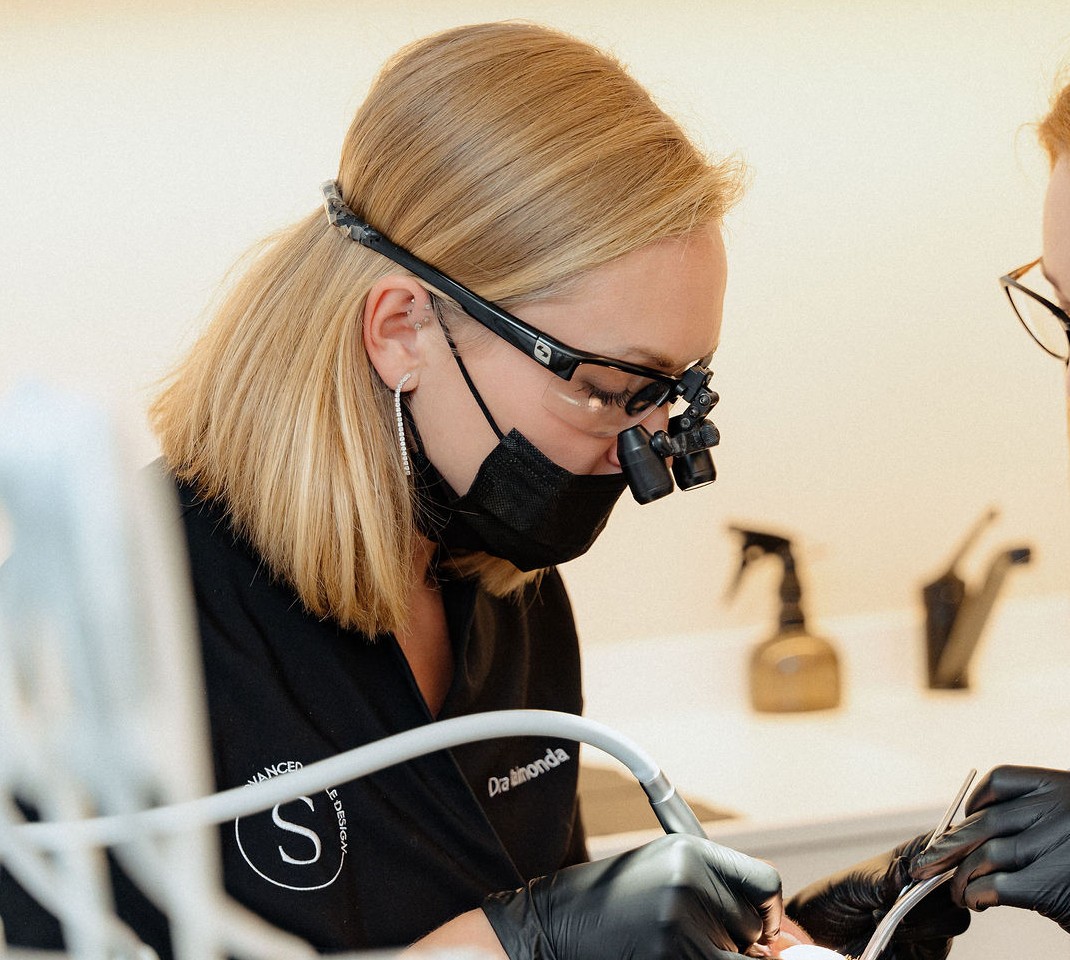
How do we create composite veneers at SMITA?
It is not simply a matter of placing a layer of white material over the tooth.
We work with high-end composite materials, advanced adhesive techniques and rubber dam isolation when indicated, because precise moisture control and a clean working field are fundamental for predictable bonding.
We then use a direct layering technique.
Different composite masses with different optical properties can be combined to reproduce the natural layers of a tooth.
We can control:
Translucency
Opacity
Value
Chroma
Incisal edges
Internal effects
Surface texture
Transition lines
Gloss
The composite is progressively sculpted directly onto the tooth until the new anatomy is created.
This is why high-end composite dentistry is, to a large extent, a form of dental sculpture.
When properly planned and executed, it can produce exceptionally natural results.
How much tooth preparation is required for composite?
In many of our cases:
0 mm.
There is no mechanical tooth preparation.
In some situations, very small and localised recontouring may be necessary to avoid excess volume or improve a transition.
But our principle is very clear:
if there is no clinical reason to remove healthy enamel, we do not remove it.
The adhesive conditioning required for bonding should not be confused with shaving the tooth.
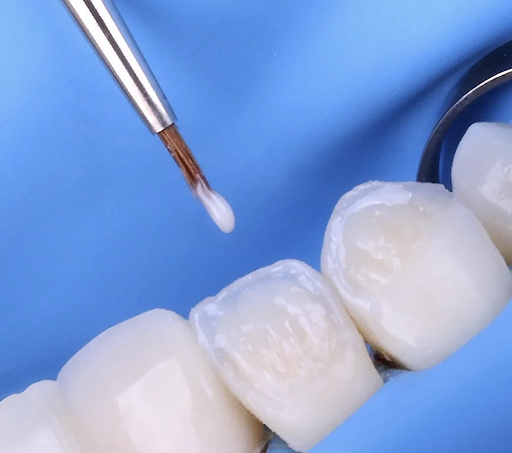
How does composite bond to the tooth?
Enamel is one of the best bonding substrates we have in adhesive dentistry.
Through enamel conditioning and adhesive systems, we create a micromechanical bond between the natural tooth and the composite.
This is why preserving enamel is not only a philosophical choice.
It also supports predictable adhesion.
What is the main disadvantage of composite?
Its main compromise is maintenance.
Unlike a well-polished ceramic restoration, composite can gradually develop:
Loss of gloss
Surface staining
Minor wear
Changes in texture
Small fractures
For this reason, at SMITA we recommend professional maintenance approximately once a year.
During this visit, we can review the restorations, repolish them and make small adjustments or repairs when necessary.
Our own rehabilitation protocol includes annual maintenance to preserve the shine and colour of composite restorations.
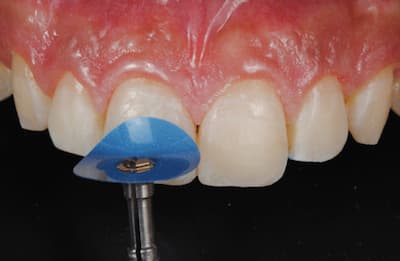
One major advantage of composite: it can be repaired
If a small fracture or area of wear appears, we often do not need to replace the entire restoration.
We can add new composite, repair a specific area or repolish the restoration.
This reparability is one of the reasons we value composite so highly within a conservative treatment philosophy.
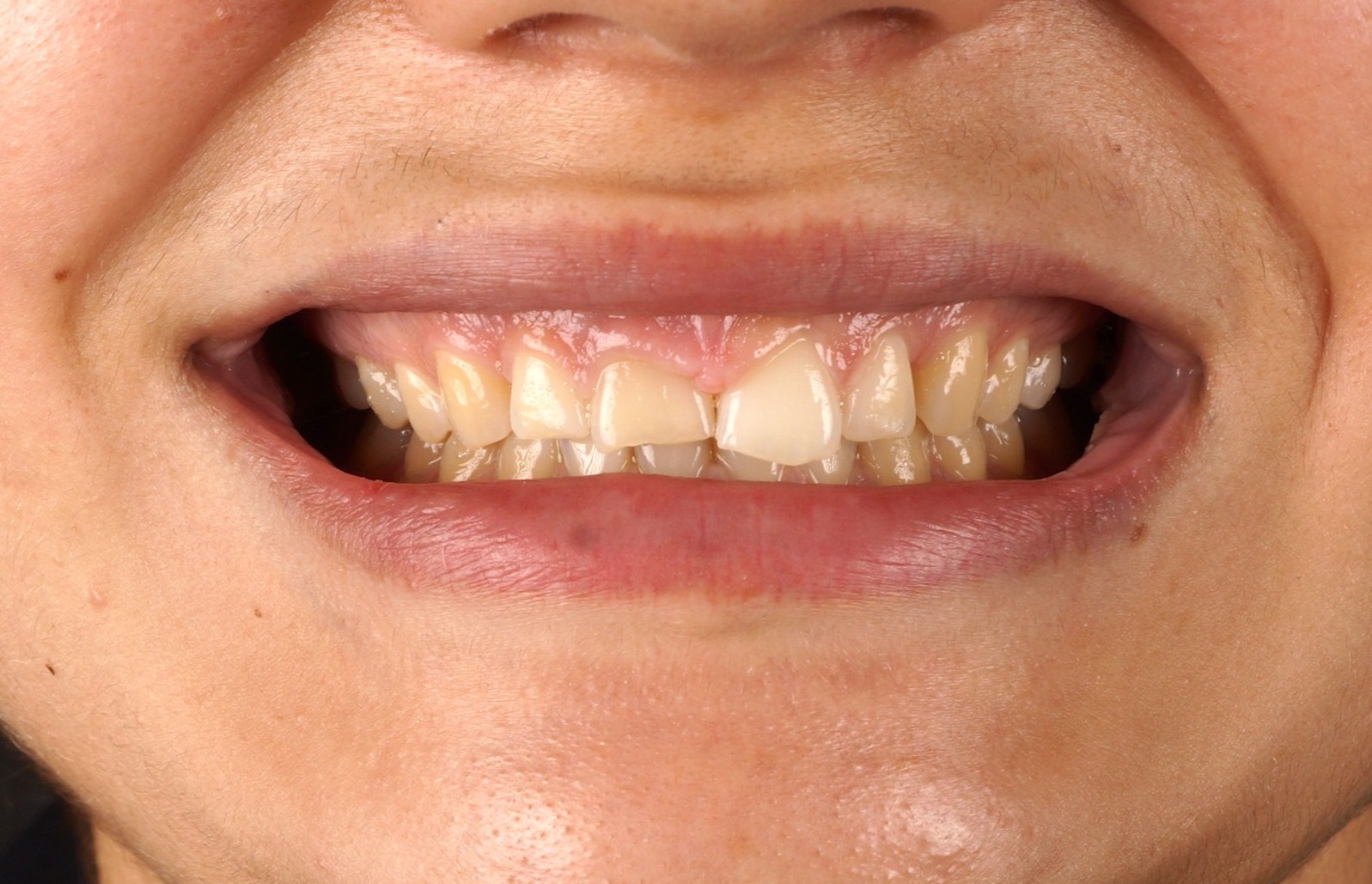
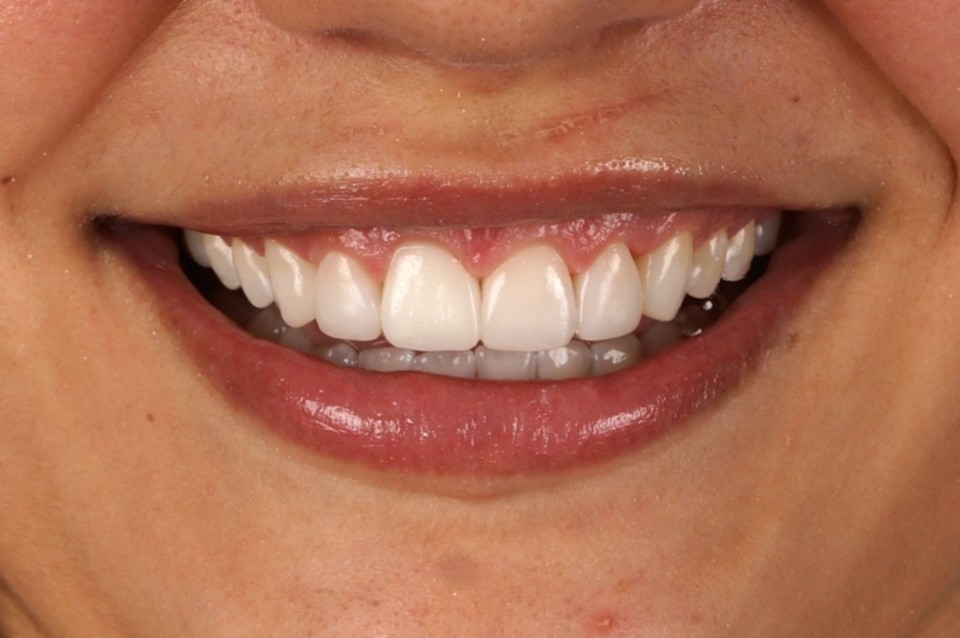
How long do composite veneers last?
There is no exact lifespan that applies to every patient.
Composite restorations can remain clinically successful for many years, but longevity depends on:
Size of the restoration
Bite
Bruxism
Habits
Oral hygiene
Quality of adhesion
Maintenance
Rather than speaking about an artificial “expiry date”, we prefer to focus on maintenance, repairability and preservation of natural tooth structure.
Injectable composite veneers: what are they?
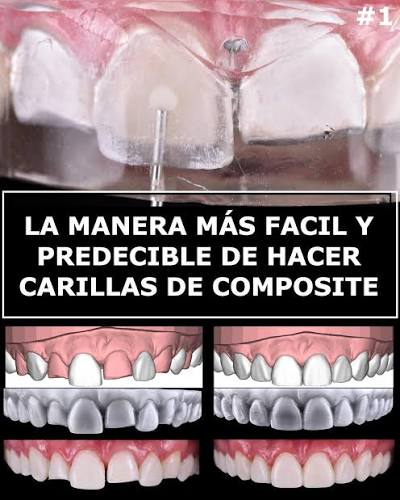
The injectable composite technique uses a transparent matrix, usually produced from a wax-up or digital design.
A flowable or injectable composite is placed through the matrix to transfer the planned shape onto the teeth.
It can be fast, reproducible and minimally invasive, and in selected cases can be performed without tooth preparation.
Why do we not routinely use injectable composite at SMITA?
For our anterior aesthetic rehabilitations, we prefer individualised direct layering.
Injectable techniques can be useful, but we prefer the control that manual stratification gives us over:
Anatomy
Different shades and translucencies
Texture
Characterisation
Final polishing
Repairability
Contemporary highly filled flowable composites have improved significantly, but the technique still offers less freedom for individual optical layering than a carefully executed direct stratification approach.
For that reason, injectable composite is not our technique of choice when we are aiming for the highest level of personalisation and natural aesthetics at SMITA.
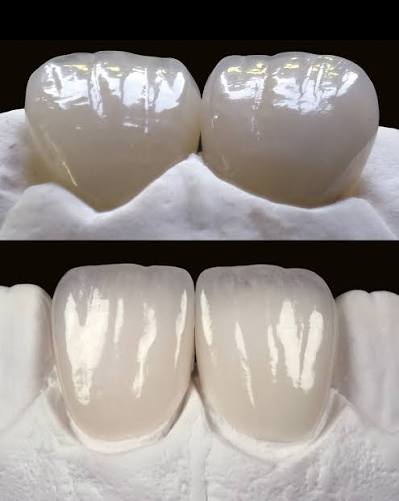
Feldspathic porcelain veneers
Feldspathic porcelain is one of the classic materials used in high-end aesthetic dentistry.
Its main strength is its optical behaviour.
It can reproduce with remarkable precision:
Translucency
Depth
Opalescence
Incisal halo
Surface texture
Colour variation
Natural characteristics of enamel
For this reason, it can be an excellent option when we are seeking a very delicate and highly individualised aesthetic result.
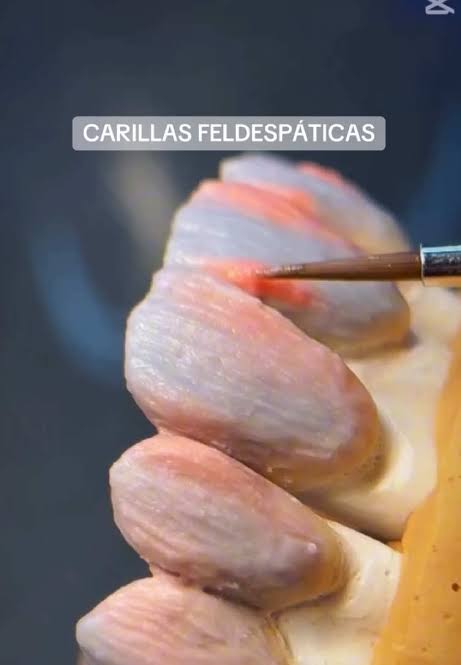
How is a feldspathic veneer made in the laboratory?
A high-quality feldspathic veneer may require many hours of technical work.
After the smile design and clinical records are completed, the dental technician builds the restoration progressively.
Different ceramic masses can be applied to recreate dentine, enamel and internal optical effects.
Each layer may require specific firing cycles in a ceramic furnace.
The technician then performs:
Characterisation
Anatomical corrections
Surface texturing
Finishing
Glazing
Polishing
This is where the concept of a layered veneer becomes important.
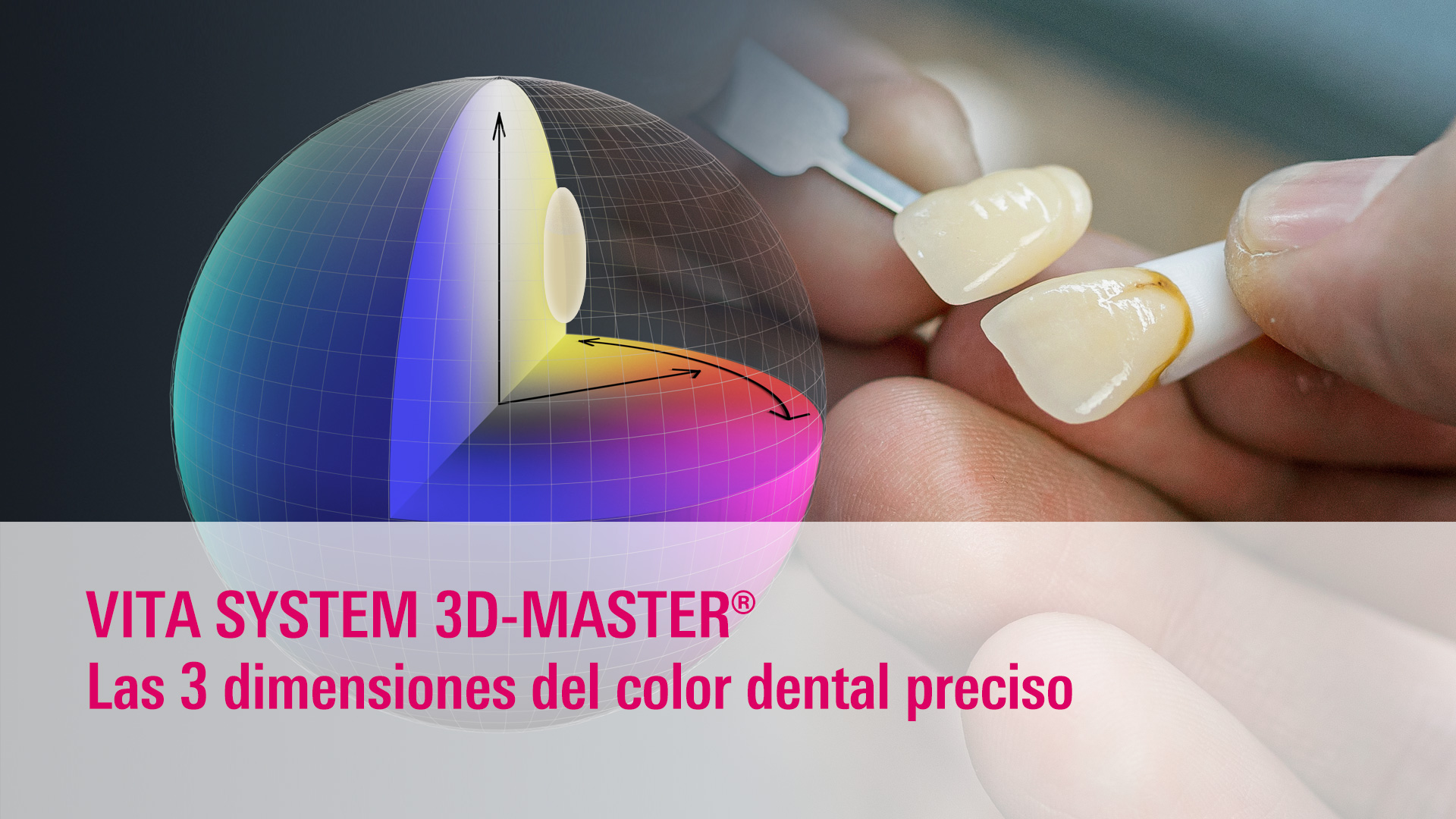
What does “layered veneer” actually mean?
“Layered” does not necessarily describe a completely different material.
It describes how the restoration is optically built.
Instead of producing a flat, monochromatic piece, the technician works with different ceramic layers and masses to reproduce depth, translucency, colour and natural dental characteristics.
A layered veneer may include:
More translucent areas
More opaque areas
Incisal effects
Colour variations
Depth
Individualised texture
This is one of the reasons why highly aesthetic laboratory veneers are expensive.
You are not paying only for the ceramic itself.
You are paying for many hours of specialised work by both the dentist and the master ceramist.
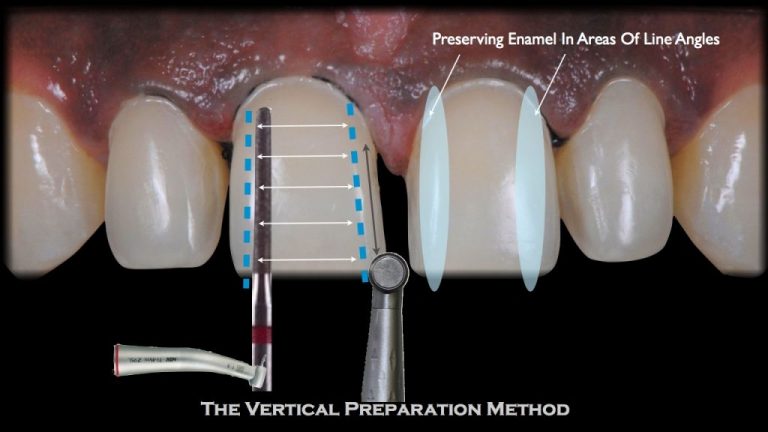
How much tooth preparation is required for feldspathic veneers?
It depends completely on the initial tooth position and the planned result.
In favourable situations, preparation can be extremely conservative and remain mainly within enamel.
In selected cases, a virtually no-prep approach may even be possible.
In other cases, sufficient space must be created for the ceramic so that the final restoration does not look bulky.
There is therefore no universal preparation depth that applies to every patient.
The objective is to preserve enamel whenever the clinical situation allows it, because bonded ceramic veneers perform particularly well when adhesion is primarily to enamel.
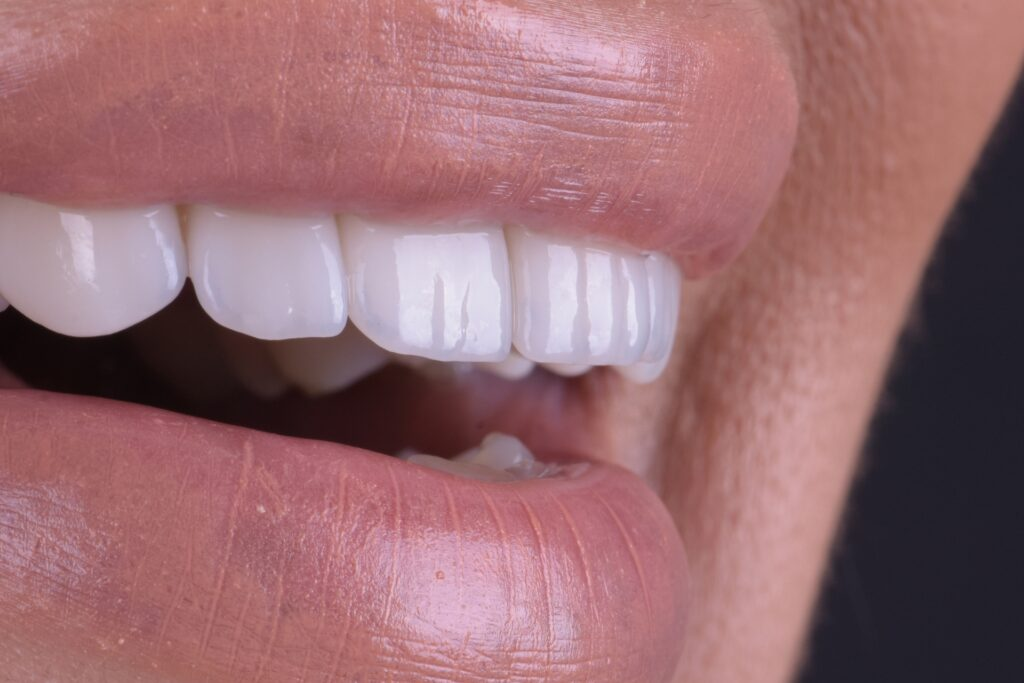
Lithium disilicate veneers — E.max
E.max is one of the names patients hear most frequently.
But it is important to clarify:
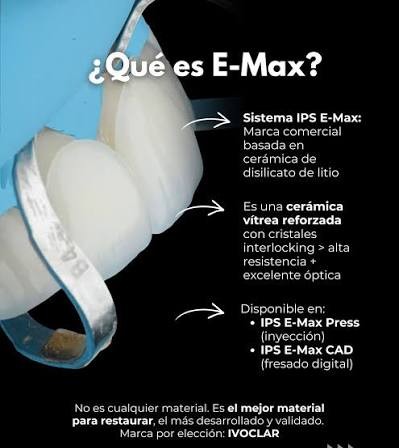
E.max is a commercial brand.
The material most commonly discussed in this context is lithium disilicate, a glass-ceramic with excellent mechanical and aesthetic properties.
It combines:
Strength
Translucency
Colour stability
Bonding capability
Good aesthetics
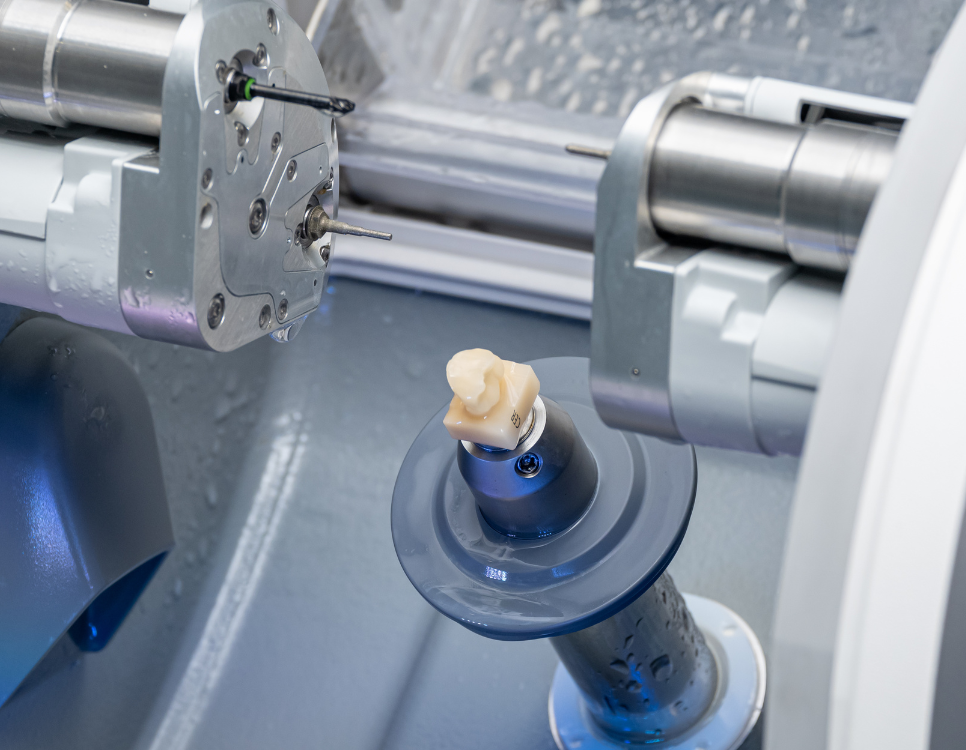
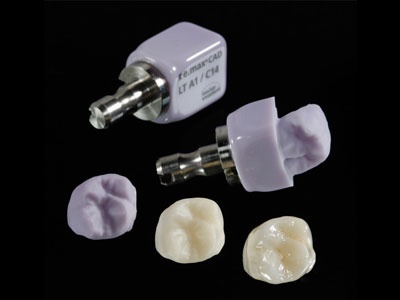
How are lithium disilicate veneers made?
They can mainly be fabricated using:
Pressing
The laboratory first creates the planned restoration and the ceramic is then heat-pressed under pressure.
CAD/CAM
The restoration is digitally designed and milled from a ceramic block.
It can then be surface characterised or receive additional ceramic layering depending on the aesthetic result required.
For this reason, two veneers both described as “E.max” may actually involve very different levels of craftsmanship.
A monolithic restoration with surface characterisation is not the same as a restoration individually modified and layered by an experienced ceramic technician.
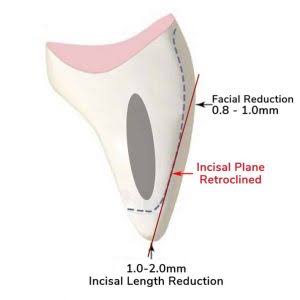
How much preparation is required for E.max?
Again, it depends on the case.
Lithium disilicate can be used with conservative preparations when there is enough space and the tooth is in a favourable position.
However, if we need to change a dark underlying colour, visually reposition the tooth or reduce excessive volume, more restorative space may be necessary.
For this reason, the amount of tooth reduction should never be decided solely according to the material.
First, we design the final result.
Then we calculate the minimum amount of space required to achieve it.
How do feldspathic porcelain and lithium disilicate bond?
Both are glass-ceramics and allow highly effective adhesive protocols.
The internal surface of the ceramic is specifically conditioned, followed by silane treatment and adhesive resin cementation.
The tooth also undergoes an adhesive protocol.
The combination of correctly treated ceramic and well-preserved enamel allows for a very strong bond.
This is another reason why we try to preserve enamel whenever possible.
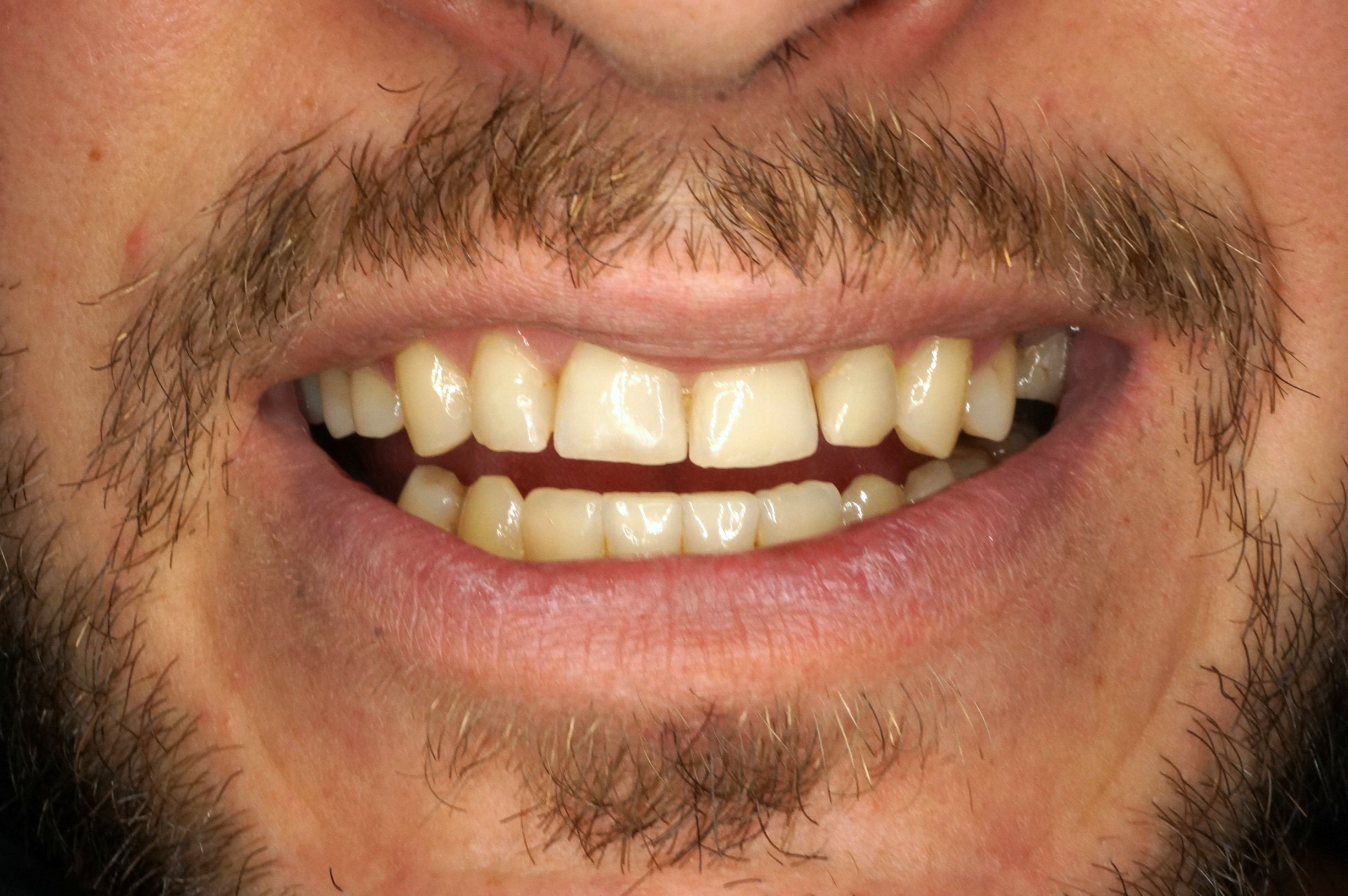
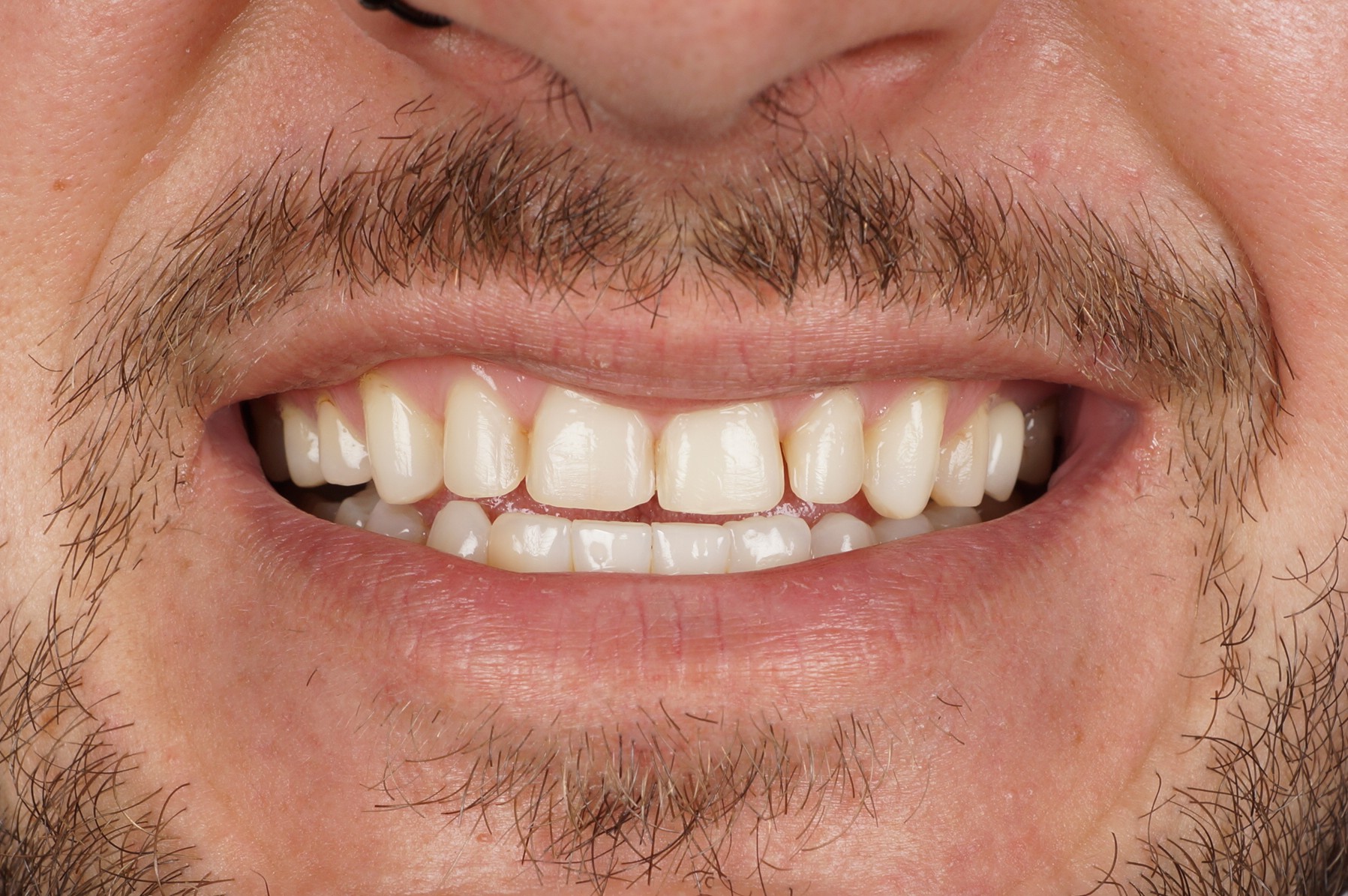
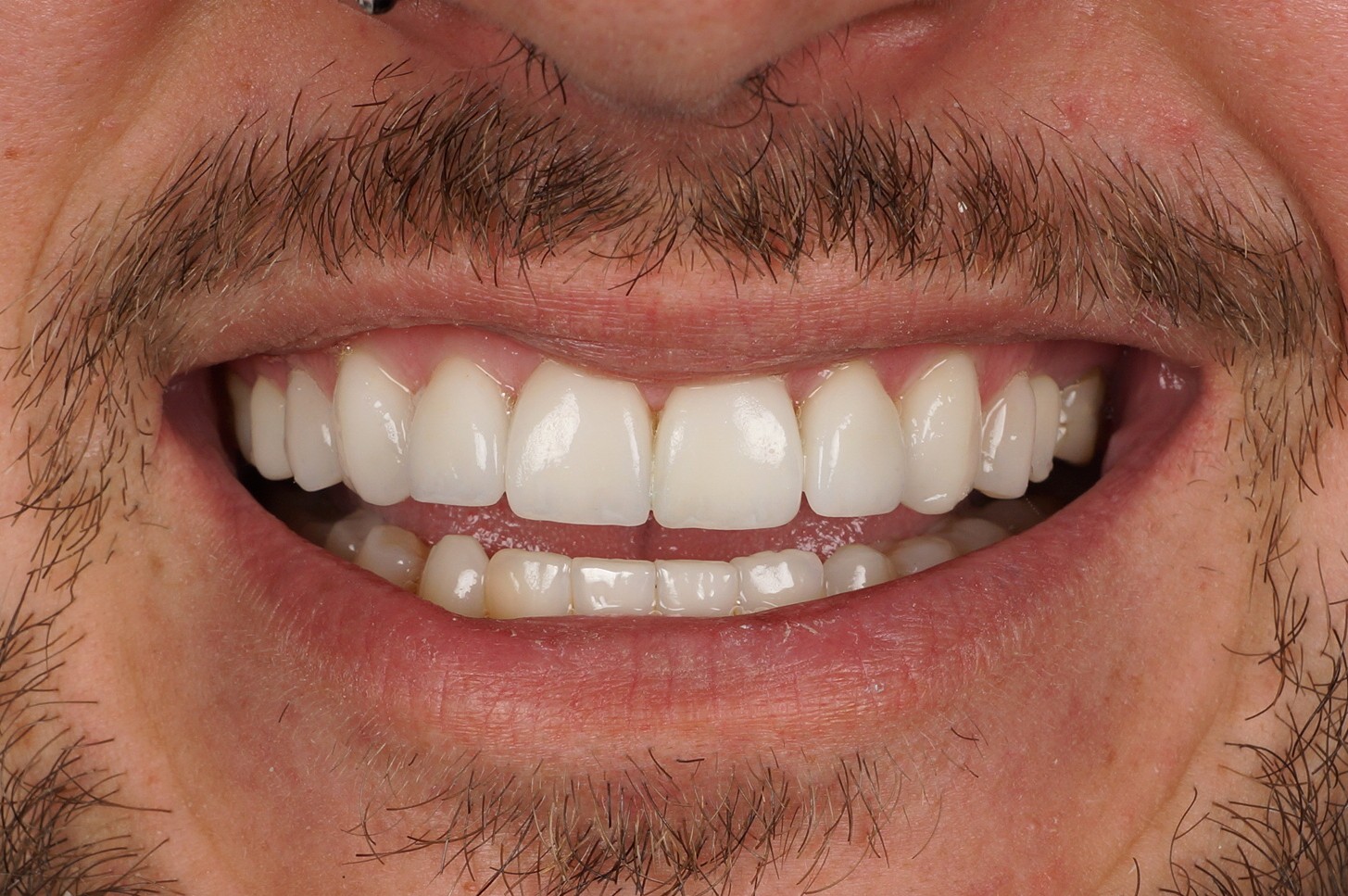
Real SMITA case: E.max veneers Bleach 2 color:
Initial situation
After teeth preparation for venners:
Final result: E.max veneers Bleach 2
How long do ceramic veneers last?
Long-term clinical evidence for ceramic veneers is very strong.
High-quality feldspathic and lithium disilicate veneers can remain clinically successful for many years when they are properly indicated, bonded and maintained.
This does not mean that a veneer has a fixed expiry date.
Longevity depends on:
Treatment planning
Preparation
Bonding
Bite
Bruxism
Oral hygiene
Maintenance
Zirconia veneers
Zirconia is an extremely strong ceramic material.
Newer generations of translucent zirconia have improved considerably in terms of aesthetics.
However, it is not usually our first choice for anterior veneers when maximum natural appearance is the priority and a glass-ceramic can be used.
Feldspathic porcelain and lithium disilicate offer particularly favourable optical and adhesive properties for many veneer cases.
Zirconia also has a different chemical structure and requires a different bonding protocol from glass-ceramics.
It may have specific indications, but it is not the default material for every aesthetic veneer case.
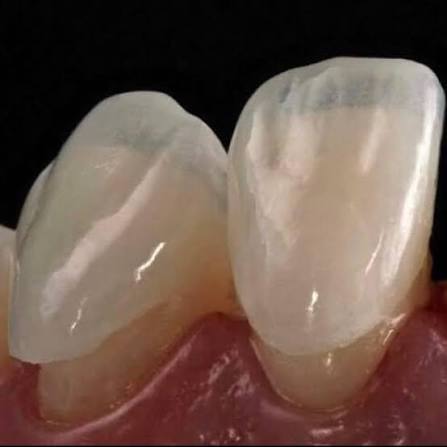
Lumineers, ultra-thin veneers and no-prep veneers
This is where marketing terminology often creates confusion.
Lumineers is a commercial brand.
It is not a completely different ceramic category.
The name has historically been associated with very thin ceramic veneers and no-prep treatment concepts.
Ultra-thin mainly describes the thickness of the restoration.
No-prep means that no significant mechanical reduction of the tooth is performed.
But one point is extremely important:
a very thin veneer does not automatically mean that the tooth can be left completely unprepared.
If a tooth is rotated, protruding or already has too much facial volume, simply adding another layer on top can create an overcontoured and unnatural result.
In those cases, a small preparation — or even orthodontics before veneers — may actually be the more conservative choice overall.
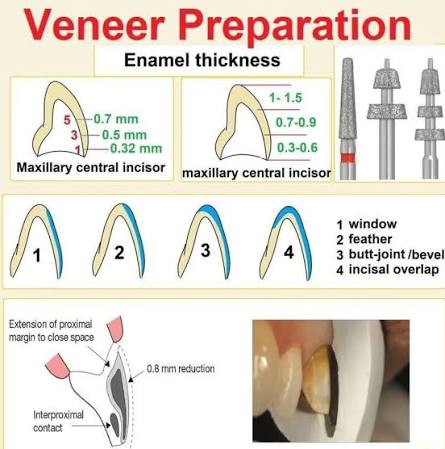
How much tooth preparation is needed for each type?
As a general clinical orientation:
Additive direct composite
Often 0 mm in appropriately selected cases.
Composite with minor adjustments
Very localised recontouring when necessary.
Feldspathic porcelain
Potentially very conservative preparation when tooth position and colour allow it.
Lithium disilicate
Variable preparation depending on space, colour, tooth position and restorative design.
No-prep veneers
Approximately 0 mm, but only when the initial anatomy allows additional volume.
Zirconia
Variable depending on the system and indication.
We do not believe it makes sense to promise a patient “0.3 mm” or “0.5 mm” of preparation before completing the design.
The true objective is not to remove a predetermined number of millimetres.
It is to remove the minimum amount of healthy structure necessary to achieve a correct result.
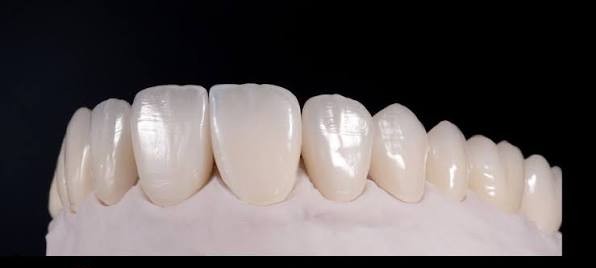
Why are ceramic veneers more expensive?
A high-end ceramic veneer is not simply a small piece of porcelain.
Behind it there may be:
Photographic study
Facial analysis
Smile design
Digital scanning
Mock-up
Tooth preparation
Shade records
Clinical-laboratory communication
Digital design
Individual laboratory work
Manual ceramic layering
Multiple firing cycles
Surface texturing
Characterisation
Clinical try-ins
Adhesive cementation
Bite adjustments
Final polishing
In high-end aesthetic rehabilitations, both dentist and technician may invest many hours in each individual tooth.
That is one of the main reasons for the difference in price.
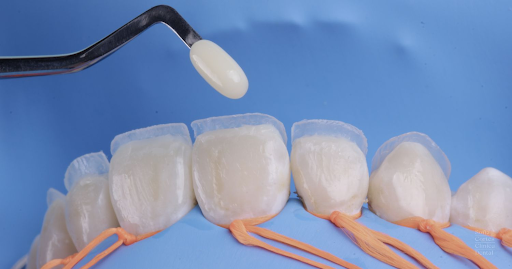
Why is composite more affordable?
Mainly because it is created directly in the clinic.
It does not require the individual laboratory fabrication of every restoration or all of the associated production stages.
This significantly reduces the cost.
But more affordable does not mean lower quality.
A high-end layered composite restoration performed with isolation, advanced adhesive techniques and individualised anatomy can be an extremely sophisticated treatment.
For us, the main advantage of composite is not that it costs less.
It is that in many cases it allows us to achieve an excellent result without sacrificing healthy enamel.

How much do veneers cost?
Prices can vary considerably depending on the clinic, the material, the complexity of the case and the level of laboratory work involved.
As a broad market guide, direct composite veneers are generally more affordable than laboratory-made ceramic veneers, while highly customised feldspathic or lithium disilicate restorations tend to sit at the higher end of the price spectrum.
The final price depends on:
Who performs the treatment
What diagnostic and planning stages are included
The material selected
The laboratory involved
The experience of the ceramic technician
The level of customisation required
The adhesive protocol
The clinical and technical time involved
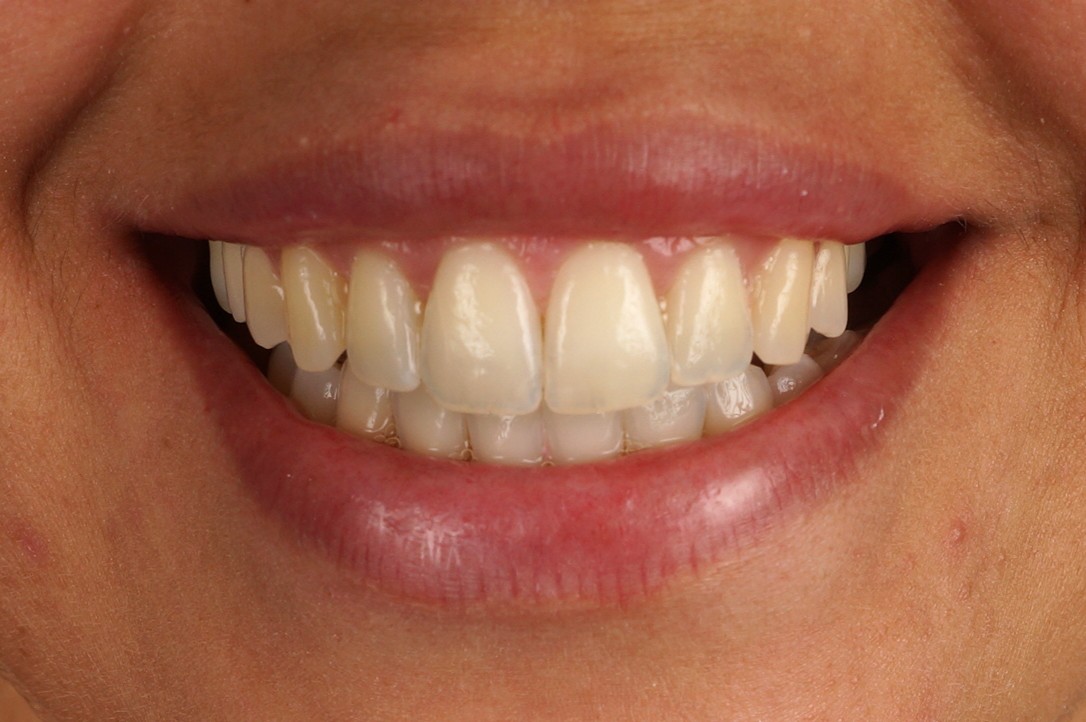
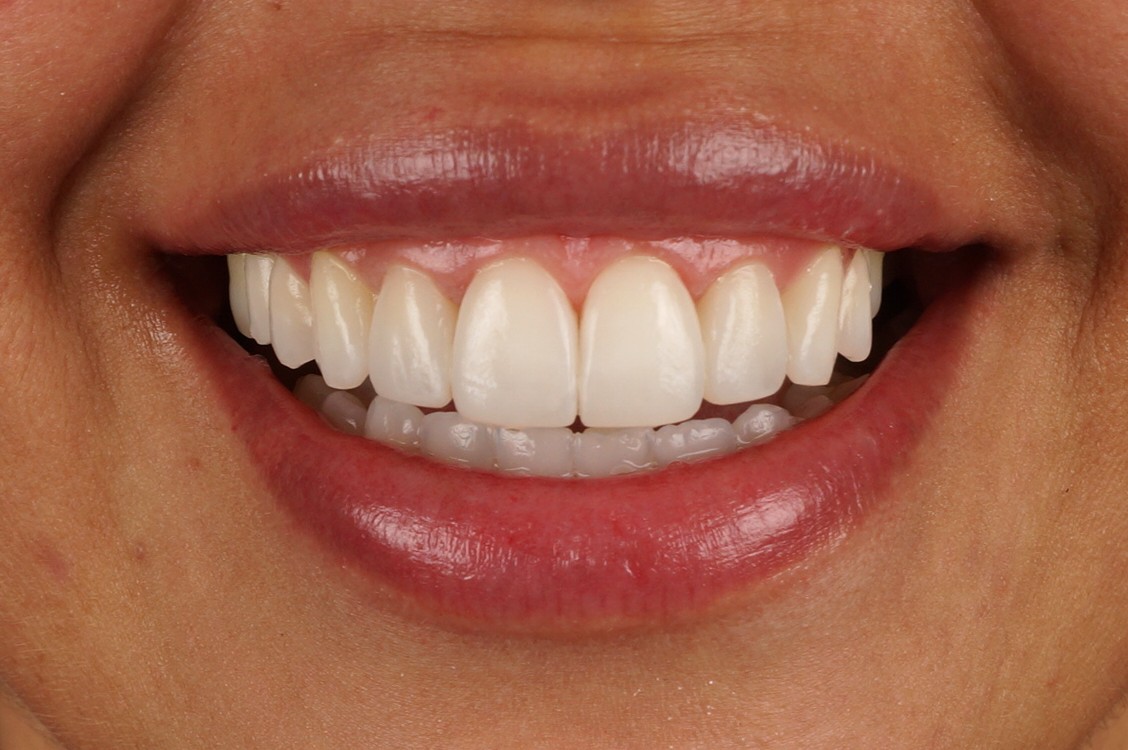
Two treatments both described simply as “porcelain veneers” can therefore be completely different.
What maintenance does each type require?
Composite
At SMITA we generally recommend:
Annual review
Professional polishing approximately once a year
Assessment of margins and texture
Small repairs whenever required
Our own aesthetic rehabilitation protocol includes periodic maintenance to preserve the shine and colour of composite restorations.
Ceramic
Ceramic veneers generally maintain their gloss and colour stability better.
However, they still require:
Regular dental reviews
Professional hygiene
Gingival health monitoring
Margin assessment
Bite control
A protective night guard when indicated for bruxism
No veneer should be considered a treatment that is placed and forgotten for twenty years.
Which type of veneer is easiest to repair?
Composite, clearly.
We can add material, reshape it and repolish it directly.
Ceramic can also be repaired in selected circumstances, but a significant fracture may require a new restoration.
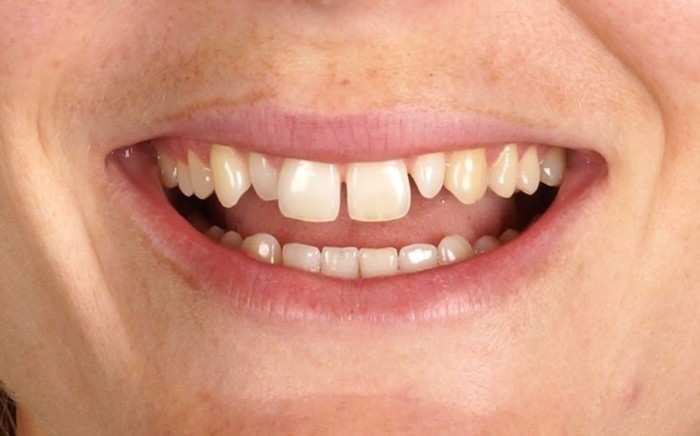
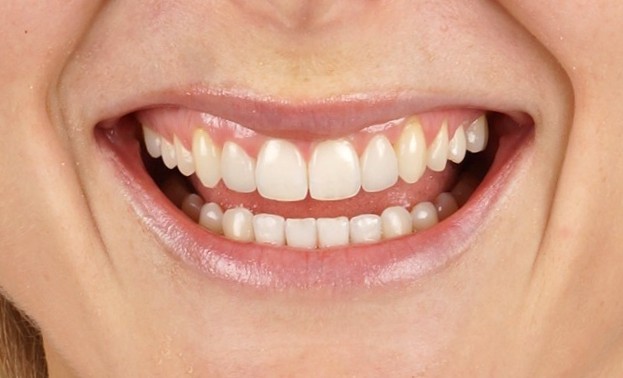
This distinction can be particularly important in younger patients or in situations where long-term preservation of natural tooth structure is a priority.
So, which type of veneer is best?
There is no universal answer.
Composite can be an excellent option when we are seeking an additive and highly conservative transformation.
Feldspathic porcelain can offer exceptional aesthetics when we need extremely delicate ceramic work.
Lithium disilicate combines aesthetics and strength very effectively.
Zirconia has specific indications where its mechanical properties may be useful.
And a no-prep veneer can be a fantastic solution when it is genuinely indicated.
But the material should never be the first decision.
Before choosing it, we need to assess:
Tooth position
Available enamel
Initial colour
Tooth shape
Gums
Lips
Bite
Bruxism
Desired result
And how much natural tooth structure would need to be removed to achieve that result.
Our philosophy at SMITA
At SMITA, we do not believe that a smile is better simply because it is restored with porcelain rather than composite.
Nor because it has ten veneers instead of four.
Our objective is to find the solution that achieves maximum aesthetics with the minimum necessary intervention.
This is why we use direct composite in many of our cases.
When we can achieve the desired result without shaving natural teeth, we believe preserving that enamel has enormous value.
And when a case genuinely requires ceramic restorations, we follow exactly the same principle:
prepare only what is necessary, preserve as much healthy tissue as possible and create a restoration designed specifically for that patient.
The best veneer is not necessarily the most expensive.
Nor the thinnest.
Nor the strongest.
It is the one that allows us to achieve the right result while preserving as much of the natural tooth as possible.

Frequently Asked Questions
Which veneers look the most natural?
High-quality layered composite, feldspathic porcelain and lithium disilicate can all produce extremely natural results. The outcome depends not only on the material, but also on the design, technique and experience of the clinician and technician.
Which veneers require the least tooth shaving?
Additive composite can be performed without tooth reduction in many cases. There are also no-prep or minimally prepared ceramic veneers, but they are only suitable when the initial tooth position and anatomy allow additional material without excessive volume.
Is E.max porcelain?
E.max is a commercial ceramic system. In veneer treatments, it is most commonly associated with lithium disilicate.
What are layered veneers?
They are restorations built using different layers or masses of material to reproduce depth, translucency, colour and the optical characteristics of natural teeth.
What are Lumineers?
Lumineers is a commercial brand associated with thin ceramic veneers. It is not a separate material and does not mean that every patient can receive veneers without tooth preparation.
Why does SMITA use composite so often?
Because in many cases it allows us to transform the smile without shaving the teeth. We work with high-end composites, advanced adhesive protocols, appropriate isolation and individualised layering to create highly natural results.
What is the main disadvantage of composite?
It requires more maintenance than ceramic. At SMITA, we generally recommend professional review and polishing approximately once a year.
Why does SMITA not routinely use injectable composite veneers?
We prefer direct stratification because it gives us greater control over anatomy, optical effects, texture and characterisation. Injectable composite is a valid technique, but it is not our first choice for highly aesthetic anterior rehabilitations.
How long do porcelain veneers last?
High-quality ceramic veneers can remain clinically successful for many years when properly indicated, bonded and maintained. They do not have a fixed expiry date, and longevity depends on the individual case.
Can veneers be repaired?
Composite is especially easy to repair and modify. Ceramic can be repaired in selected situations, but significant fractures may require replacement of the restoration.
More cases here:
Book your consultation: