What if you could try certain changes to your smile before deciding whether you actually want to make them?
Seeing digitally designed teeth on a screen can be useful.
But seeing those changes directly on your own smile, looking in the mirror, speaking, smiling and observing how they relate to your lips is a completely different experience.
That is exactly what a dental mock-up allows us to do.
At SMITA Advanced Smile Design in Barcelona, we use mock-ups in selected smile design cases as a tool for planning, diagnosis and communication.
It is not simply about showing you “what veneers could look like”.
In fact, a mock-up may even help us decide that veneers are not the right treatment.
Its real value lies in allowing us to assess an aesthetic proposal before making definitive changes to the teeth.
What is a dental mock-up?
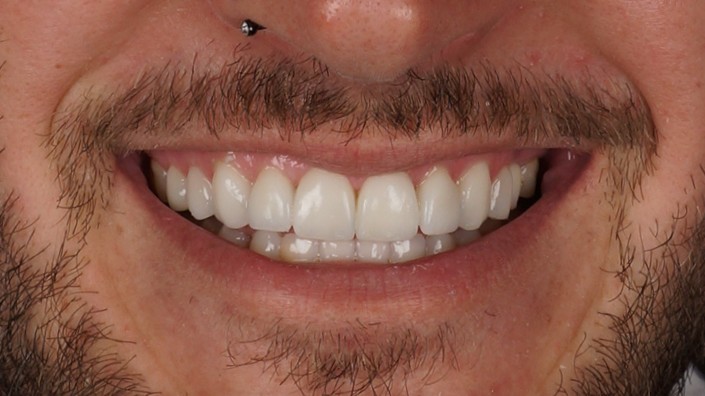
A mock-up is a temporary aesthetic trial that allows a smile design to be transferred directly into the patient’s mouth.
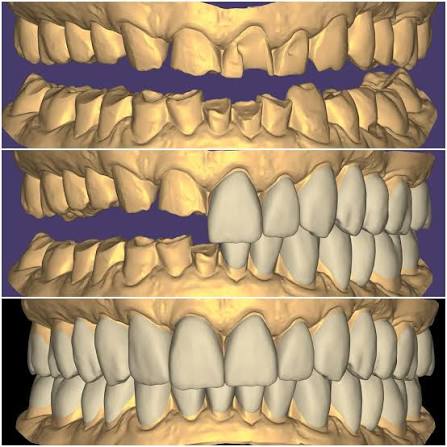
First, we study the initial situation and plan certain changes in tooth shape, length, volume or proportions.
That design can then be reproduced provisionally over the teeth using a temporary material.
In many cases, this can be done without preparing or reducing the teeth beforehand.
For a period of time, the patient can observe how those changes affect their smile.
They can look at themselves from the front.
They can smile.
They can speak.
They can observe the result from different angles.
And most importantly, they can tell us how they feel about the proposed design.
This is why we often describe the mock-up as a test drive for your smile.
We are not simply imagining the result.
We are trying it.

The mock-up begins long before the material is placed
The most important part of a mock-up does not begin when the temporary resin is placed over the teeth.
It begins with diagnosis.
First, we need to understand what we want to improve and why.
We analyse oral health.
Tooth position.
Shape and proportions.
The smile line.
The gums.
The lips.
Tooth display.
Facial harmony.
The bite.
Existing tooth wear.
The patient’s objectives and preferences.
Using all of this information, we can develop a design proposal.
The mock-up is simply a way of transferring that proposal from the planning stage into the mouth.
This is why a mock-up without proper diagnosis beforehand loses much of its value.
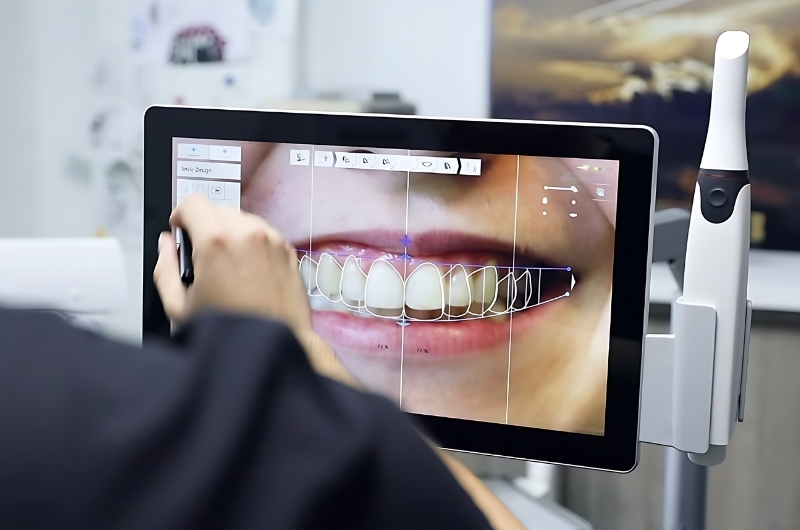
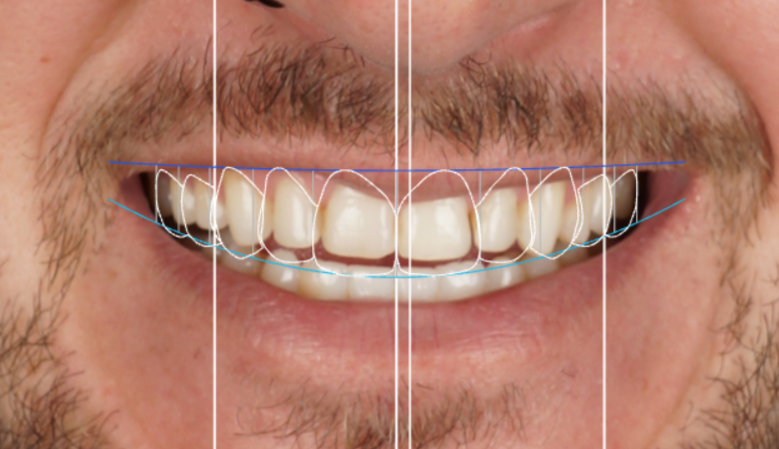
Digital Smile Design: designing before treating
Within the philosophy of Digital Smile Design, we do not begin by thinking only about which material we are going to use.
We first think about the desired result.
How should the central incisors relate to one another?
What tooth length is harmonious with the face?
How much tooth should be visible at rest?
How should the curve of the incisal edges relate to the lower lip?
Does the dental midline work with the face?
Are the gums balanced?
Are the teeth in an appropriate position?
Is there enough space to make the required changes conservatively?
From these questions, we can create a personalised aesthetic proposal.
Only afterwards do we decide how to achieve it.
Perhaps with orthodontics.
Perhaps with whitening.
Perhaps with composite.
Perhaps with porcelain.
Perhaps by correcting the gums first.
Or by combining several disciplines.
The design comes before the material.
We do not design isolated teeth
A common mistake when discussing smile design is to focus only on the six front teeth.
But the smile exists within the face.
When designing a mock-up, we need to consider how the new dental shapes relate to:
The lips
The smile
The facial midline
Tooth display
The gums
Smile width
Facial proportions
Lip dynamics
The patient’s personality and expression
A tooth shape that looks attractive in a close-up photograph may not be the most suitable once we observe the entire face.
The objective is therefore not to design “perfect teeth”.
It is to design teeth that naturally belong to that person.
What can we assess with a mock-up?
Depending on the case, a mock-up can help us evaluate changes such as:
Tooth length
Visual width
Proportions between central and lateral incisors
The shape of the incisal edges
The smile curve
Closure of certain spaces
Dental volume
Symmetry
The relationship between teeth and lips
The amount of tooth visible when smiling
Small changes in the overall architecture of the smile
This does not mean that all of these elements need to be changed.
The objective is to identify which changes genuinely improve harmony and which are unnecessary.
Tooth length can transform a smile
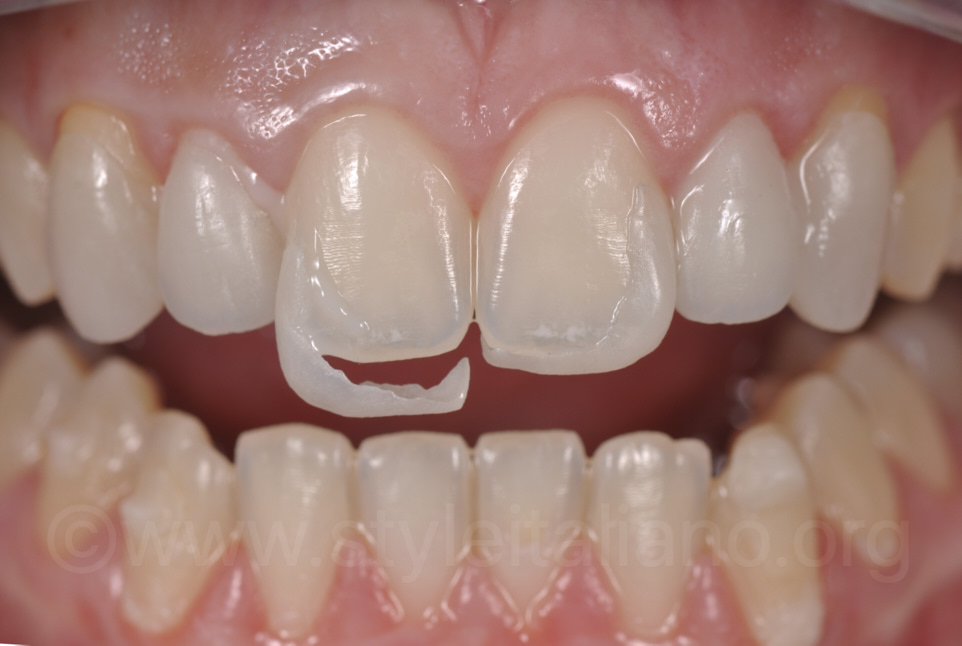
One of the most surprising things during a mock-up is seeing how much a smile can change by slightly altering the length of the incisors.
Over time, teeth may become worn.
They may also be naturally short or appear less visible because of their position, the gums or lip dynamics.
When the central incisors regain an appropriate length, this can visually improve:
The youthful appearance of the smile
The incisal curve
Tooth display
The width-to-length proportion
The relationship with the lower lip
The presence of the teeth within the face
But longer does not automatically mean better.
A tooth that is excessively long can also appear artificial.
The mock-up allows us to search for this balance directly within the patient’s face.
Proportions can be analysed… but they can also be felt
In aesthetic dentistry, we can measure.
We can calculate width-to-length ratios.
We can analyse symmetry.
We can use facial references.
All of this is important.
But there is another part of smile design that cannot be reduced entirely to numbers.
When a patient looks in the mirror with the mock-up in place, their reaction gives us additional information.
“I prefer them slightly longer.”
“They feel too large.”
“This side looks different.”
“I feel as if I am showing too much tooth.”
“I like that they still look natural.”
“This feels more like me.”
This exchange is extremely valuable.
The patient no longer has to imagine an abstract result.
They can react to something much more tangible.
The patient participates in the design
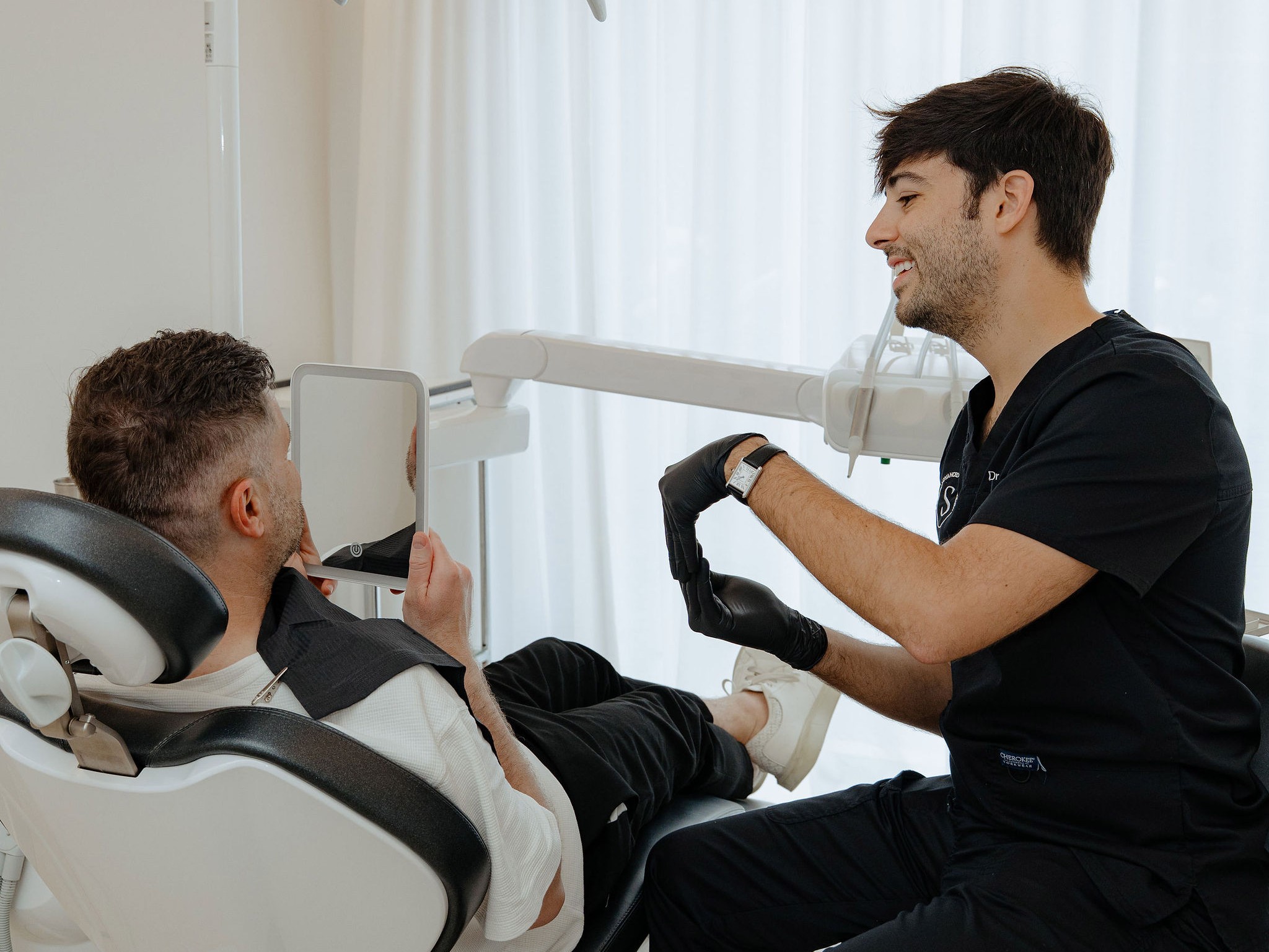
Aesthetic treatment should not be a unilateral decision made by the dentist.
The clinician contributes diagnosis, knowledge of dental anatomy, function, materials, proportions and long-term stability.
But the patient contributes something equally important:
Their perception.
Their preferences.
Their personality.
Their own idea of beauty.
Some people prefer a very symmetrical and ordered smile.
Others want to preserve small irregularities.
Some want the central incisors to have more presence.
Others prefer softer shapes.
Some want a brighter result.
Others prefer to maintain a much more discreet colour.
The mock-up creates a conversation between clinical design and personal perception.
And this helps us create a genuinely personalised result.
A natural mock-up is not about creating a “Hollywood smile”
A natural smile does not simply mean choosing a less white shade.
Naturalness depends on many different elements.
Proportions.
Transitions between teeth.
Small variations in shape.
Texture.
Position.
Incisal edges.
The relationship with the gums.
The way the teeth appear during speech and smiling.
For this reason, we do not automatically try to remove every individual characteristic during the design process.
A slight asymmetry can be completely harmonious.
One lateral incisor can have a slightly different shape from the other.
The central incisors can have presence without becoming excessively dominant.
The aim is not to manufacture a standardised smile.
The aim is to find a better balanced version of your own smile.
The mock-up can also reveal that orthodontics is needed
This is one of the most important points.
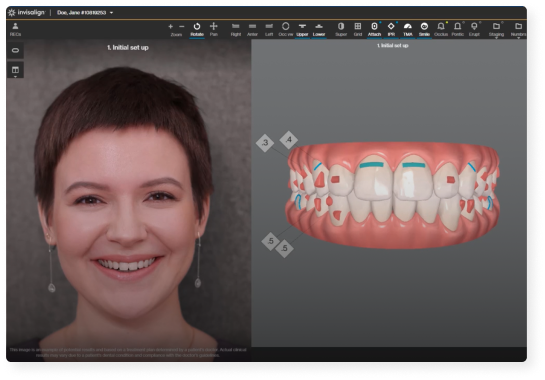
Imagine that we want to improve the shape of an incisor, but the tooth is positioned too far forwards.
If we simply add material to create the desired shape, we may make it excessively bulky.
Or imagine that we want to improve symmetry, but one tooth is rotated.
Trying to compensate for this exclusively with restorations could require removing more tooth structure than necessary.
In these situations, the mock-up and planning may help us identify that the issue is not only the shape.
It is also the position.
In that case, it may be more appropriate to move the teeth first with orthodontics and then, if still necessary, make small aesthetic corrections afterwards.
This approach allows us to preserve more enamel and work in a much more conservative way.
Sometimes the mock-up also changes the gum plan
Teeth and gums form a single visual composition.
We may design an ideal tooth length and discover that part of the natural tooth is covered by gum.
Or we may see different gum heights around similar teeth.
In these cases, we need to ask:
Do we really need to add length to the edge of the tooth?
Or do we need to expose more of its natural anatomy?
Are the gums healthy?
Is there gingival asymmetry?
Does the amount of gum displayed change when smiling?
In selected cases, the design may show us that periodontal treatment or a small gingival correction should be considered first.
In other cases, no gum treatment is required at all.
Once again, design helps us decide before intervening.
Mock-up and whitening: sequence matters too
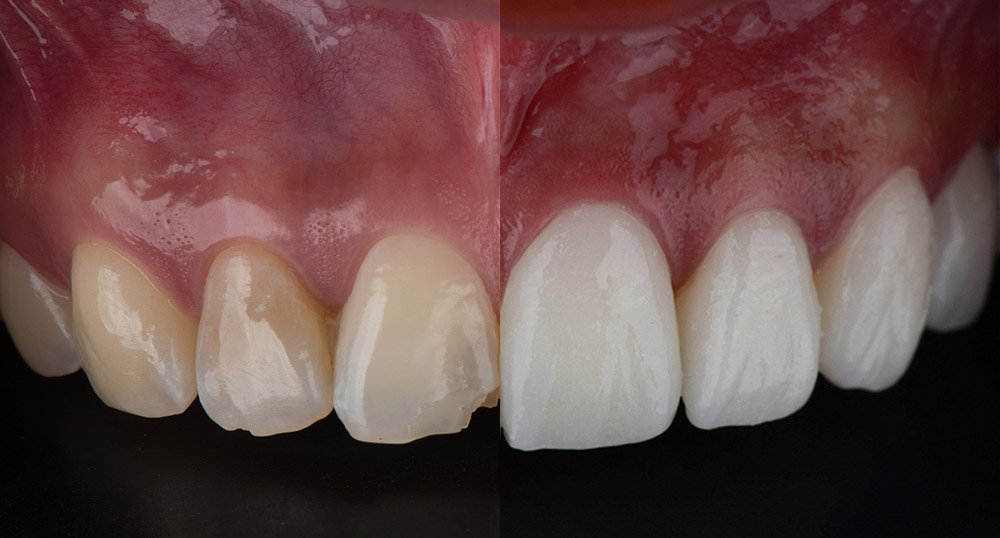
The mock-up can help us evaluate shape and proportions, but the definitive colour requires separate planning.
If the patient would like to brighten their natural teeth, we usually need to consider whether whitening should be performed before creating the final restorations.
Why?
Because composite, porcelain and crowns do not change colour in the same way as natural teeth.
We can use the mock-up to evaluate the design.
Then perform whitening when indicated.
Allow the colour to stabilise.
And finally select the shade of the definitive restorations.
This allows shape and colour to be planned at the appropriate stage.
The mock-up is not the final result
It is important to understand this distinction.
A mock-up is a temporary design trial.
It does not necessarily reproduce the final:
Colour
Translucency of ceramic
Texture
Gloss
Fine anatomical details
Definitive adaptation
Exact sensation of the finished restorations
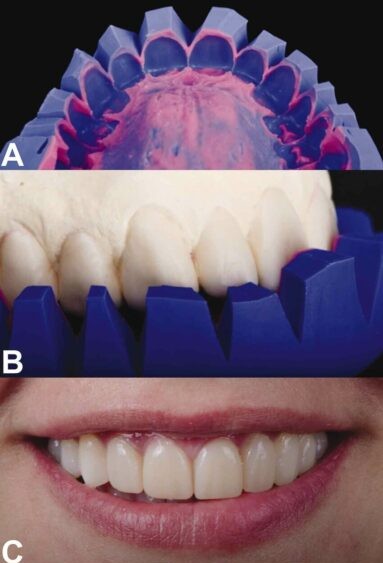
The material used for the trial is temporary and its principal purpose is to help us evaluate volume, proportions and the relationship with the smile.
For this reason, a future porcelain restoration, for example, should not be judged solely by the surface finish of the mock-up.
We are primarily testing the design, not the final material.
Do the teeth need to be prepared for a mock-up?
In many cases, no.
One of the main advantages of a mock-up is that it can often be performed over the initial dental situation without modifying the tooth structure beforehand.
This allows us to assess the design before making irreversible decisions.
However, every case is different.
If a tooth is positioned significantly forwards, if there is a bulky existing restoration or if there are limitations in available space, the mock-up may not perfectly reproduce the definitive result without previous modification.
These limitations are also useful information.
If achieving a particular shape would require removing too much tooth structure, we may need to reconsider the plan and look for a more conservative alternative.
The mock-up is also a diagnostic tool for the dentist
For the patient, the most striking part may be seeing themselves with a different smile.
Clinically, however, the mock-up gives us a considerable amount of information.
We can observe:
How the new tooth lengths integrate with the lips
What happens when the patient smiles
How tooth display changes
Whether the volume appears excessive
How the teeth relate to the face
Whether certain proportions need adjustment
Whether there are spatial limitations
Whether tooth position interferes with the design
Whether function requires further analysis
This is why we do not consider the mock-up simply a presentation tool.
It can also help us refine the diagnosis and modify the treatment plan.
Does having a mock-up mean I will need veneers?
No.
And this point is essential.
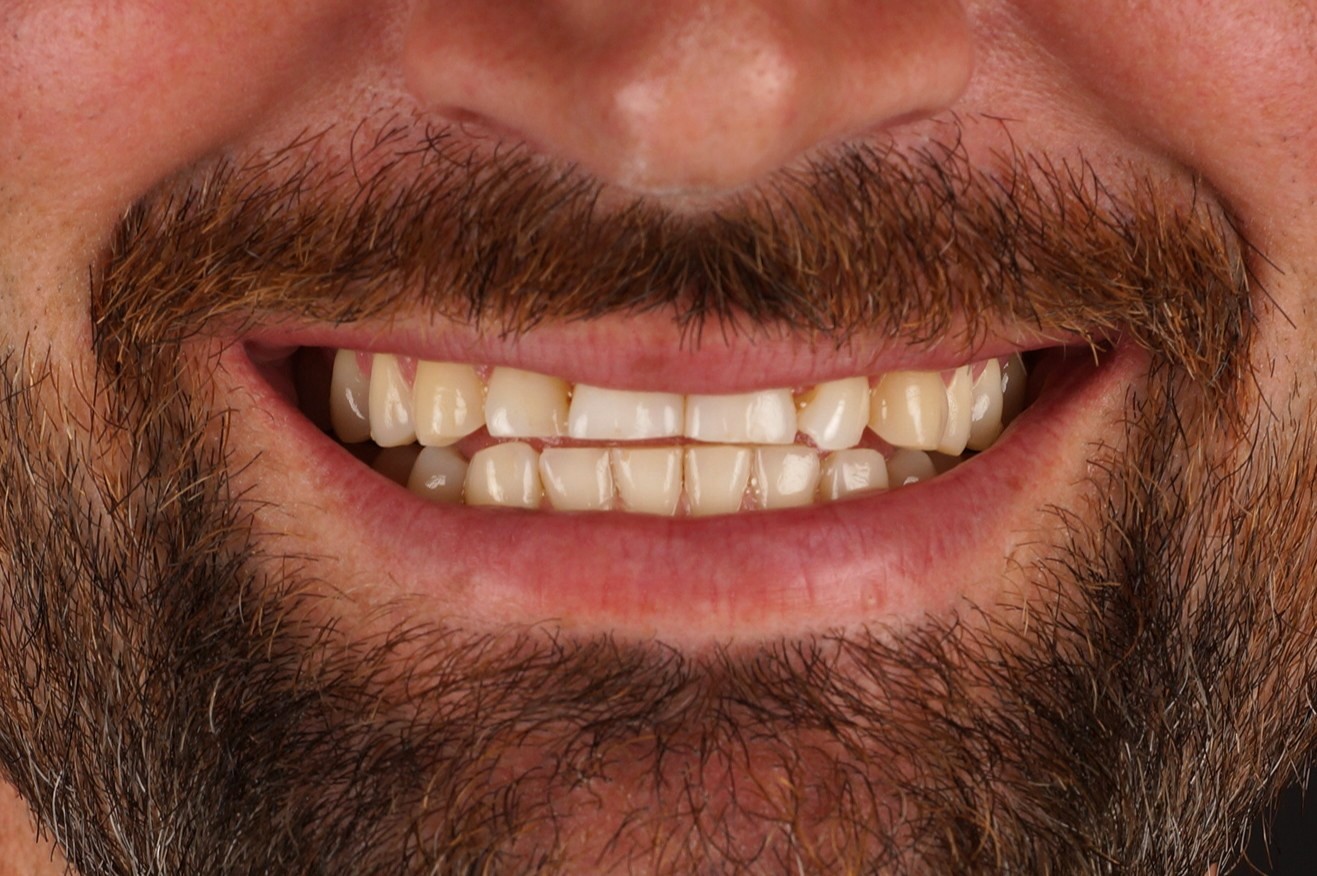
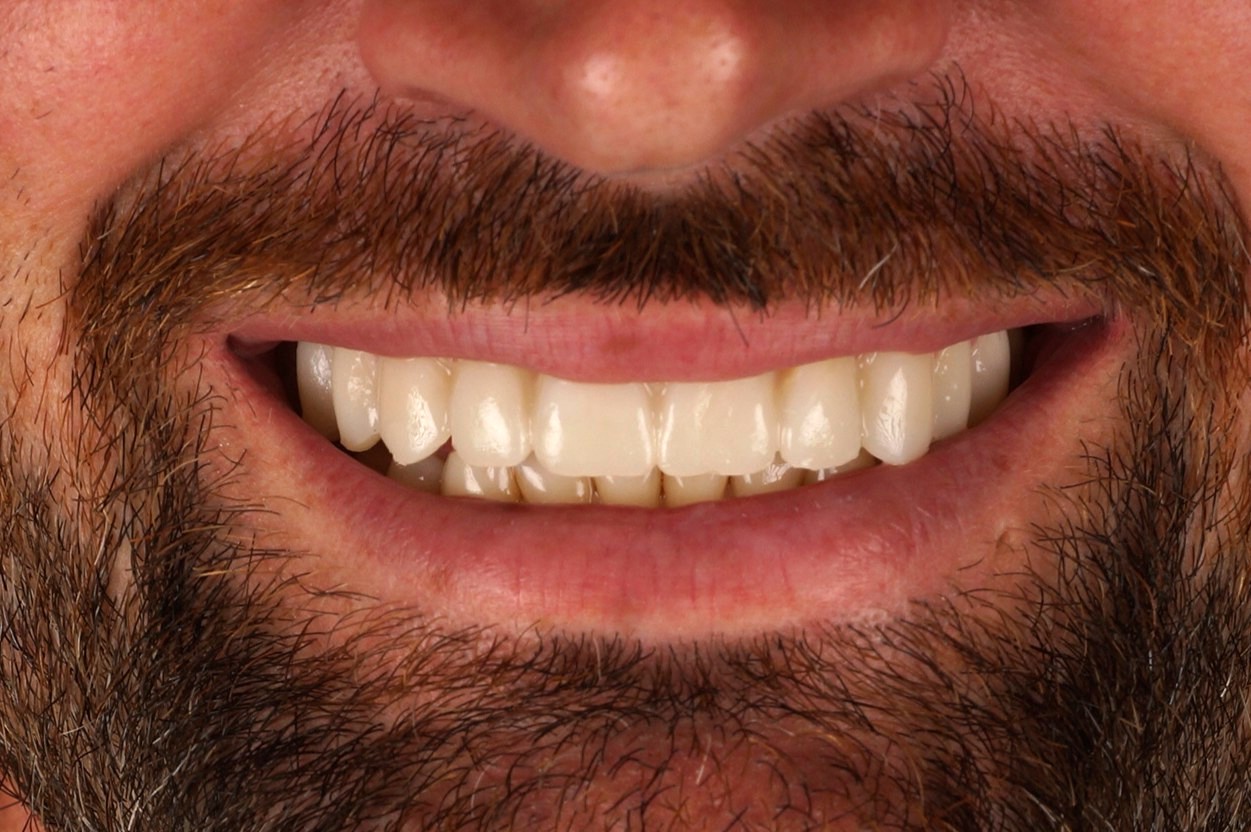
The mock-up represents a proposal for shape and proportions.
It does not automatically prescribe a material.
Once we know what we would like to achieve, we can determine the most conservative way of reaching that result.
It may involve orthodontics.
It may involve composite bonding.
It may involve a small number of porcelain veneers.
It may involve a combination.
And sometimes, after orthodontics or whitening, the patient may already be satisfied and need far less restorative treatment than originally expected.
First we design. Then we choose the treatment.
Composite or porcelain after the mock-up
If restorative treatment is ultimately required, the choice between composite and porcelain depends on many factors.
The amount of change required
The available enamel
Existing wear
Tooth position
Initial colour
The bite
Bruxism
The number of teeth involved
The required resistance
Aesthetic expectations
Long-term maintenance
A design that can be achieved with composite in one patient may require porcelain in another.
This is why we do not design the smile around the material.
We choose the material around the diagnosis.
Function must also be tested and analysed
A smile has to function outside photographs.
If we lengthen worn teeth, change incisal edges or modify certain positions, we also need to consider how the teeth will contact one another.
This is especially important when there is:
Bruxism
Significant tooth wear
A deep bite
An open bite
Anterior guidance problems
Existing restorations
Extensive rehabilitation
A mock-up can provide useful information, but it does not replace a complete functional analysis when one is required.
Aesthetics and function should progress together.
Because the objective is not to create a beautiful smile for a few weeks.
We want to create a smile that can remain stable over the long term.
What happens if I do not like the mock-up?
In fact, this can be extremely valuable information.
It is precisely one of the reasons why we perform a trial before definitive treatment.
We may discover that the teeth feel too long.
That the volume is excessive.
That a softer shape would work better.
That the patient prefers to preserve a particular feature of the original smile.
That the proportions need to be modified.
Or even that the patient wants a much smaller change than originally imagined.
It is far better to discover this during the planning stage than after definitive restorations have already been made.
A mock-up is not designed to convince the patient.
It is designed to help us make better decisions together.
Does every patient need a mock-up?
No.
There are straightforward treatments where a mock-up may not provide enough additional information to be necessary.
For example, certain small restorations or cases where the objective is already very clearly defined.
A mock-up can be particularly useful when we are considering more significant changes in:
Shape
Length
Proportion
Volume
Smile line
Number of teeth involved
Overall smile architecture
The indication depends on each individual case.
As with any tool in digital dentistry, using more technology does not automatically mean providing better treatment.
There must be a clinical reason to use it.
How we use the mock-up within smile design at SMITA
At SMITA Advanced Smile Design in Barcelona, the mock-up forms part of a broader philosophy.
First, we listen.
Then we diagnose.
We analyse oral health.
We study photographs and the smile.
We assess the face, lips and gums.
We evaluate tooth position.
We analyse the bite when necessary.
We create a proposal.
And only then do we begin to consider how to transfer that proposal clinically.
The mock-up introduces an extremely valuable intermediate stage:
trying before transforming.
This can make the treatment easier for the patient to understand and helps us work in a more precise, personalised and conservative way.
A smile you can experience before treatment
There is something particularly important in aesthetic dentistry: changes that appear very small on a digital model can feel very different once we see them within our own face.
One millimetre can change the perception of an incisor.
A subtle modification to the dental curve can change its relationship with the lips.
A different shape can make a smile appear softer, more mature, more youthful or simply more natural.
This is why the mock-up is so valuable.
It allows us to stop talking only about teeth.
It allows us to see the smile within the person.
And it allows us to answer a fundamental question before treatment begins:
Does this design genuinely fit you?
At SMITA, we believe that carefully planned aesthetic dentistry should reduce the number of irreversible decisions made too early.
Diagnose.
Design.
Try.
Adjust.
And only then, treat.
Because a personalised smile should not be selected from a catalogue.
It should be designed around the person who will wear it.
Frequently Asked Questions
What is a dental mock-up?
A dental mock-up is a temporary trial that transfers a proposed smile design directly onto the teeth. It helps us evaluate changes in length, shape, proportions and volume before definitive treatment.
Is a dental mock-up painful?
It is usually a non-invasive procedure and, in many cases, can be performed without preparing the teeth or using anaesthesia. Its purpose is to allow the design to be tested temporarily.
Do my teeth need to be filed down for a mock-up?
In many cases, the teeth do not need to be modified beforehand. However, certain tooth positions or existing restorations may limit the accuracy of the trial. Every situation must be assessed individually.
Does a mock-up show exactly what my final teeth will look like?
It mainly demonstrates the design, proportions and volumes. It does not necessarily reproduce the exact colour, translucency, texture or final finish of the definitive restorative material.
Can the design be changed after I try the mock-up?
Yes. One of the main advantages of a mock-up is the ability to evaluate the proposal and modify it before certain definitive stages of treatment begin.
Does having a mock-up mean I need veneers?
No. The mock-up helps define an aesthetic proposal, but the treatment required to achieve it may include orthodontics, whitening, composite, porcelain, gum treatment or a combination depending on the case.
Can I have a mock-up if my teeth are crowded?
It depends on the position of the teeth and the changes we are trying to assess. In some cases, the design itself may reveal that orthodontic treatment first would be the more conservative option.
How long do you wear a dental mock-up?
It is generally used as a temporary clinical trial to evaluate the design and allow the patient to see and experience the proposed changes. The exact duration and protocol depend on the individual case.
Is a mock-up used to choose the colour of veneers?
Its main purpose is to evaluate shape, length, volume and proportions. The definitive colour is planned separately, taking into account the natural tooth shade, any planned whitening and the chosen restorative material.
How do I know whether I need a mock-up?
The first step is an aesthetic and functional assessment. Once the diagnosis has been completed, we can determine whether a smile trial would provide useful information for planning your case.
Learn more about the SMITA team:
Book your assessment: